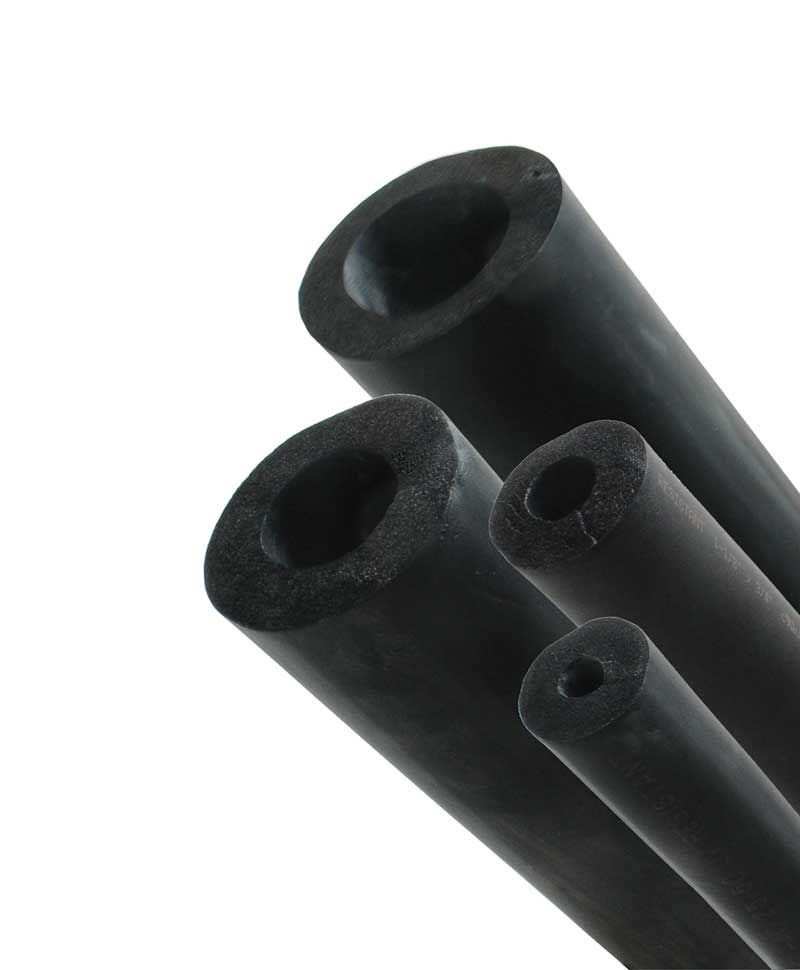
3 8 Copper Tubing Insulation for HVAC and Air Conditioning
3 8 copper tubing insulation is a critical requirement in HVAC, air-conditioning and refrigeration systems where small-diameter copper tubing is used for refrigerant flow. Because copper has very high thermal conductivity, uninsulated 3/8 inch tubing can lead to heat gain, condensation and reduced system efficiency.
In residential split ACs, VRF systems and commercial HVAC installations, 3 8 copper tubing insulation ensures temperature stability, moisture control and long-term system reliability.
What is 3 8 Copper Tubing Insulation?
3 8 copper tubing insulation refers to thermal insulation materials precisely manufactured to fit copper tubing with a nominal diameter of 3/8 inch. The insulation forms a continuous thermal barrier around the tubing surface, reducing heat transfer between the refrigerant and ambient air.
It is typically supplied as pre-slit tubular insulation for quick installation on straight runs and fittings.
Why 3 8 Copper Tubing Insulation is Important
Small-diameter copper tubing is highly sensitive to temperature variation. In cooling applications, condensation can form rapidly on bare tubing, leading to water damage and corrosion. In refrigerant lines, heat gain reduces cooling efficiency. 3 8 copper tubing insulation effectively prevents these issues.
Key Functions of 3 8 Copper Tubing Insulation
- Prevents heat gain in refrigerant lines
- Eliminates surface condensation
- Improves HVAC system efficiency
- Protects copper tubing from corrosion
- Enhances system performance and lifespan
Materials Used for 3 8 Copper Tubing Insulation
Elastomeric Rubber Insulation
Elastomeric rubber insulation is the most widely used material for 3 8 copper tubing insulation. Its closed-cell structure provides excellent thermal resistance and acts as a reliable vapor barrier.
Polyethylene (PE) Foam Insulation
PE foam is commonly used for residential installations where moderate insulation performance is sufficient for 3 8 copper tubing insulation.
Cross-Linked Polyethylene (XLPE)
XLPE insulation offers improved durability and temperature resistance, making it suitable for commercial and industrial 3 8 copper tubing insulation applications.
Recommended Thickness for 3 8 Copper Tubing Insulation
| Application | Recommended Thickness |
|---|---|
| Residential split AC systems | 6–9 mm |
| Commercial HVAC systems | 9–13 mm |
| VRF / VRV systems | 13 mm |
| High-humidity environments | 13 mm or more |
Standards Applicable to 3 8 Copper Tubing Insulation
3 8 copper tubing insulation materials should comply with recognized international insulation and HVAC standards:
- ASTM C534 – Elastomeric insulation materials
- EN 14304 – Thermal insulation for building services
- ASHRAE guidelines – HVAC insulation practices
Copper tubing typically complies with ASTM B280 or EN 12735 standards for HVAC and refrigeration.
Installation Best Practices for 3 8 Copper Tubing Insulation
For optimal performance, 3 8 copper tubing insulation must be installed continuously along the entire tubing length. All joints and seams should be sealed with compatible adhesive or insulation tape to prevent moisture ingress.
Outdoor installations require UV-resistant insulation or additional protective jacketing.
Applications of 3 8 Copper Tubing Insulation
Air Conditioning Systems
- Split and inverter air conditioners
- Multi-split and VRF systems
Refrigeration Systems
- Commercial refrigeration equipment
- Cold rooms and cooling units
Heat Pumps
- Residential and commercial heat pump systems
Advantages of Using 3 8 Copper Tubing Insulation
- Improved cooling efficiency
- Reduced condensation-related damage
- Lower energy consumption
- Extended copper tubing service life
- Compliance with HVAC energy regulations
Quality Control for 3 8 Copper Tubing Insulation
High-quality 3 8 copper tubing insulation is tested for thermal conductivity, vapor permeability, fire performance and durability. Uniform thickness and density ensure reliable long-term insulation performance.
Conclusion
3 8 copper tubing insulation is essential for efficient and reliable HVAC and air-conditioning systems. By minimizing heat gain and preventing condensation, it significantly improves system efficiency and protects copper tubing.
When correctly selected and professionally installed, 3 8 copper tubing insulation delivers long-term energy savings, moisture control and dependable HVAC performance.