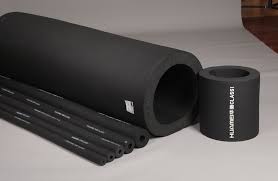
Copper Pipe Rubber Insulation for HVAC and Industrial Piping
Copper pipe rubber insulation is one of the most widely used insulation solutions for copper piping systems in HVAC, refrigeration, plumbing and industrial applications. Copper pipes conduct heat rapidly, and without proper insulation, they can cause energy losses, condensation and system inefficiency.
In modern building services and industrial installations, copper pipe rubber insulation is essential for thermal control, moisture protection and long-term piping reliability.
What is Copper Pipe Rubber Insulation?
Copper pipe rubber insulation refers to closed-cell elastomeric rubber insulation designed specifically to fit copper pipes of various diameters. The rubber material forms a continuous thermal and vapor barrier around the pipe surface, minimizing heat transfer and preventing condensation.
It is typically supplied in tubular, pre-slit or sheet form for ease of installation.
Why Copper Pipe Rubber Insulation is Important
Copper pipes used in chilled water, refrigerant and hot water systems are highly sensitive to ambient temperature. Without insulation, surface condensation and heat loss occur quickly. Copper pipe rubber insulation effectively addresses these issues while improving system performance.
Key Benefits of Copper Pipe Rubber Insulation
- Reduces heat gain and heat loss
- Prevents condensation and moisture damage
- Improves energy efficiency
- Protects copper pipes from corrosion
- Extends system service life
Material Properties of Copper Pipe Rubber Insulation
Copper pipe rubber insulation is manufactured from elastomeric rubber with a closed-cell structure. This design ensures low thermal conductivity and excellent resistance to water vapor transmission.
The insulation remains flexible over a wide temperature range, making it suitable for both hot and cold piping systems.
Types of Copper Pipe Rubber Insulation
Standard Elastomeric Rubber Insulation
Standard-grade elastomeric rubber is the most common form of copper pipe rubber insulation used in residential and commercial HVAC systems.
UV-Resistant Rubber Insulation
UV-resistant variants of copper pipe rubber insulation are used for outdoor installations where exposure to sunlight is expected.
Fire-Retardant Rubber Insulation
Fire-rated copper pipe rubber insulation is used in commercial and industrial buildings to meet fire safety regulations.
Recommended Thickness for Copper Pipe Rubber Insulation
| Application | Recommended Thickness |
|---|---|
| Split air conditioners | 6–9 mm |
| Commercial HVAC systems | 9–13 mm |
| Chilled water piping | 13–19 mm |
| Industrial piping | 19 mm and above |
Standards Applicable to Copper Pipe Rubber Insulation
Quality copper pipe rubber insulation should comply with recognized international standards:
- ASTM C534 – Elastomeric insulation materials
- EN 14304 – Thermal insulation for building services
- ASHRAE guidelines – HVAC insulation practices
Installation Guidelines for Copper Pipe Rubber Insulation
Proper installation of copper pipe rubber insulation is essential for long-term performance. Insulation must be installed continuously over the entire pipe length, including bends and fittings.
All joints should be sealed with compatible adhesive or insulation tape to prevent moisture ingress.
Applications of Copper Pipe Rubber Insulation
HVAC & Air Conditioning
- Refrigerant lines
- Split and VRF systems
Chilled & Hot Water Systems
- Chiller piping
- Hot water distribution
Industrial Piping
- Process cooling lines
- Utility piping systems
Advantages of Using Copper Pipe Rubber Insulation
- Easy and fast installation
- Excellent thermal efficiency
- Resistance to moisture and mold
- Low maintenance requirement
- Compliance with energy efficiency codes
Quality Control for Copper Pipe Rubber Insulation
High-quality copper pipe rubber insulation is tested for thermal conductivity, fire behavior, water vapor permeability and dimensional accuracy to ensure reliable field performance.
Conclusion
Copper pipe rubber insulation is a proven and efficient solution for insulating copper piping systems across HVAC, plumbing and industrial applications. Its closed-cell structure, flexibility and durability make it ideal for controlling heat transfer and preventing condensation.
When correctly specified and professionally installed, copper pipe rubber insulation delivers long-term energy savings, system protection and dependable performance.