Copper Pipe Specification – Grades, Sizes, Standards and Applications
Copper pipe specification defines the material grade, dimensional tolerances, wall thickness, mechanical properties and applicable standards required for safe and reliable use of copper piping in plumbing, HVAC, gas and industrial systems. Proper specification ensures compliance with codes, pressure ratings and long-term operational performance.
Engineers, contractors and system designers rely on accurate copper pipe specification to select the correct product for water distribution, refrigerant lines, gas piping and industrial fluid transport.
What is Copper Pipe Specification?
Copper pipe specification refers to the complete technical description of a copper pipe, including chemical composition, temper, dimensions, pressure rating and manufacturing standard. These parameters define where and how the pipe can be safely used.
A correctly defined copper pipe specification eliminates installation risks, leakage issues and premature failures.
Material Grades Used in Copper Pipe Specification
Copper pipes are manufactured from specific copper grades selected for strength, corrosion resistance and formability. Common grades included in copper pipe specification are:
- C12200 – Phosphorus-deoxidized copper (most common)
- C10200 – Oxygen-free copper (special applications)
C12200 is widely preferred due to its excellent resistance to hydrogen embrittlement and superior brazing characteristics.
Standards Governing Copper Pipe Specification
Copper pipe specification is defined by international standards that regulate dimensions, tolerances and mechanical properties:
- ASTM B88 – Copper water and gas pipe
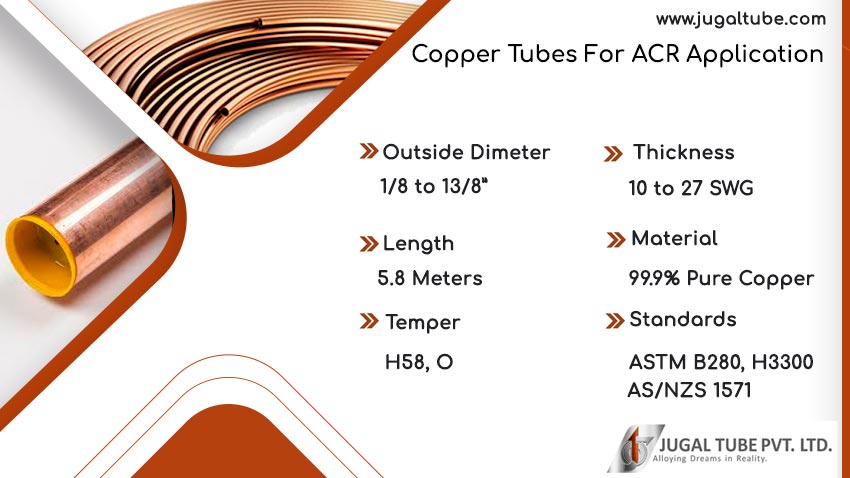
- ASTM B280 – ACR copper tubing for HVAC
- EN 1057 – Copper pipes for water and gas
- EN 12735 – Refrigeration copper tubing
- IS 1545 – Indian standard for copper pipes
- JIS H3300 – Japanese copper tube standard
Types Defined in Copper Pipe Specification
Type K Copper Pipe
Type K is the thickest wall option in copper pipe specification and is used for underground water services, fire protection and high-pressure systems.
Type L Copper Pipe
Type L is the most commonly specified pipe in copper pipe specification for plumbing, HVAC and commercial installations.
Type M Copper Pipe
Type M has thinner walls and is used in low-pressure residential plumbing where permitted by local codes.
ACR Copper Tubing
ACR tubing is included in copper pipe specification for refrigeration and air-conditioning systems and is supplied dehydrated and sealed.
Sizes Covered in Copper Pipe Specification
| Nominal Size (in) | Outside Diameter (mm) | Typical Application |
|---|---|---|
| 1/2 | 15.88 | Water and gas distribution |
| 3/4 | 22.23 | Plumbing and HVAC |
| 1 | 28.58 | Commercial piping |
| 1 1/2 | 41.28 | Industrial systems |
Wall Thickness in Copper Pipe Specification
Wall thickness is a critical element of copper pipe specification and directly affects pressure rating and mechanical strength. Type K, L and M pipes offer progressively thinner walls.
Correct wall selection ensures compliance with pressure, temperature and safety requirements.
Pressure Ratings in Copper Pipe Specification
Pressure ratings in copper pipe specification depend on pipe type, size and operating temperature. Higher temperatures reduce allowable pressure.
Designers must always refer to standard pressure tables when specifying copper piping for critical services.
Manufacturing Process Defined in Copper Pipe Specification
Copper pipe specification requires seamless manufacturing through hot extrusion followed by cold drawing. Pipes are annealed or supplied in hard-drawn condition depending on application requirements.
Strict dimensional control and surface finish are maintained throughout production.
Applications Based on Copper Pipe Specification
Plumbing Systems
- Hot and cold water distribution
- Potable water systems
HVAC & Refrigeration
- Refrigerant suction and liquid lines
- Chilled water piping
Gas Distribution
- Natural gas and LPG piping
- Medical gas systems
Industrial Applications
- Process fluid transport
- Instrumentation lines
- Power and refinery systems
Quality Control in Copper Pipe Specification
Each pipe manufactured under a defined copper pipe specification undergoes chemical analysis, dimensional inspection, eddy current testing and pressure testing to ensure compliance with standards.
Advantages of Proper Copper Pipe Specification
- Ensures safety and code compliance
- Prevents premature failure and leaks
- Optimizes system performance
- Extends service life
- Reduces maintenance cost
Conclusion
A well-defined copper pipe specification is essential for selecting the right copper piping solution for plumbing, HVAC, gas and industrial applications. By specifying correct grade, standard, size and wall thickness, engineers and installers ensure safe operation, long-term reliability and regulatory compliance.
Manufactured under strict quality standards, copper pipes meeting precise copper pipe specification continue to be a trusted choice for critical infrastructure worldwide.