
ASTM Copper Tube & Pipe Standards Explained
Copper and copper alloy tubes show up in an enormous range of systems: refrigeration lines, water pipes, condenser tubing, and marine seawater piping, and each of those applications is governed by its own ASTM standard, specifying exactly what the material has to be made of, how precisely it has to be dimensioned, and how it has to be tested before it can be certified for use. Knowing which standard applies to which application isn't just a technical curiosity; specifying the wrong one, or failing to confirm compliance, can mean a system that fails prematurely or doesn't pass inspection at all.
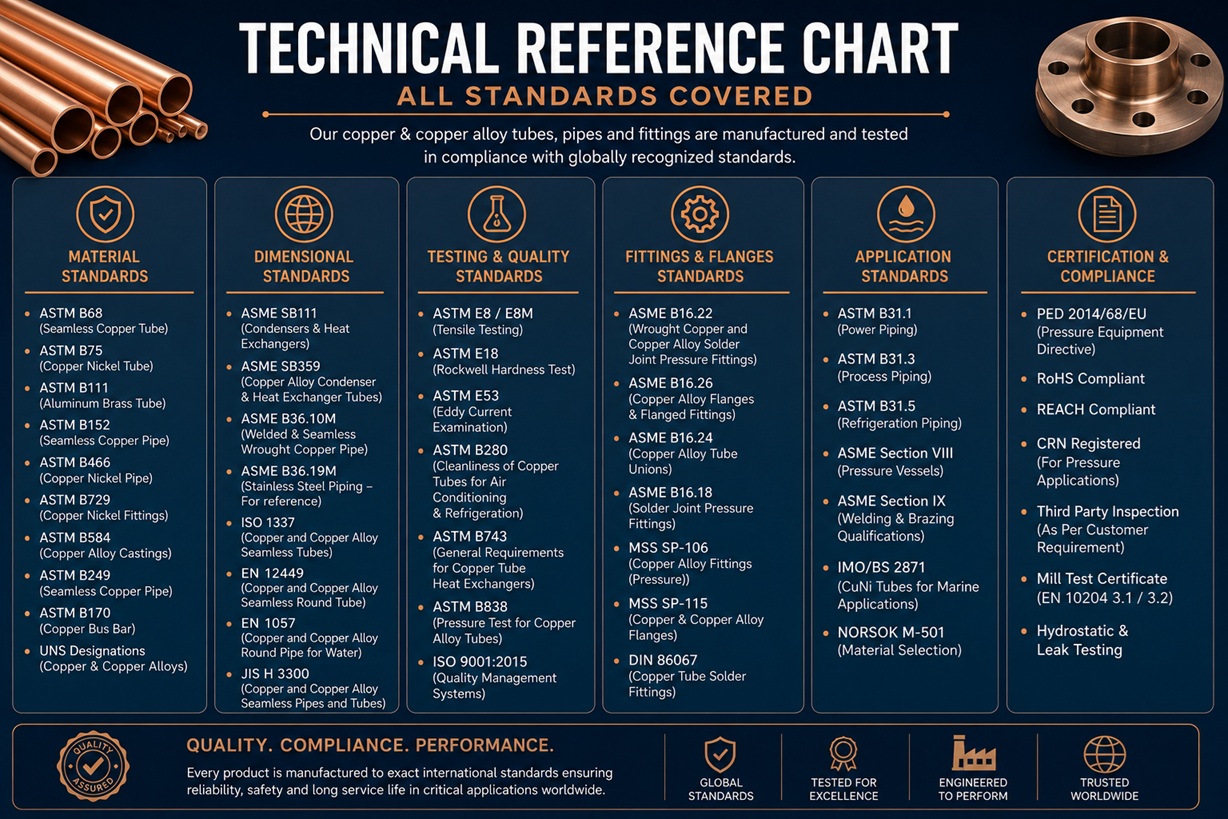
This guide works through the major ASTM standards that govern copper and copper alloy tube and pipe, starting with ASTM B280 copper tube for refrigeration, moving through ASTM B88 water tube, ASTM B111 tube for condensers and heat exchangers in its copper-nickel, admiralty brass, and aluminum brass variants, and ASTM B466 seamless copper-nickel pipe for marine service. The goal is a clear, practical reference for anyone specifying or purchasing copper tube who needs to know which standard actually applies.

Why Copper Tube & Pipe Standards Exist
Every ASTM standard covering copper tube and pipe exists to answer the same basic question for a buyer or engineer: How do I know this material will actually perform the way I need it to?
A standard accomplishes this by defining several things together: the permitted chemical composition of the alloy; the dimensional tolerances for outside diameter, wall thickness, and length; the mechanical properties the finished product must meet (tensile strength, elongation, and hardness depending on temper); and the testing and inspection methods a manufacturer must use to verify all of the above before certifying a batch.
Without a shared standard, a buyer would have no consistent way to compare tubes from different manufacturers and no basis for holding a supplier accountable if material underperforms in service. With a standard in place, a mill test certificate referencing "ASTM B280" or "ASTM B88 Type L" carries a specific, verifiable meaning that doesn't depend on trusting a manufacturer's word alone; it's checked against a documented, industry-recognized benchmark.
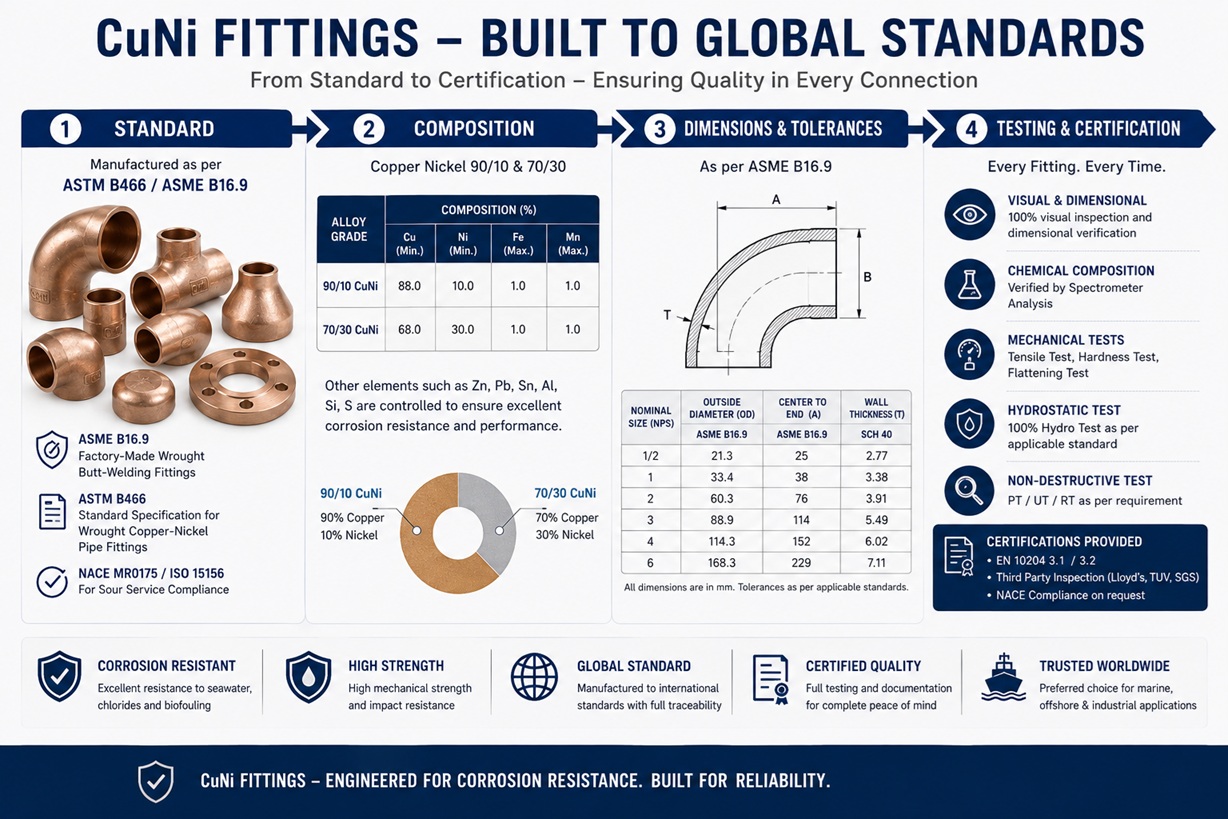
ASTM B280 Copper Tube: Refrigeration & Air Conditioning
ASTM B280 governs seamless copper tube manufactured specifically for air conditioning and refrigeration (ACR) service, and it's one of the most frequently referenced copper standards in HVAC work.
What sets ASTM B280 copper tube apart from general-purpose water tube is the finishing process required by the standard: the tube must be internally cleaned to remove oils, oxides, and particulate residue; dehydrated to eliminate internal moisture; and capped or plugged at both ends before shipment. This matters because even trace contamination or moisture sealed inside a refrigerant line can lead to ice formation, internal corrosion, or compressor damage once the system is charged and running.
The standard covers both soft-annealed tube, typically supplied in coils for field bending, and hard-drawn tube, typically supplied in straight lengths for larger commercial installations, and it specifies dimensional tolerances precise enough to ensure compatibility with standard flare fittings and braze connections regardless of which manufacturer produced the tube. Many mechanical and building codes reference ASTM B280 directly for refrigerant piping, which makes mill certification for this standard an important document to retain for inspection and warranty purposes.

ASTM B88 Copper Pipe: Water Tube Types K, L & M
ASTM B88 is the standard governing copper water tube used in plumbing, and it defines three distinct wall-thickness types, K, L, and M, that are frequently confused by anyone unfamiliar with the standard.
Type K carries the thickest wall of the three, giving it the highest pressure rating and making it the choice for underground water service lines and applications where mechanical durability matters more than material cost. Type L sits in the middle, with a wall thickness that balances pressure capacity and cost, and it's the standard specification for most commercial and many residential plumbing systems above ground. Type M has the thinnest wall of the three, suited to lighter-duty residential plumbing where system pressures are modest and cost efficiency is a priority.
h An important detail the standard clarifies: ASTM B88 copper pipe is sized by nominal diameter, but the actual outside diameter is always slightly larger than the nominal figure, a detail that trips up buyers unfamiliar with copper sizing conventions since it differs from how some other pipe materials are dimensioned. Confirming both the type (K, L, or M) and the actual OD against project drawings before ordering avoids compatibility surprises with fittings and other system components.

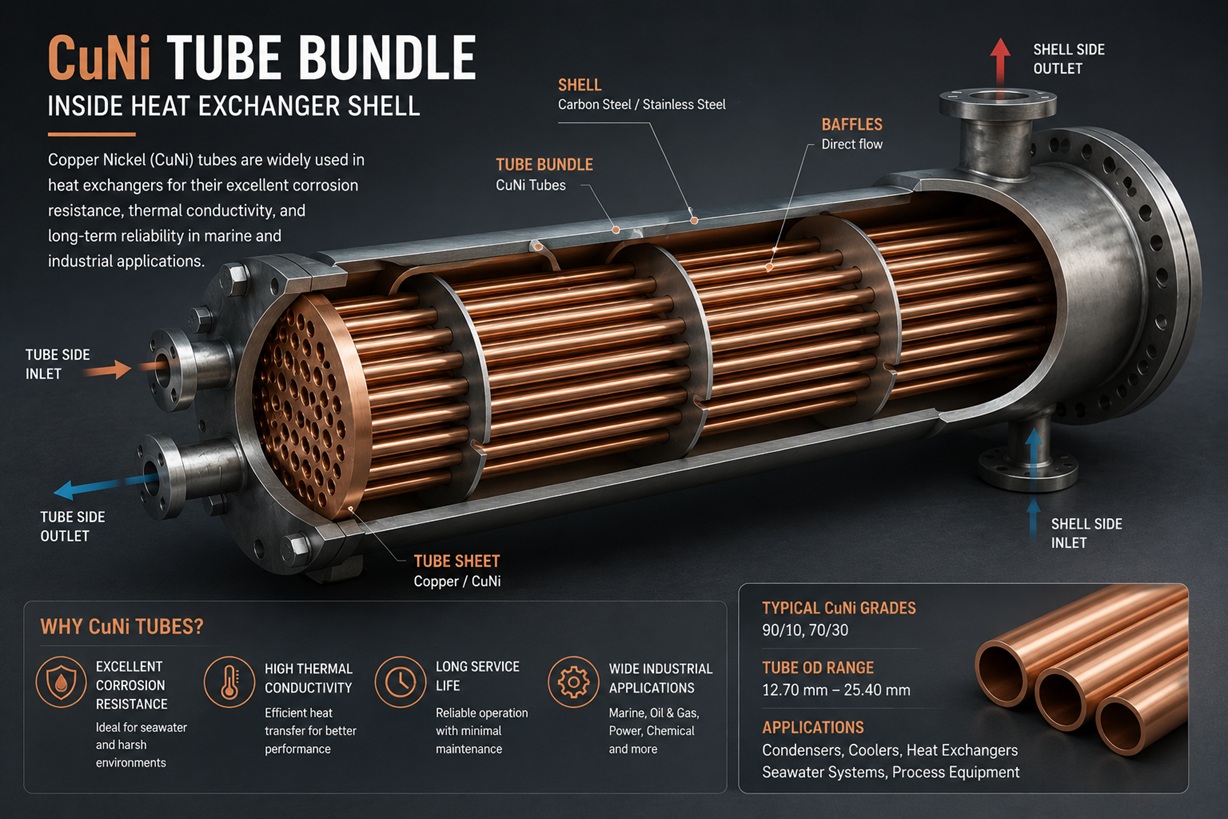
ASTM B111 CuNi Tube: Copper Nickel Heat Exchanger Tube
ASTM B111 governs seamless copper alloy tubes used in condensers, evaporators, and heat exchangers, and one of its most widely specified variants is the ASTM B111 CuNi tube, a copper-nickel tube, typically in 90/10 or 70/30 composition, chosen for its corrosion resistance in seawater-cooled or brackish-water-cooled heat exchange systems.
The standard specifies the alloy's chemical composition; dimensional tolerances suited to the thin-wall, high-precision requirements of heat exchanger tube bundles; and mechanical properties appropriate to the tube's role supporting heat transfer efficiency while withstanding the pressure and thermal cycling typical of condenser and evaporator service.
Because a heat exchanger tube operates in direct, continuous contact with cooling water. often seawater in marine and coastal power applications, the corrosion resistance of an ASTM B111 CuNi tube directly affects how long a heat exchanger can operate before tube replacement becomes necessary, making alloy grade selection (90/10 versus 70/30) an important decision tied to the specific water chemistry and flow conditions of the cooling system.
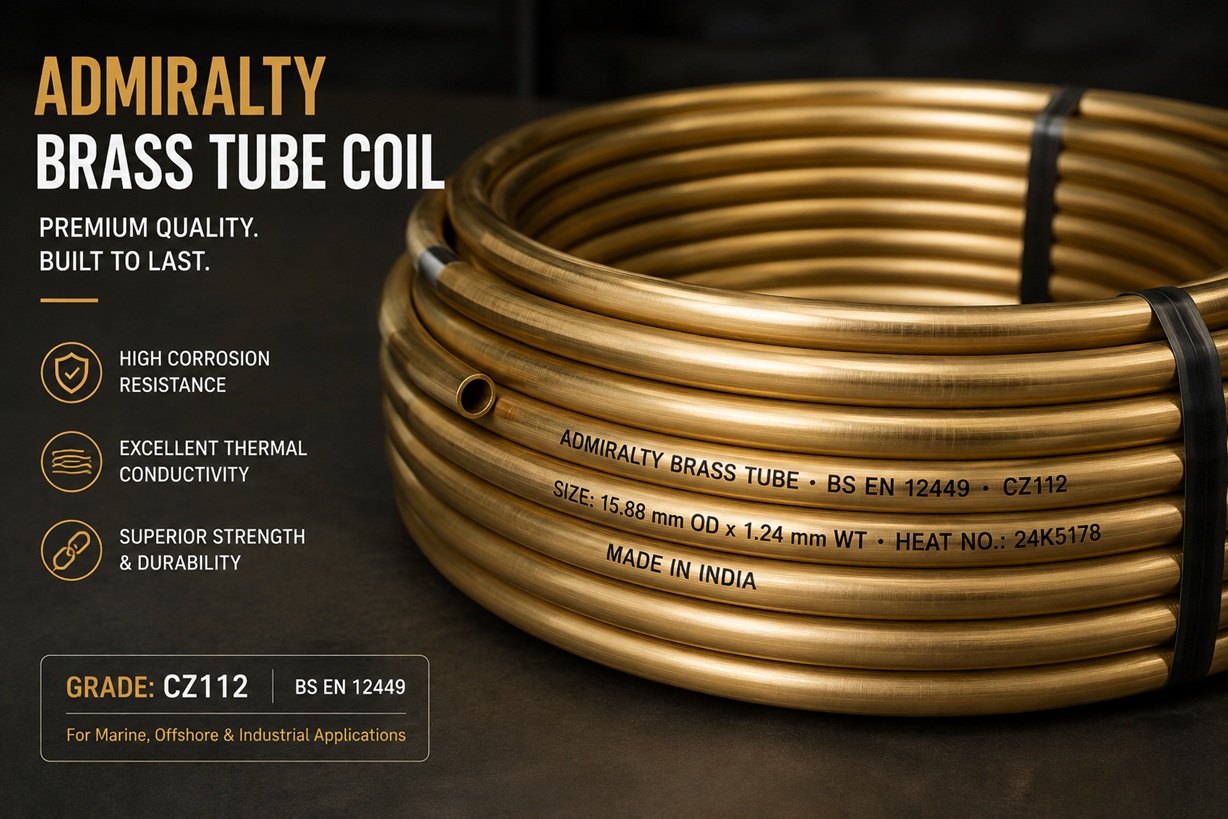
ASTM B111 Admiralty Brass Tube
Also covered under ASTM B111 is admiralty brass tube, a copper-zinc-tin alloy that has a long history in condenser and heat exchanger applications, particularly in power generation and industrial process cooling.
Admiralty brass combines good general corrosion resistance with strong heat transfer characteristics and reasonable cost relative to some copper-nickel alternatives, which historically made it a default choice for condenser tubes in many freshwater and moderately brackish cooling water applications. The small tin addition in the alloy improves resistance to dezincification compared to plain brass, extending service life in typical cooling water service.
While copper-nickel alloys have gained ground in more aggressive seawater applications due to superior corrosion and erosion resistance, admiralty brass tube manufactured to ASTM B111 remains a widely specified option for condenser and heat exchanger tube in freshwater and less aggressive cooling water systems, where its cost advantage is a meaningful factor in project economics.
ASTM B111 Aluminum Brass Tube
Aluminum brass tube is another alloy variant covered under ASTM B111, developed specifically to improve on plain and admiralty brass in applications involving higher-velocity or more erosive water flow.
The addition of aluminum to the copper-zinc base alloy improves resistance to impingement attack, localized erosion-corrosion that occurs where water flow velocity or turbulence is highest, such as at tube inlets in condenser and heat exchanger bundles. This makes aluminum-brass tubing a common choice in condenser applications where flow velocities are higher than admiralty brass can reliably withstand without requiring the greater material cost of a full copper-nickel alloy.
As with the other ASTM B111 variants, selecting between admiralty brass, aluminum brass, and copper-nickel tube for a given heat exchanger comes down to matching alloy performance to the specific water chemistry, flow velocity, and expected service life required by the project, a decision generally best confirmed with a materials engineer familiar with the cooling water conditions involved.

ASTM B466 Copper Nickel Pipe: Seamless Marine Pipe
Where ASTM B111 governs thin-wall copper alloy tube for heat exchangers, ASTM B466 governs seamless copper-nickel pipe intended for larger-diameter piping applications, most notably marine and offshore seawater systems.
The standard specifies allowable compositions for both 90/10 and 70/30 copper-nickel alloys, along with dimensional tolerances, mechanical property requirements, and testing methods appropriate to pipe rather than the thinner-wall tube covered under B111. ASTM B466 copper nickel pipe is typically supplied in an annealed condition, providing the ductility needed for bending and forming during shipboard or offshore installation while retaining full corrosion resistance.
Because ASTM B466 pipe is frequently used in systems subject to classification society survey shipboard seawater cooling, ballast piping, and offshore seawater lift systems, mill certification confirming compliance with the standard, along with full batch traceability, is typically expected documentation rather than an optional extra on these projects.

Copper Tube Grades: Understanding Alloy Designations
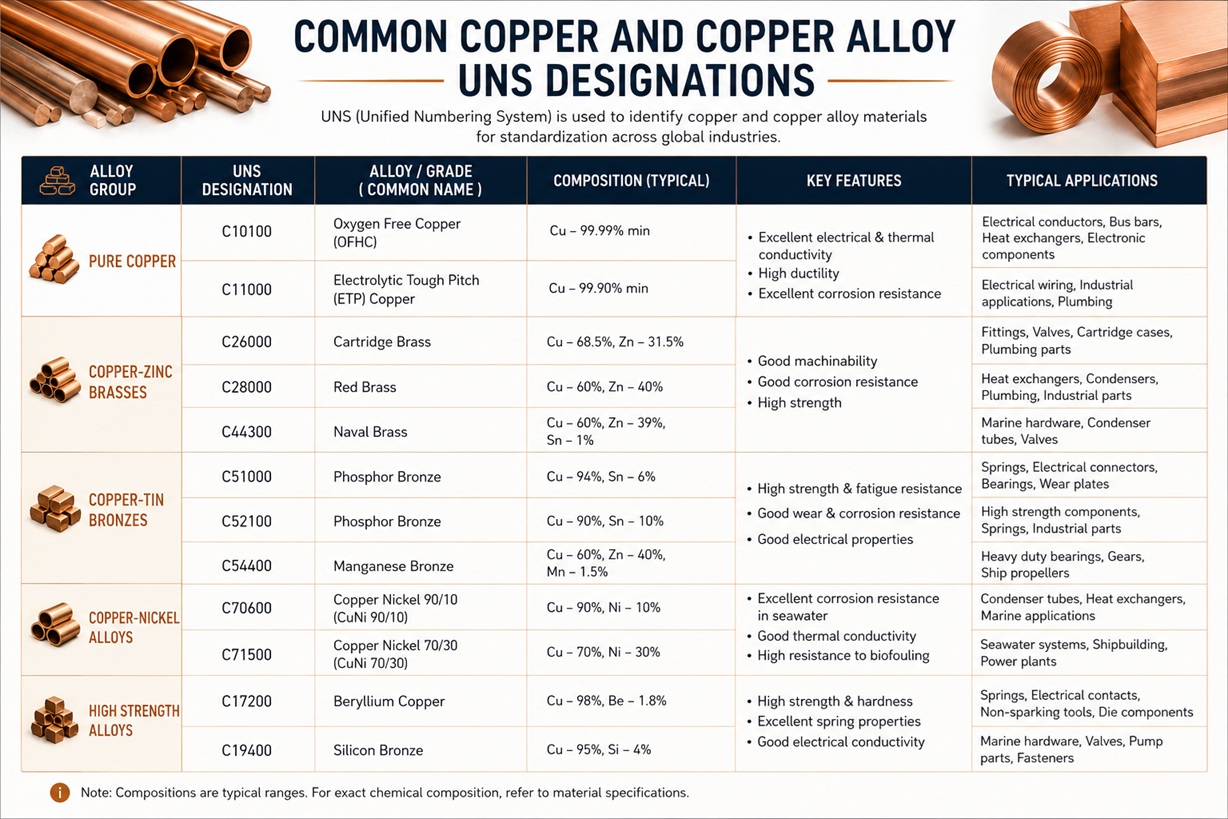
Beyond the ASTM standard governing dimensions and testing, copper tube and pipe are also identified by an alloy designation typically a UNS (Unified Numbering System) number that specifies the base metal and any alloying elements.
Plain copper tube, such as that used in ASTM B88 water tube or ASTM B280 refrigeration tube, is generally produced from a high-purity copper alloy suited to good formability and corrosion resistance. Copper-nickel alloys used in ASTM B111 and ASTM B466 products carry their own designations reflecting the 90/10 or 70/30 nickel content. Admiralty brass and aluminum brass each carry distinct designations reflecting their specific zinc, tin, or aluminum content.
Confirming both the ASTM standard and the specific alloy designation together rather than relying on a general description like "copper tube" or "brass tube" is the most reliable way to ensure a purchased product actually matches project requirements, since two products can meet the same ASTM standard's dimensional requirements while differing meaningfully in alloy composition and corrosion performance.
How to Read a Mill Test Certificate
A mill test certificate is the document a manufacturer provides confirming that a specific batch of copper tube or pipe meets the requirements of the ASTM standard it's certified against, and knowing how to read one is an important part of applying these industrial copper tubing standards correctly.
A complete certificate should identify the specific ASTM standard and any relevant type or grade designation (such as ASTM B88 Type L or ASTM B466 90/10), the alloy composition as tested, the heat or batch number for traceability, dimensional measurements confirming outside diameter and wall thickness, and mechanical test results such as tensile strength and elongation where applicable to the standard.
Cross-checking a mill certificate against the actual product received, verifying markings on the tube itself match the certificate's stated standard, type, and heat number is a simple but often-skipped step that helps catch mismatched or mislabeled material before it's installed into a system where an error would be far more costly to correct.
Frequently Asked Questions
What is the difference between ASTM B280 and ASTM B88 copper tubes? ASTM B280 governs seamless copper tube cleaned, dehydrated, and sealed specifically for refrigeration and air conditioning service, while ASTM B88 governs general water tube in Types K, L, and M for plumbing applications.
What are the differences between copper pipe types K, L, and M under ASTM B88? Type K has the thickest wall and highest pressure rating, Type L is the mid-range standard for most commercial plumbing, and Type M has the thinnest wall for lighter-duty residential use.
What's covered under ASTM B111? ASTM B111 covers seamless copper alloy tube for condensers and heat exchangers, including copper-nickel (CuNi), admiralty brass, and aluminum brass variants, each suited to different water chemistry and flow conditions.
When would I choose an admiralty brass tube over a copper-nickel tube? Admiralty brass tube is a common choice for freshwater or less aggressive cooling water applications where its cost advantage matters, while copper-nickel tube is generally preferred for more aggressive seawater conditions requiring higher corrosion resistance.
What does ASTM B466 specifically cover? ASTM B466 governs seamless copper-nickel pipe, typically in 90/10 or 70/30 grades, intended for larger-diameter piping in marine, offshore, and industrial seawater systems.
Why does alloy designation matter in addition to the ASTM standard? The ASTM standard defines dimensional and testing requirements, but the alloy designation (often a UNS number) specifies the actual base metal composition. Two products can meet the same standard while differing in alloy content, so both should be confirmed together.
What information should a mill test certificate include? It should identify the ASTM standard and type/grade, alloy composition as tested, heat or batch number, dimensional measurements, and applicable mechanical test results, all of which should be cross-checked against markings on the physical product.
Conclusion
Copper and copper alloy tube standards can look like an alphabet soup of ASTM designations at first glance, but each one exists to answer a specific, practical question about how a piece of tube or pipe will perform in service, from ASTM B280 copper tube built for sealed, contamination-free refrigeration lines to ASTM B88 water tube sized by pressure requirement to ASTM B111 and ASTM B466 alloys engineered for the demands of heat exchangers and seawater piping. Understanding which standard governs which application and how to verify compliance through a mill test certificate is the foundation of specifying copper tube and pipe correctly the first time.