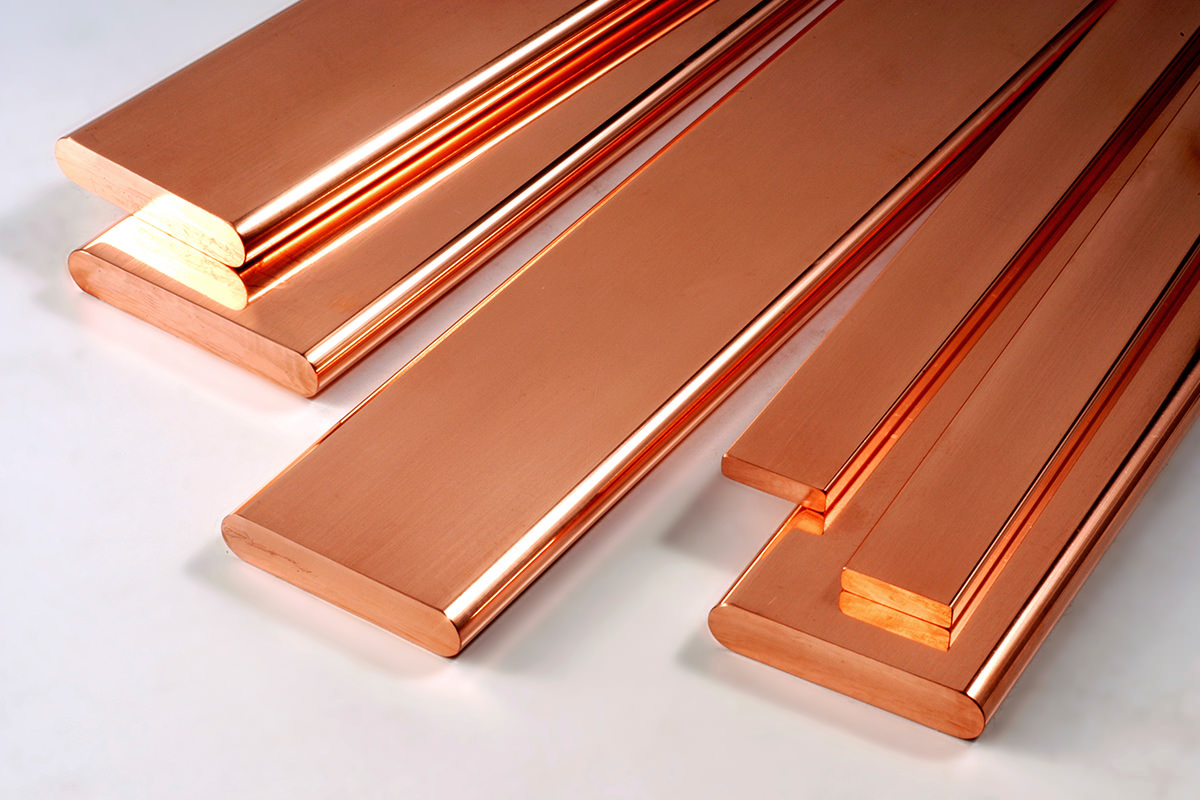
Copper Busbars
Copper busbars are essential components in electrical power distribution systems, widely used in switchgear, substations, panel boards, and industrial electrical installations. Known for their excellent electrical conductivity, thermal performance, and mechanical strength, copper busbars ensure efficient and reliable current distribution.
They play a critical role in modern electrical infrastructure by providing a safe, efficient, and compact solution for carrying high current loads.
What are Copper Busbars?
Copper busbars are solid strips or bars made of high-conductivity copper used to distribute electrical power within a system. They serve as a common connection point for multiple electrical circuits, ensuring efficient energy transfer with minimal losses.
Busbars are typically rectangular or flat in shape, allowing for better heat dissipation and ease of installation.
Types of Copper Busbars
- Flat Busbars: Most common type used in panels and switchgear
- Laminated Busbars: Insulated layers for improved performance and reduced inductance
- Flexible Busbars: Used in dynamic or vibration-prone applications
- Rigid Busbars: Used in fixed installations requiring high strength
Key Properties
- High electrical conductivity
- Excellent thermal conductivity
- Low electrical resistance
- Strong mechanical properties
- Corrosion resistance
Copper Grades Used
- C11000 – Electrolytic tough pitch (ETP) copper
- C10100 – Oxygen-free copper (OFHC)
Applicable Standards
- ASTM B187 – Copper bus bars, rods and shapes
- IEC 60439 – Low-voltage switchgear assemblies
- IS 613 – Copper busbars for electrical purposes
Dimensions and Sizes
| Width (mm) | Thickness (mm) | Application |
|---|---|---|
| 20 | 3 | Small panels |
| 40 | 5 | Medium distribution systems |
| 80 | 10 | High current applications |
| 100+ | 12+ | Industrial power systems |
Applications of Copper Busbars
Power Distribution Systems
- Electrical panels and switchgear
- Substations
Industrial Applications
- Manufacturing plants
- Heavy machinery power systems
Renewable Energy
- Solar power systems
- Wind energy installations
Data Centers
- High-capacity power distribution
Advantages of Copper Busbars
- High efficiency in power transmission
- Reduced energy losses
- Compact and space-saving design
- Easy installation and maintenance
- Long service life
Surface Finishes
- Bare copper
- Tin-plated copper
- Silver-plated copper
Quality Control
- Electrical conductivity testing
- Dimensional inspection
- Surface finish inspection
- Mechanical strength testing
Conclusion
Copper busbars are a vital component in modern electrical systems, offering superior conductivity, durability, and performance. Their wide application across industries highlights their importance in efficient and reliable power distribution.
By selecting the appropriate design, size, and finish, copper busbars ensure optimal electrical performance and long-term reliability in demanding environments.