Copper Coils – Complete Technical Guide, Standards, Sizes and Industrial Applications
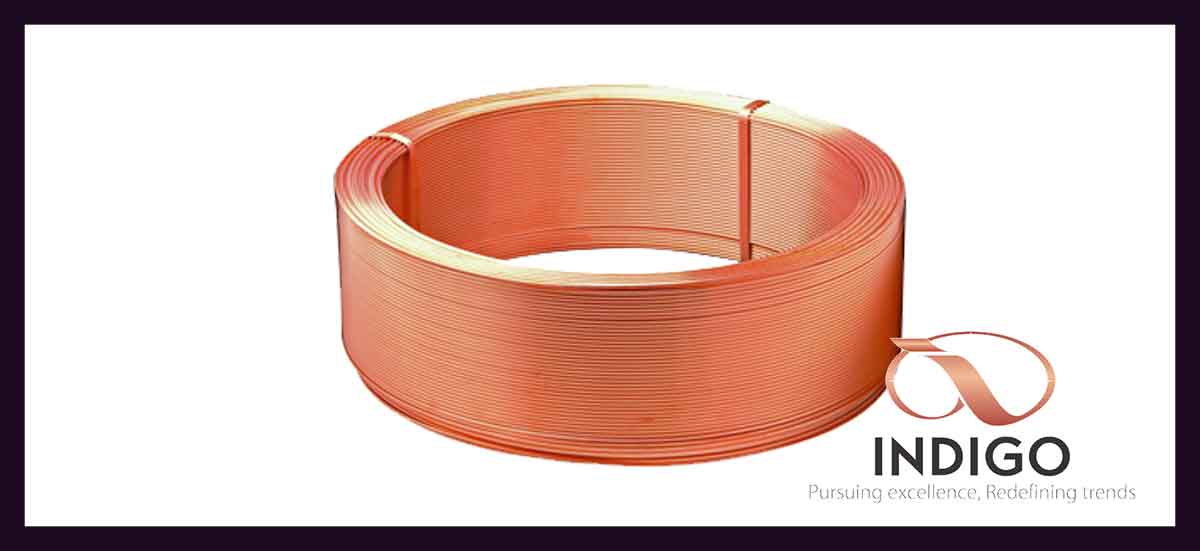
Copper coils are widely used in air-conditioning, refrigeration, heat exchangers, plumbing and industrial process systems where flexibility, high thermal conductivity and pressure resistance are essential. Supplied in level-wound or pancake coil form, they allow long continuous tube lengths with minimal joints, ensuring superior system reliability and reduced leakage risk.
In HVAC and refrigeration, coiled copper tubing is the backbone of refrigerant circuits, condenser coils and evaporator coils. In industrial sectors, it is used for heat transfer, hydraulic control, gas distribution and medical gas networks. The combination of corrosion resistance, formability and long service life makes copper coils a preferred solution for critical installations.
Material Properties
Copper offers excellent thermal conductivity, allowing rapid heat exchange in condensers and evaporators. Its smooth internal surface minimizes friction loss and prevents scale formation. High ductility enables tight bending radii without cracking, making it ideal for coil winding and compact heat exchanger design.
Types of Copper Coils
Level Wound Copper Coils
Manufactured with uniform layering and precise tension control, level wound coils provide consistent straightening during installation and are commonly used in VRF/VRV systems, split ACs and refrigeration lines.
Pancake Copper Coils
Flat wound coils used in residential air conditioners, heat pumps and refrigeration appliances where compact storage and easy handling are required.
Inner Grooved Copper Coils
Designed with micro-grooves on the internal surface to enhance heat transfer efficiency, widely used in high-efficiency air-conditioning and refrigeration systems.
Plain Copper Coils
Smooth bore coils used for water, gas, oil and industrial fluid transmission where pressure integrity and cleanliness are critical.
Manufacturing Process
Copper coils are produced by hot extrusion followed by multiple stages of cold drawing and annealing to achieve precise dimensions and mechanical properties. For inner-grooved tubes, special mandrel forming creates uniform internal fin geometry to improve heat transfer.
International Standards
- ASTM B280 – ACR copper tubing
- ASTM B88 – Water and plumbing applications
- EN 12735 – Refrigeration copper tubes
- EN 1057 – Water and gas
- JIS H3300 – Japanese specification
- IS 1545 / IS 2501 – Indian standards
Sizes and Wall Thickness
Copper coils are available from 1/4” to over 1-1/8” OD for HVAC and up to large diameters for industrial heat exchangers. Wall thickness is selected based on refrigerant pressure, temperature and safety margins defined by design codes.
Applications
HVAC & Refrigeration
- VRF and VRV systems
- Split and packaged air conditioners
- Chillers and cold storage
- Heat pumps and condensers
Heat Exchangers
- Shell and tube exchangers
- Evaporators and condensers
- Power plant cooling systems
Plumbing & Gas
- Hot and cold water distribution
- LPG and medical gas lines
- Solar thermal systems
Industrial & Marine
- Hydraulic control lines
- Seawater cooling systems
- Instrumentation tubing
Insulation and Protection
Copper coils are often supplied with factory-applied PE or elastomeric insulation to reduce heat loss, prevent condensation and protect against external corrosion in HVAC installations.
Quality Control and Testing
Each coil undergoes chemical composition analysis, eddy current testing, dimensional inspection and hydrostatic pressure testing. Cleanliness and moisture levels are strictly controlled for refrigeration service.
Conclusion
Copper coils remain essential for modern thermal and fluid systems due to their heat transfer efficiency, flexibility, strength and long-term reliability. Whether in inner-grooved form for high-efficiency air-conditioning or plain coils for industrial fluid transport, copper continues to be the preferred material for high-performance and safety-critical applications worldwide.