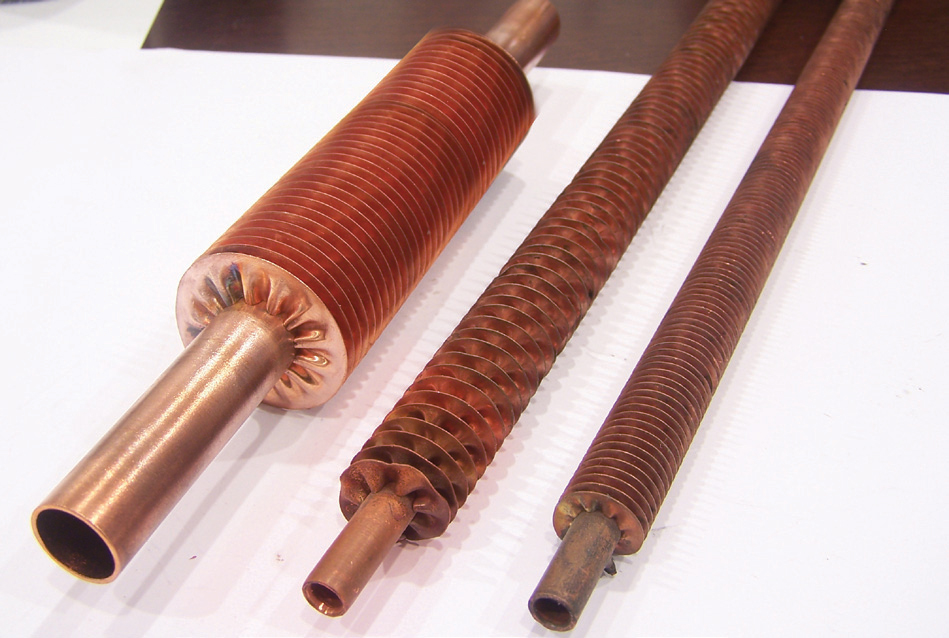
Copper Finned Tubes – Types, Manufacturing and Heat Exchanger Applications
Copper finned tubes are high-efficiency heat transfer components widely used in heat exchangers, condensers, evaporators, air coolers and industrial thermal systems. By increasing the external surface area of a copper tube through fins, these tubes significantly enhance heat transfer rates between fluids and surrounding air or gases.
Due to copper’s excellent thermal conductivity and corrosion resistance, copper finned tubes are preferred in HVAC, power plants, refineries, petrochemical units, marine systems and industrial process equipment where efficient and reliable heat exchange is critical.
Why Copper is Ideal for Finned Tubes
Copper offers superior thermal conductivity compared to most engineering metals, allowing rapid heat transfer across tube walls. When combined with extended surfaces such as fins, copper finned tubes deliver high thermal efficiency even under compact design constraints.
In addition, copper’s corrosion resistance, ease of fabrication and compatibility with various fluids make it suitable for long-term service in demanding operating environments.
Types of Copper Finned Tubes
Integral Low Fin Copper Tubes
Integral low fin tubes are manufactured by rolling or extrusion, where fins are formed directly from the parent tube material. These fins are permanent, uniform and provide excellent thermal contact, making them ideal for high-performance heat exchangers.
Embedded Fin Copper Tubes
In embedded fin tubes, a continuous fin strip is embedded into a groove machined on the tube surface. This design ensures strong mechanical bonding and efficient heat transfer.
Wrapped Fin Copper Tubes
Wrapped fin tubes are produced by helically winding a fin strip around the copper tube and securing it mechanically. This type offers flexibility in fin material selection and is commonly used in air-cooled heat exchangers.
Plain and Inner Grooved Combinations
Copper finned tubes can also be combined with inner grooved or enhanced internal surfaces to maximize heat transfer on both the internal and external sides of the tube.
Manufacturing Process
Copper finned tubes begin with high-quality copper tubes produced through extrusion and cold drawing processes. Depending on the fin type, fins are formed by rolling, embedding or wrapping using precision machinery to ensure consistent fin height, pitch and bonding.
Post-manufacturing processes include stress relieving, dimensional inspection and surface finishing to ensure mechanical integrity and thermal performance.
Materials and Copper Grades
Common copper grades used for finned tubes include:
- C12200 – Phosphorus Deoxidized Copper
- C10200 – Oxygen-Free High Conductivity Copper
- C11000 – Electrolytic Tough Pitch Copper
Grade selection depends on application requirements, operating temperature, corrosion exposure and joining methods.
Applicable Standards
- ASTM B111 – Copper and copper alloy condenser tubes
- ASTM B359 – Copper finned tubes
- EN 12451 – Copper and copper alloy tubes for heat exchangers
- EN 12735 – Copper tubes for refrigeration
- JIS H3300 – Copper tubes
Dimensions and Fin Parameters
Copper finned tubes are available in a wide range of outer diameters, typically from 12 mm to 50 mm or more depending on application. Fin height, fin density (fins per inch) and fin thickness are customized to meet specific thermal performance requirements.
Tube lengths can be supplied in straight lengths or cut-to-size as required by heat exchanger design.
Applications of Copper Finned Tubes
HVAC & Refrigeration
- Condensers and evaporators
- Air-cooled heat exchangers
- Chillers and refrigeration units
Power & Energy
- Power plant condensers
- Heat recovery systems
- Thermal power cooling circuits
Refinery & Petrochemical
- Process heat exchangers
- Gas coolers and heaters
- Waste heat recovery units
Marine & Industrial
- Marine cooling systems
- Industrial air heaters
- Oil and gas processing equipment
Advantages of Copper Finned Tubes
- High heat transfer efficiency
- Compact heat exchanger design
- Excellent corrosion resistance
- Long service life
- Compatibility with multiple fluids
Quality Control and Testing
Copper finned tubes undergo stringent quality control including dimensional inspection, fin bonding verification, eddy current testing and visual examination. Thermal performance checks may also be conducted to ensure compliance with design requirements.
Strict adherence to international standards ensures reliable performance and durability in critical heat transfer applications.
Conclusion
Copper finned tubes are a vital component in modern heat transfer technology, offering superior thermal efficiency, reliability and versatility across HVAC, power, refinery and industrial applications. Their ability to enhance heat transfer while maintaining durability makes them an essential choice for high-performance heat exchanger systems.
Manufactured to precise specifications and backed by rigorous quality control, copper finned tubes continue to support efficient thermal management in demanding industrial environments worldwide.