Copper Fittings – Types, Standards, Sizes and Industrial Applications
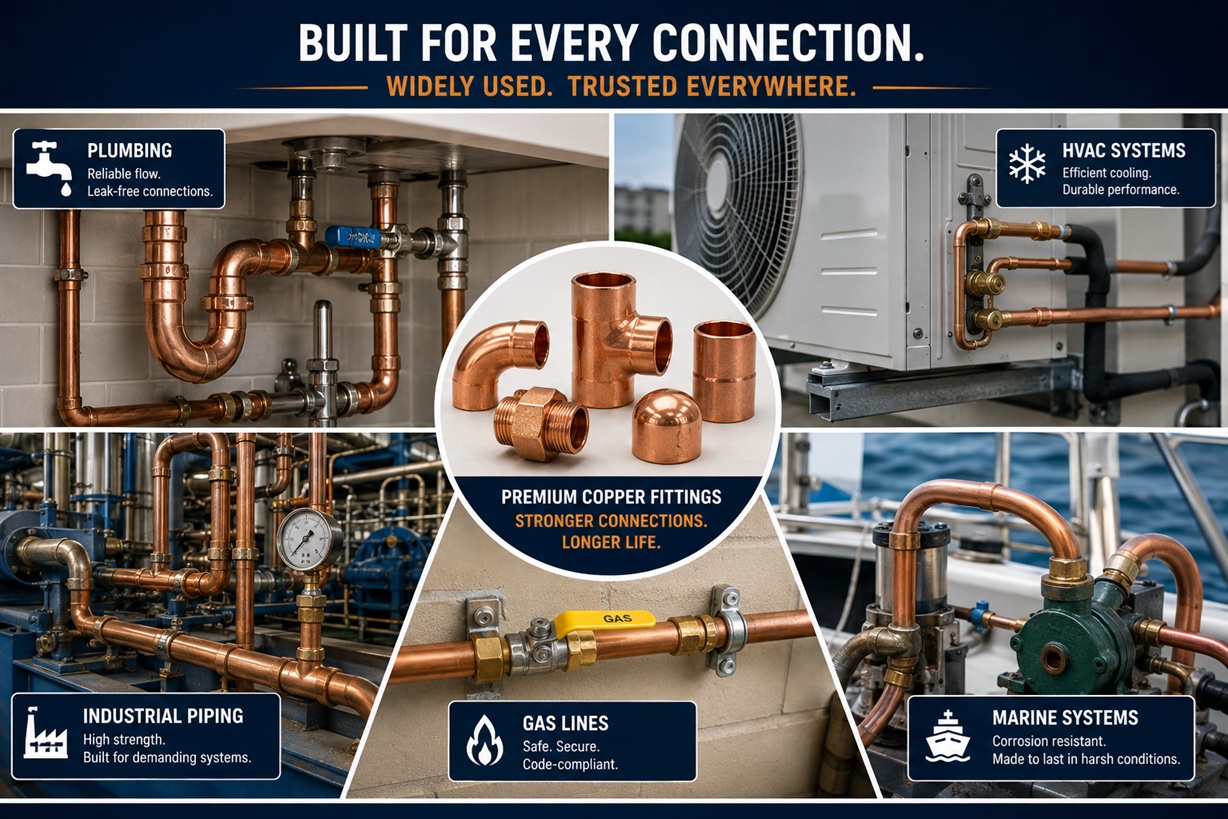
Copper fittings are essential components used to connect, redirect, branch or terminate copper piping systems across HVAC, plumbing, gas distribution, medical, power, refinery and marine industries. Designed to provide leak-proof, durable and corrosion-resistant joints, copper fittings play a critical role in maintaining system integrity under varying pressures and temperatures.
Manufactured to precise dimensional tolerances and international standards, copper fittings ensure compatibility with copper tubes and pipes while offering long service life and excellent performance in both residential and heavy industrial environments. Their superior thermal conductivity, antimicrobial properties and mechanical strength make them a preferred choice for critical fluid and gas handling systems.
Material Properties of Copper Fittings
Copper fittings are typically manufactured from high-purity copper grades such as C12200 (phosphorus-deoxidized copper) or equivalent grades defined by ASTM, EN, JIS and IS standards. These materials offer an optimal balance of strength, ductility and corrosion resistance.
The inherent properties of copper allow fittings to withstand high internal pressures, temperature fluctuations and aggressive operating environments. Copper’s natural resistance to biofouling and microbial growth further enhances its suitability for potable water, medical gas and HVAC applications.
Types of Copper Fittings
Copper Elbows
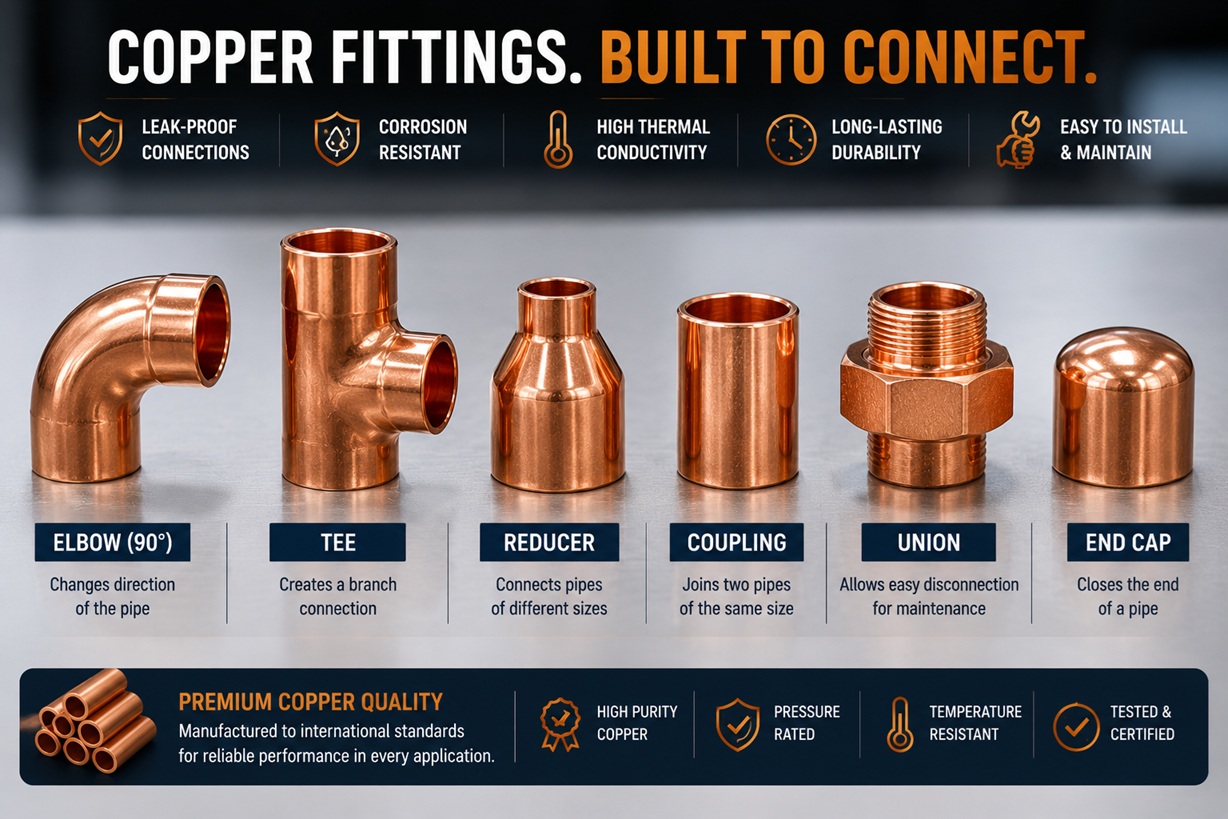
Copper elbows are used to change the direction of piping systems, typically available in 45° and 90° angles. These fittings are widely used in HVAC refrigerant lines, plumbing systems and industrial piping where directional changes are required without compromising flow efficiency.
Copper Tees
Copper tees allow branching of pipelines into two directions. Equal tees and reducing tees are used extensively in plumbing distribution networks, gas pipelines and hydraulic systems to maintain controlled flow distribution.
Copper Couplings
Couplings are straight connectors used to join two copper tubes of the same or different diameters. Available as straight couplings and reducing couplings, they are critical in extending pipe runs and repairing damaged sections.
Copper Reducers
Reducers facilitate the transition between different pipe diameters while maintaining system pressure and flow characteristics. These fittings are commonly used in HVAC, refrigeration and industrial process lines.
Copper End Caps
End caps are used to terminate copper pipelines securely. They are commonly applied in plumbing, gas and industrial installations to seal unused or future expansion points.
Copper U-Bends and Return Bends
Used extensively in heat exchangers, condensers and evaporators, U-bends and return bends help create compact and efficient heat transfer circuits.
Manufacturing Process
Copper fittings are manufactured using advanced forging, extrusion or drawing processes followed by precision machining to achieve accurate dimensions and smooth internal surfaces. Controlled annealing processes ensure optimal mechanical properties and ease of installation.
Each fitting undergoes rigorous dimensional inspection and surface finishing to ensure compatibility with soldering, brazing or press-fit installation methods. Cleanliness is strictly controlled for refrigeration and medical gas applications.
Joining Methods for Copper Fittings
Soldered Joints
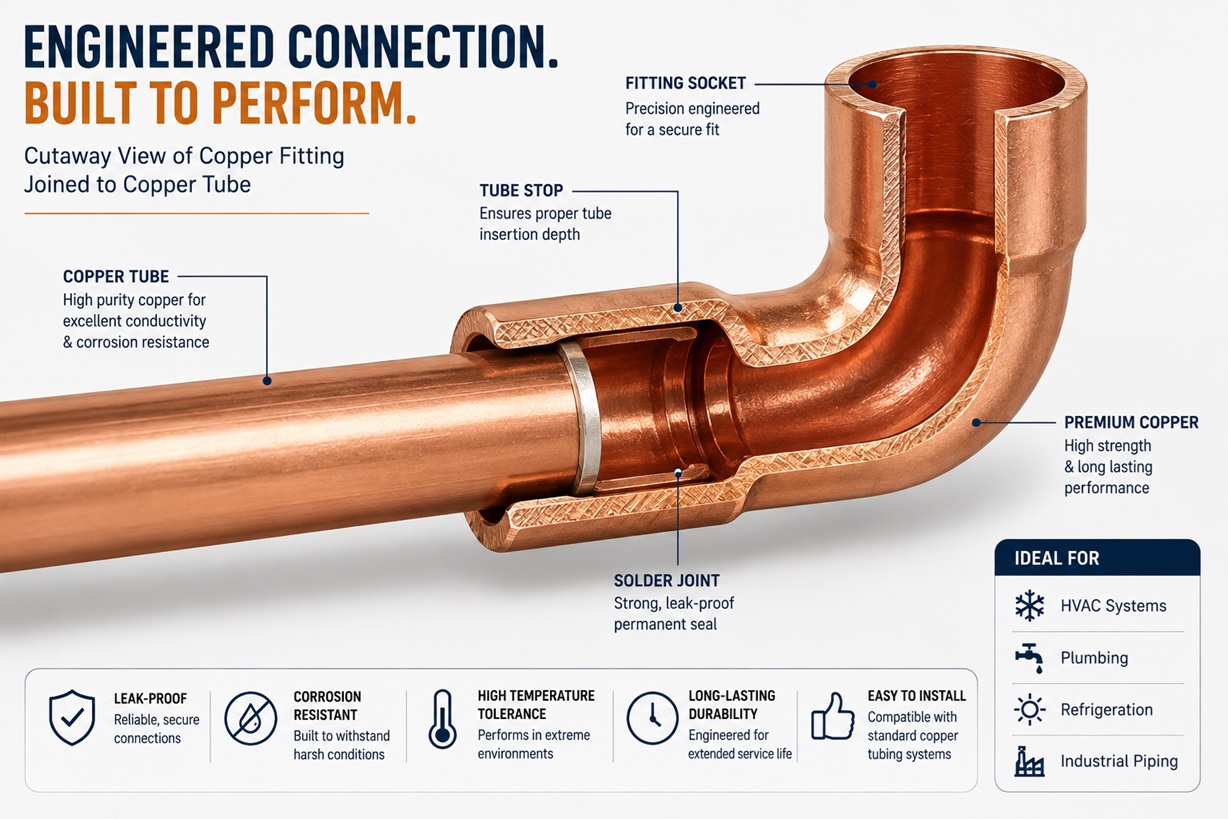
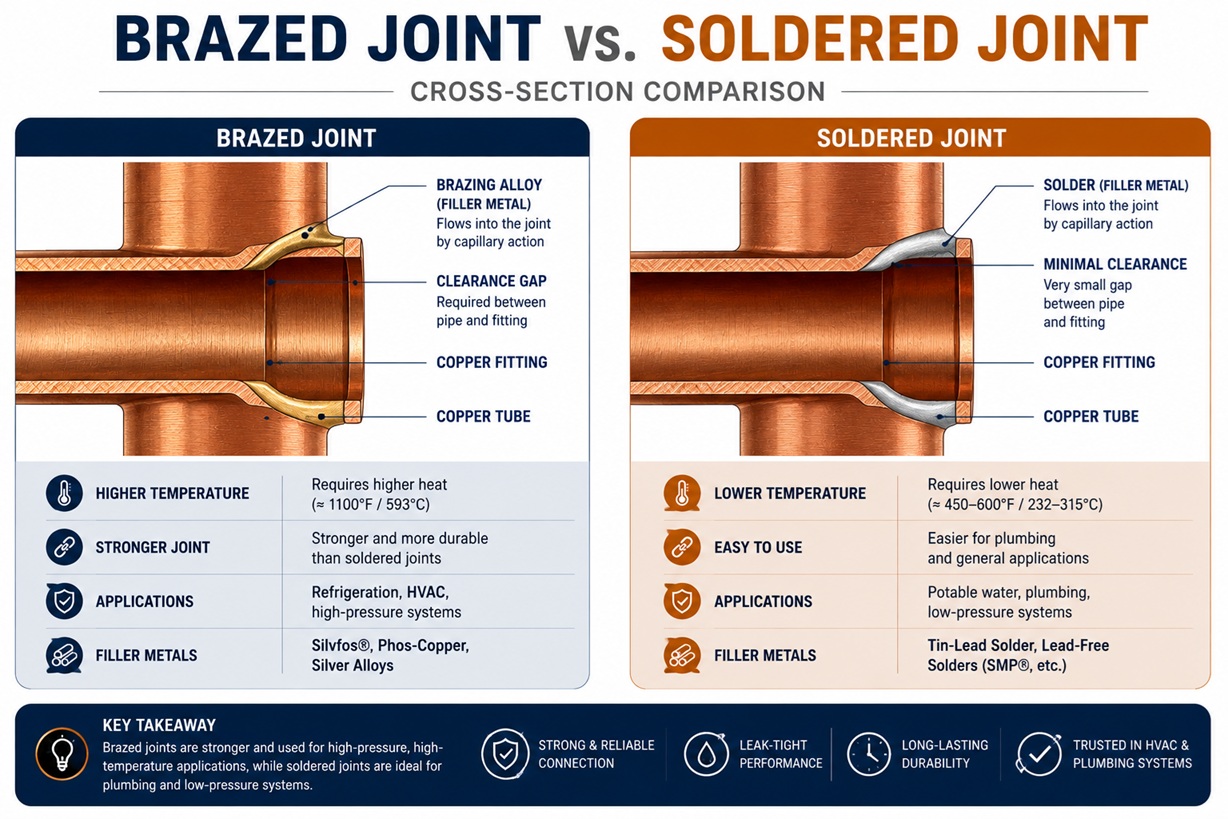
Soldering is commonly used for low-pressure plumbing and water systems. Lead-free solders are applied to ensure compliance with potable water regulations.
Brazed Joints
Brazing provides stronger joints suitable for high-pressure HVAC, refrigeration and gas applications. Silver-based brazing alloys are commonly used.
Press-Fit Connections
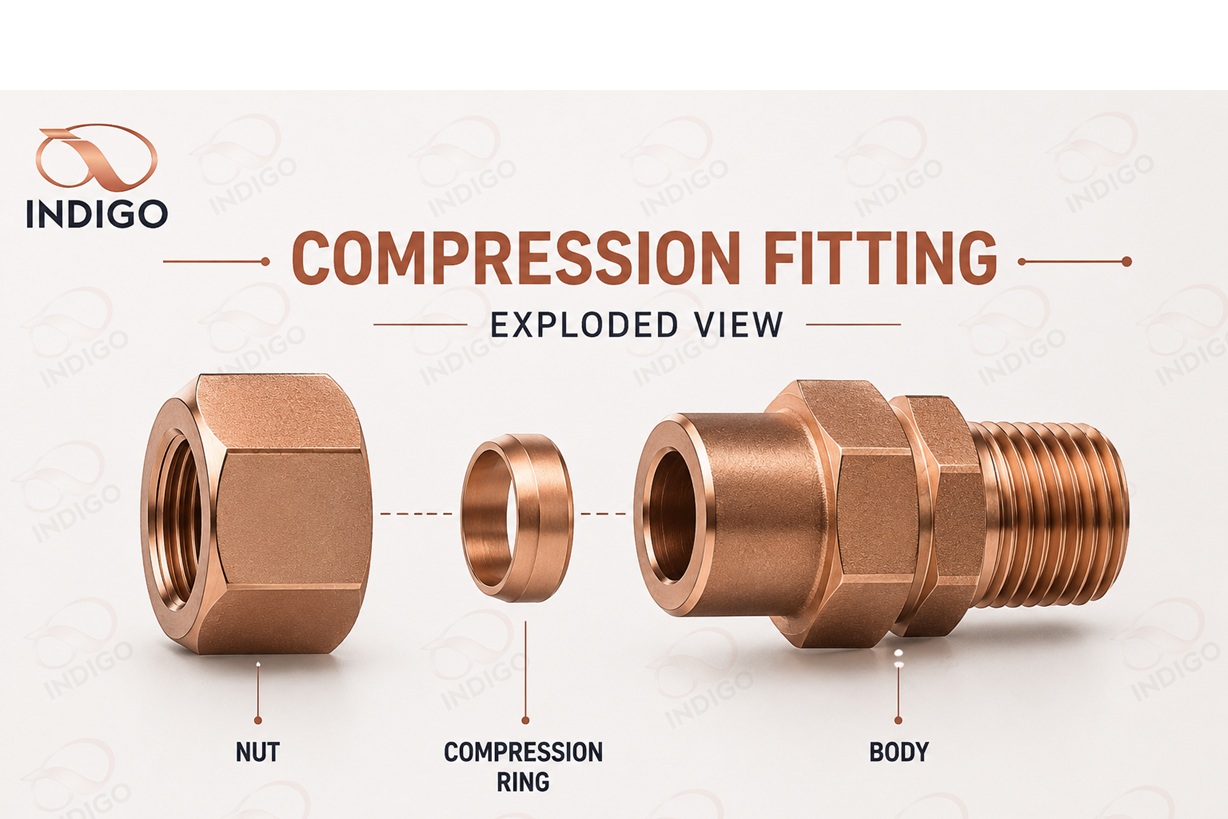
Modern press-fit copper fittings allow quick, flame-free installation using specialized tools, improving safety and reducing installation time in commercial projects.
International Standards for Copper Fittings
- ASTM B16 – Free-cutting copper alloys
- ASTM B62 / B584 – Copper alloy fittings
- EN 1254 – Copper and copper alloy fittings
- EN 1057 – Copper tubes and fittings for water and gas
- JIS H3300 / JIS B2312 – Japanese specifications
- IS 381 / IS 1545 – Indian standards
Sizes and Dimensional Range
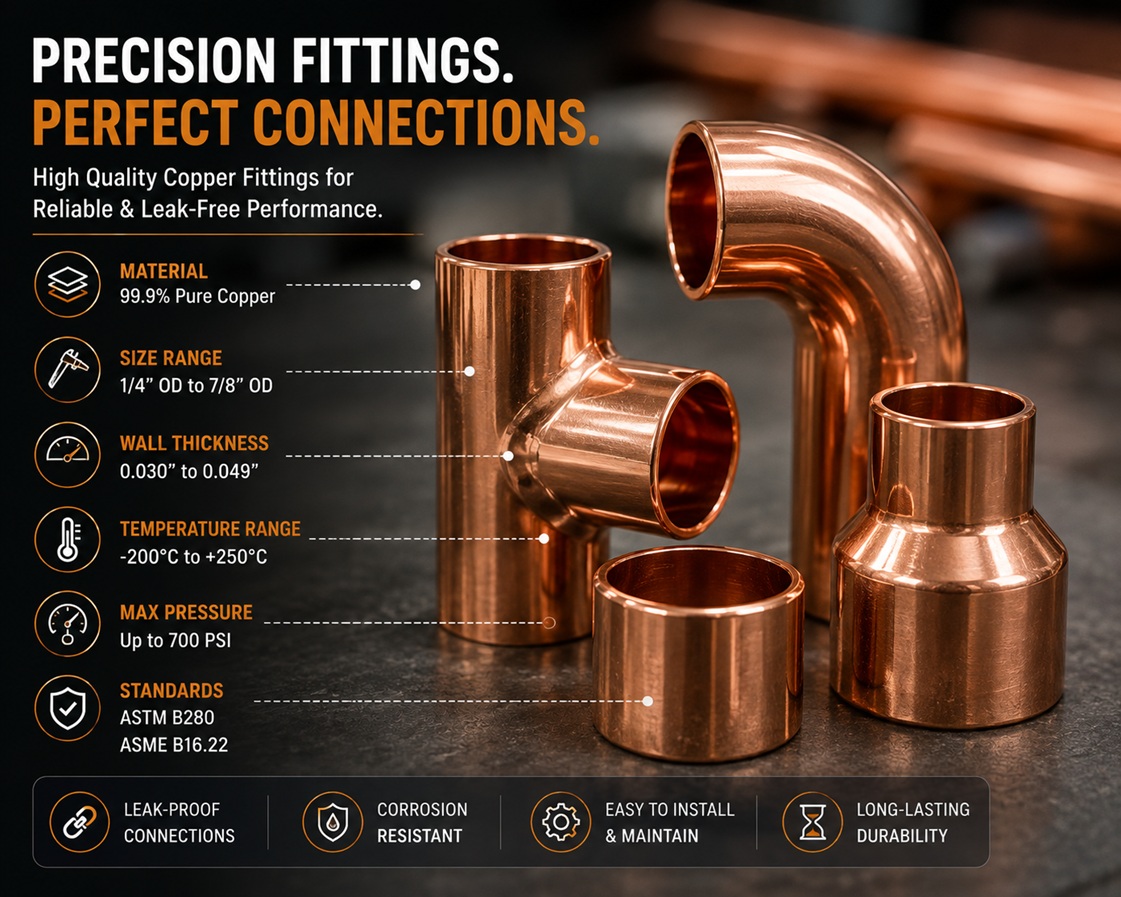
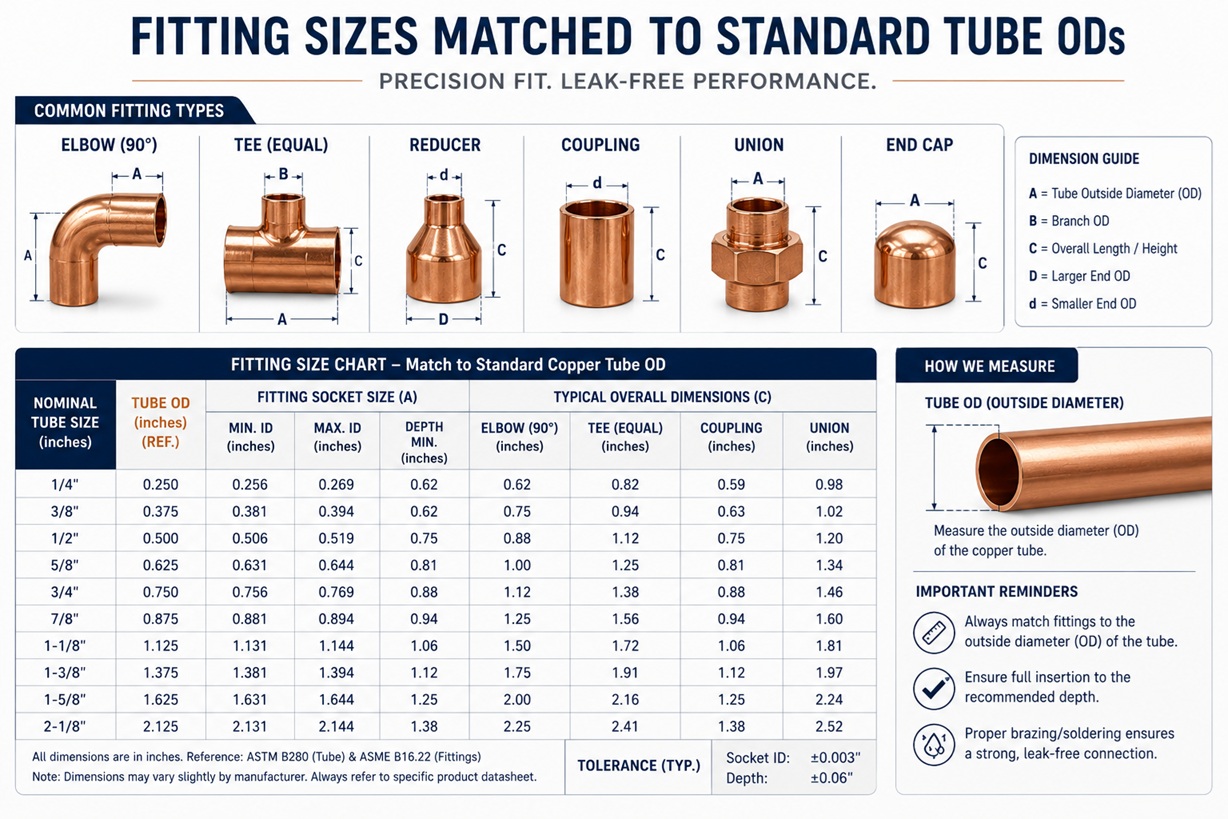
Copper fittings are available in sizes ranging from small diameters used in residential plumbing to large diameters required for industrial and power plant piping systems. Sizes are designed to match standard copper tube outer diameters, ensuring secure and reliable connections.
Wall thickness and pressure ratings vary depending on the application, system design and applicable codes. Manufacturers supply fittings in both standard and custom dimensions to meet project-specific requirements.
Applications of Copper Fittings
HVAC & Refrigeration
- Refrigerant piping systems
- Condensers and evaporators
- VRF and VRV installations
- Heat pumps and chillers
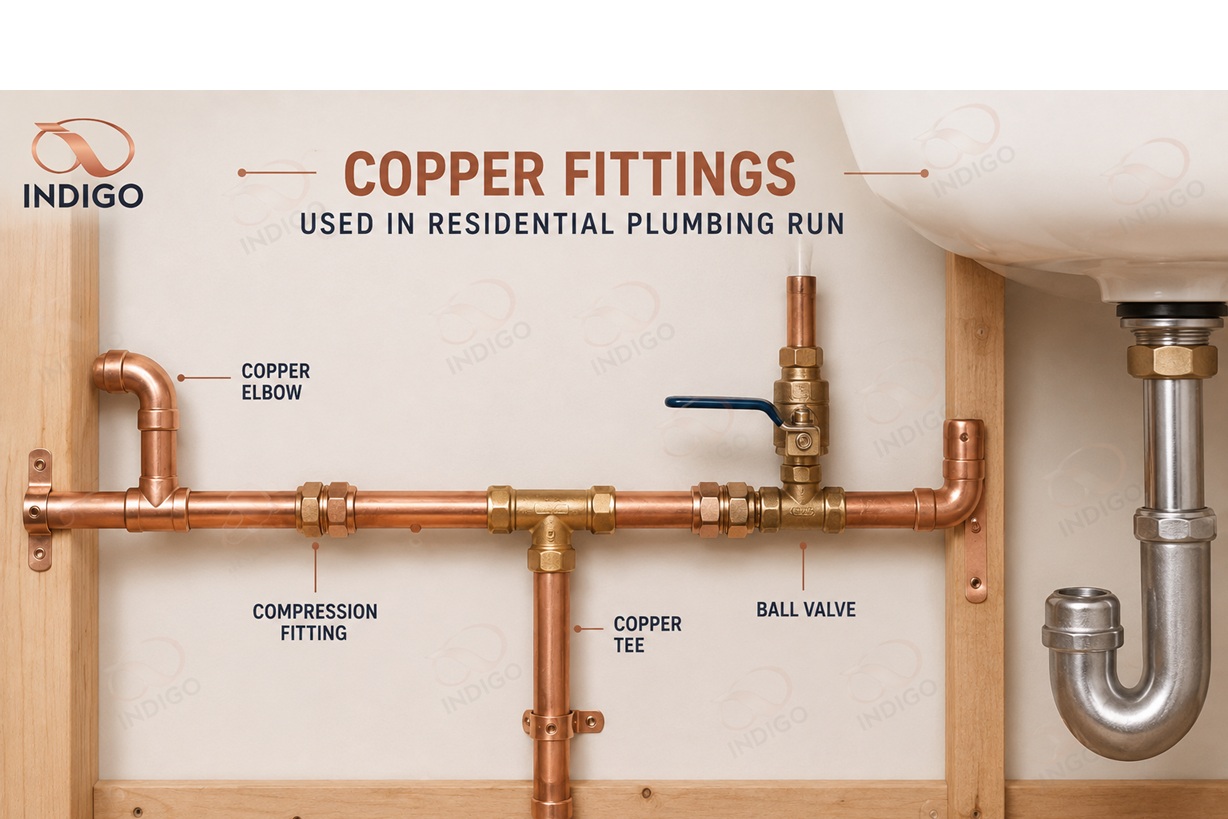
Plumbing & Water Systems
- Potable water distribution
- Hot and cold water lines
- Solar water heating systems
Gas & Medical Systems
- LPG and natural gas pipelines
- Medical oxygen and vacuum lines
- Laboratory gas distribution
Industrial, Power & Marine
- Hydraulic and pneumatic lines
- Power plant cooling systems
- Refinery and process piping
- Marine and offshore installations
Quality Control and Testing
Copper fittings are subjected to stringent quality control procedures including chemical composition analysis, dimensional inspection, pressure testing and visual examination. For refrigeration and medical applications, cleanliness and moisture content are tightly controlled.
Compliance with international standards ensures consistent performance, long-term reliability and safety in demanding operational environments.
Conclusion
Copper fittings are indispensable components in modern piping systems, offering unmatched reliability, corrosion resistance and versatility across a wide range of industries. Their compatibility with copper tubes, ease of installation and long service life make them the preferred choice for HVAC, plumbing, gas, medical and industrial applications worldwide.
With strict adherence to international standards and advanced manufacturing practices, high-quality copper fittings continue to support safe, efficient and sustainable fluid and gas transport systems across global infrastructure projects.