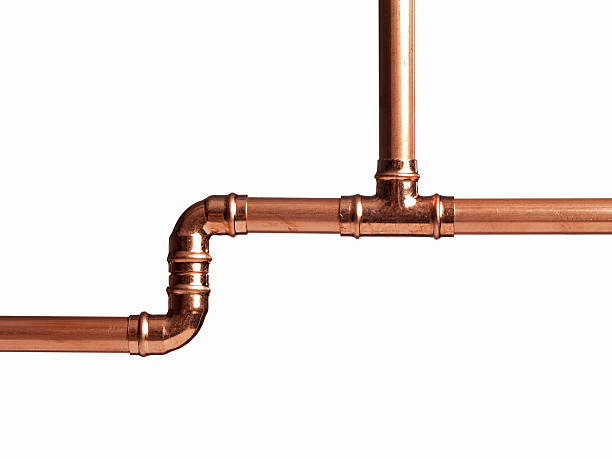
Copper Gas Line – Standards, Types and Industrial Applications
Copper gas line systems are widely used for the safe and efficient transportation of gaseous fuels and specialty gases in residential, commercial and industrial installations. Due to their excellent corrosion resistance, pressure-handling capability and long service life, copper gas lines are commonly specified for LPG, natural gas, medical gases and industrial gas distribution networks.
Manufactured from high-quality copper grades and installed in accordance with international safety standards, copper gas lines provide leak-tight performance and reliability in critical applications where gas integrity and safety are paramount.
Why Copper is Used for Gas Lines
Copper offers unique advantages that make it suitable for gas distribution systems. Its non-permeable structure prevents gas leakage, while its corrosion resistance ensures durability even in aggressive environments. Copper also maintains its mechanical strength over a wide temperature range, making it suitable for both indoor and outdoor installations.
In addition, copper’s workability allows for easy bending and routing, reducing the number of joints and potential leak points in gas piping systems.
Grades of Copper Used for Gas Lines
Copper gas lines are typically manufactured using phosphorus-deoxidized copper to ensure weldability and resistance to hydrogen embrittlement.
- C12200 – Phosphorus Deoxidized Copper
- C12000 – Low Residual Phosphorus Copper
These grades comply with global gas piping standards and provide excellent performance under pressure and thermal cycling.
Manufacturing Process
Copper gas pipes are produced through extrusion and cold drawing processes to achieve precise outer diameters, wall thicknesses and smooth internal surfaces. Controlled annealing ensures optimal ductility and strength for installation and long-term service.
Each pipe undergoes stringent inspection and testing to ensure compliance with dimensional, mechanical and chemical requirements specified by applicable standards.
Standards and Codes for Copper Gas Lines
- ASTM B88 – Copper pipe for water and gas service
- EN 1057 – Copper and copper alloy pipes for water and gas
- EN 12735 – Copper tubes for refrigeration and gas
- IS 1545 – Copper pipes for gas and water
- NFPA 54 / ANSI Z223.1 – Fuel gas code
- ISO 7396 – Medical gas pipeline systems
Sizes and Wall Thickness
Copper gas lines are available in a wide range of sizes, typically from 6 mm to 108 mm outer diameter depending on application requirements. Wall thickness is selected based on operating pressure, gas type and safety factors defined by national and international codes.
Pipes can be supplied in straight lengths or coils for ease of installation and reduced jointing.
Joining Methods for Copper Gas Lines
Brazing
Brazing is the most commonly used joining method for copper gas lines, providing strong, leak-tight joints suitable for high-pressure gas systems.
Compression Fittings
Compression fittings are used in specific low-pressure applications where permitted by local codes, offering ease of installation and maintenance.
Press-Fit Systems
Press-fit copper gas systems provide flame-free installation and are increasingly used in commercial and medical gas installations.
Applications of Copper Gas Lines
LPG and Natural Gas
- Residential and commercial gas supply
- Industrial burners and furnaces
- Hotel and kitchen gas systems
Medical Gas Systems
- Oxygen and vacuum pipelines
- Nitrous oxide and medical air systems
- Hospital and laboratory gas networks
Industrial and Specialty Gases
- Compressed air and nitrogen lines
- Process gas distribution
- Instrumentation gas systems
Advantages of Copper Gas Lines
- Excellent corrosion resistance
- High pressure and temperature capability
- Long service life with minimal maintenance
- Leak-tight and non-permeable
- Compliance with global safety standards
Quality Control and Testing
Copper gas lines undergo comprehensive quality control including chemical composition analysis, eddy current testing, hydrostatic pressure testing and visual inspection. Cleanliness and surface condition are carefully monitored to ensure safe gas transport.
Adherence to international standards ensures consistent quality, safety and long-term reliability in gas distribution systems.
Conclusion
Copper gas line systems provide a safe, reliable and durable solution for gas distribution across residential, commercial and industrial sectors. Their superior material properties, compliance with stringent safety codes and ease of installation make copper gas lines the preferred choice for critical gas piping applications worldwide.
Manufactured to global standards and supported by rigorous quality control, copper gas lines continue to play a vital role in modern energy, medical and industrial gas infrastructure.