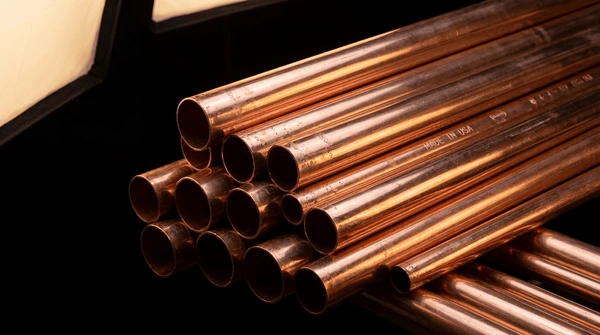
Copper Lines
Copper lines are essential components in modern piping systems, widely used in HVAC, plumbing, refrigeration, gas distribution, and industrial applications. Known for their excellent corrosion resistance, durability, and thermal conductivity, copper lines provide efficient and reliable transport of fluids and gases.
From residential installations to large-scale industrial systems, copper lines ensure long-term performance, safety, and efficiency, making them a preferred choice for engineers, contractors, and manufacturers.
What are Copper Lines?
Copper lines refer to copper pipes or tubes used for transporting liquids or gases in various systems. These lines can be in the form of rigid pipes or flexible tubing, depending on the application and installation requirements.
They are commonly used in water supply systems, air conditioning units, refrigeration systems, and gas pipelines.
Types of Copper Lines
- Plumbing Lines: Used for hot and cold water supply
- HVAC Lines: Used in heating and cooling systems
- Refrigeration Lines: Used for refrigerant transport
- Gas Lines: Used for LPG, CNG and medical gases
Key Properties
- Excellent corrosion resistance
- High thermal conductivity
- Strong and durable material
- Leak-proof and reliable performance
- Antimicrobial properties
Copper Grades Used
- C12200 – Phosphorus-deoxidized copper (DHP)
- C12000 – Low residual phosphorus copper
- C10100 – Oxygen-free copper (OFHC)
Applicable Standards
- ASTM B88 – Copper water tubes
- ASTM B280 – Copper tubing for HVAC
- EN 1057 – Copper tubes for water and gas
- IS 1545 – Copper tubes for plumbing and LPG systems
Applications of Copper Lines
Plumbing Systems
- Hot and cold water distribution
- Potable water systems
HVAC Systems
- Air conditioning pipelines
- Heating systems
Refrigeration
- Refrigerant transport lines
Gas Distribution
- LPG and CNG systems
- Medical gas pipelines
Industrial Applications
- Process piping
- Utility fluid transport
Advantages of Copper Lines
- Long service life
- Low maintenance requirements
- High efficiency and performance
- Easy installation and fabrication
- Environmentally friendly and recyclable
Installation Methods
- Soldering
- Brazing
- Compression fittings
- Press-fit systems
Quality Control
- Chemical composition testing
- Dimensional inspection
- Pressure testing
- Eddy current testing
Conclusion
Copper lines are a critical component in modern infrastructure, offering unmatched reliability, durability, and performance. Their wide range of applications across industries highlights their importance in efficient fluid and gas transport systems.
By selecting the right type, adhering to standards, and ensuring proper installation, copper lines deliver long-term, maintenance-free performance in even the most demanding environments.