Introduction
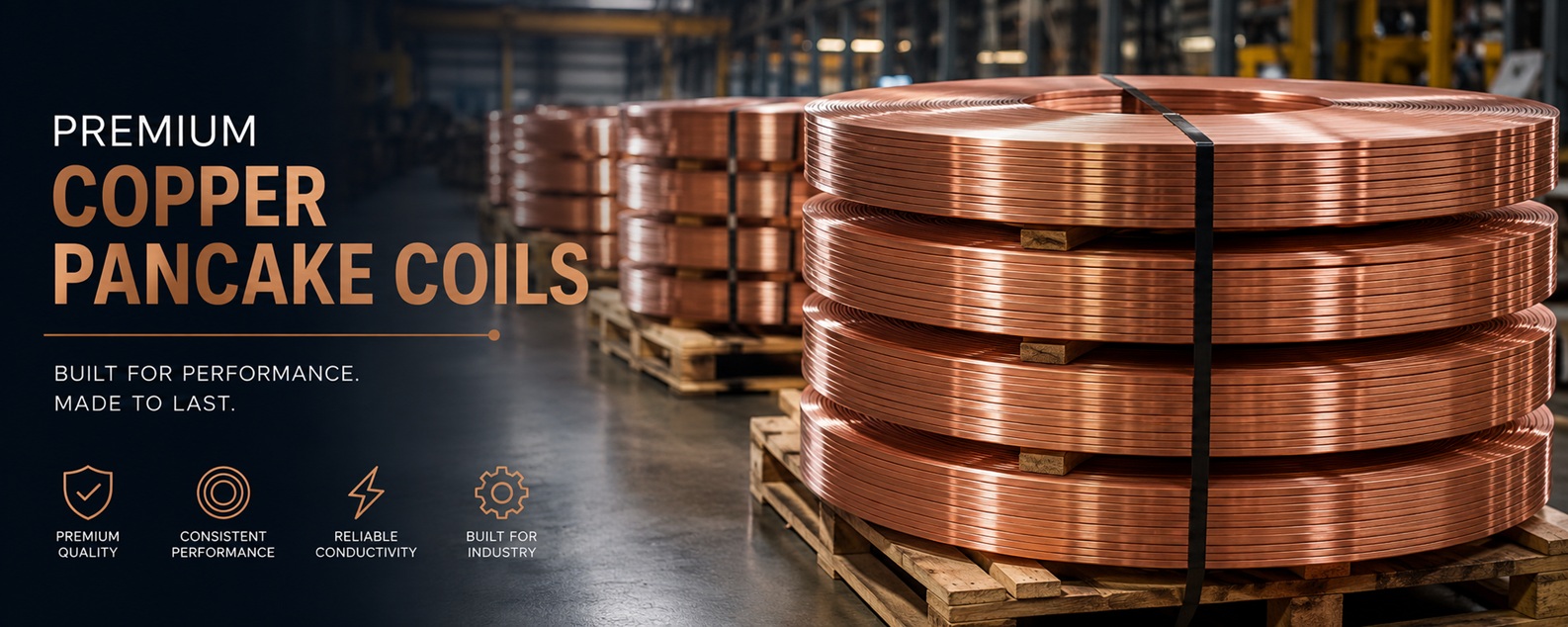
If you've ever watched a technician install a split air conditioner, you've probably seen them unroll a flat, tightly wound disc of copper tubing before running it through a wall. That product is a copper pancake coil, and it's one of the most widely used forms of tubing in modern HVAC and refrigeration work. Its flat, stackable shape makes it easy to transport and store, while its soft, flexible temper lets installers route it through walls, ceilings, and equipment cavities with minimal joints and fittings.
Despite how common it is on job sites, the copper pancake coil is often treated as a generic commodity rather than the precisely engineered product it actually is. Wall thickness, annealing quality, internal cleanliness, and coil length all affect how well a system performs once it's sealed and running refrigerant. This guide breaks down what a copper pancake coil is, the different forms it comes in, where it's used across AC, HVAC, and refrigeration systems, and what to look for when sourcing from a manufacturer, supplier, or exporter.
What is a copper pancake coil?
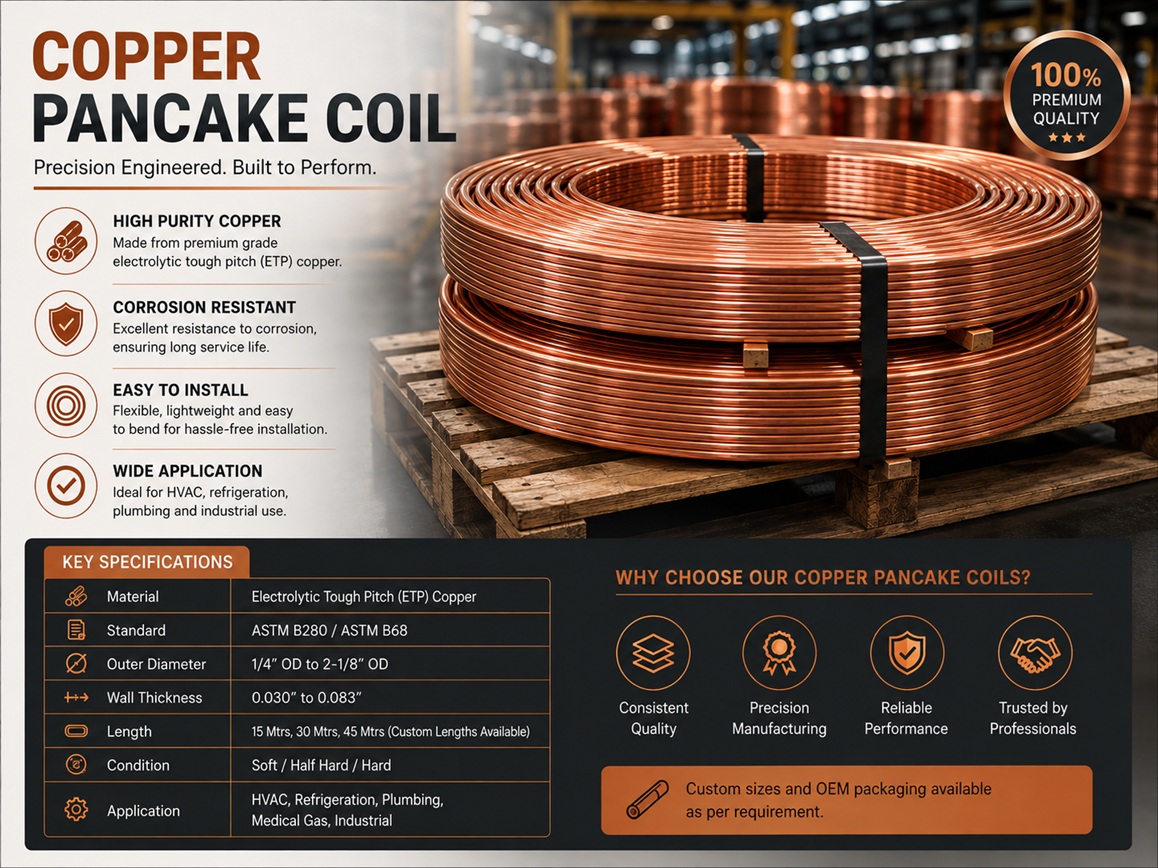
A copper pancake coil is seamless copper tubing wound flat into a disc shape, rather than coiled upright into a tall cylindrical spool. This flat-wound format is where the name comes from, and it's a deliberate design choice: pancake coils stack neatly on pallets, take up less vertical space in storage, and are easier to handle during shipping compared to bulkier coil formats carrying the same tube length.
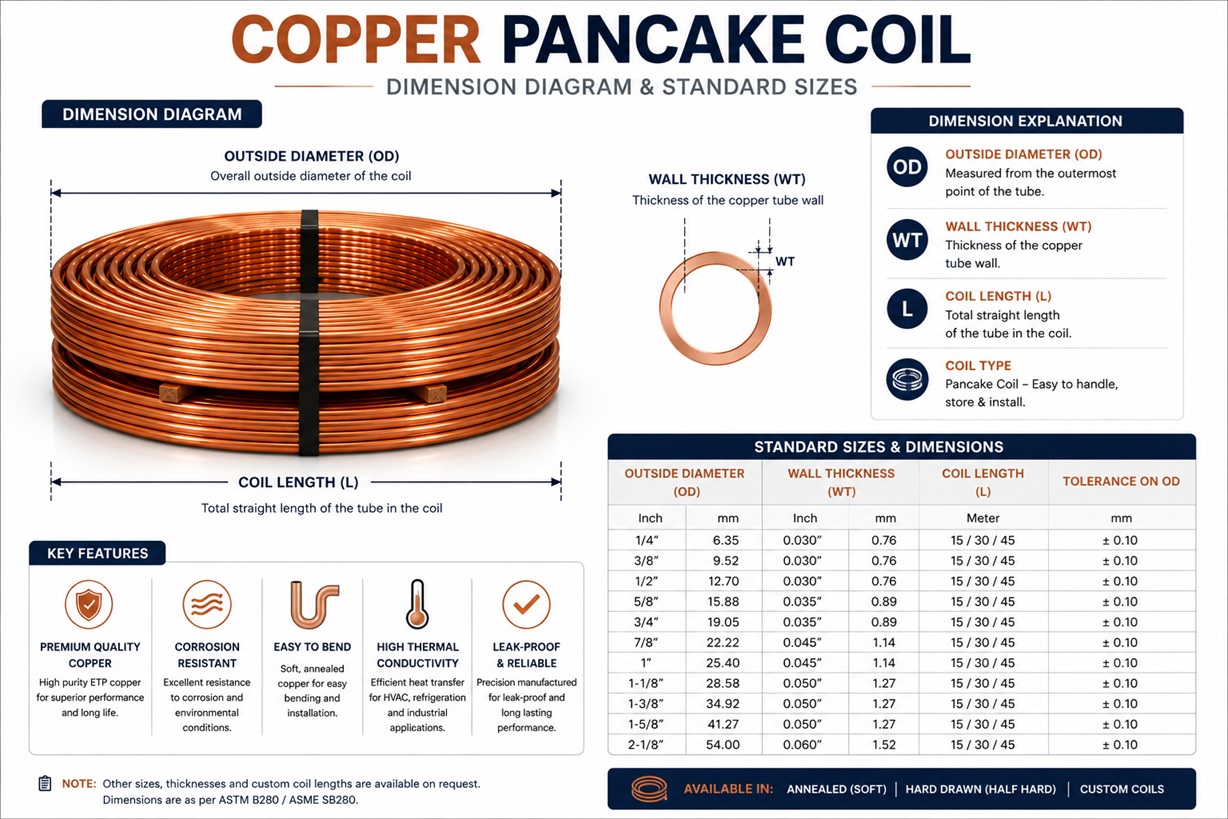
Three dimensions define a pancake coil's specifications: outside diameter (OD) of the tube itself, wall thickness, and the overall coil diameter and length once wound. These measurements determine the coil's pressure rating, flow capacity, and how easily it can be unwound and bent on-site without kinking or restricting internal flow.
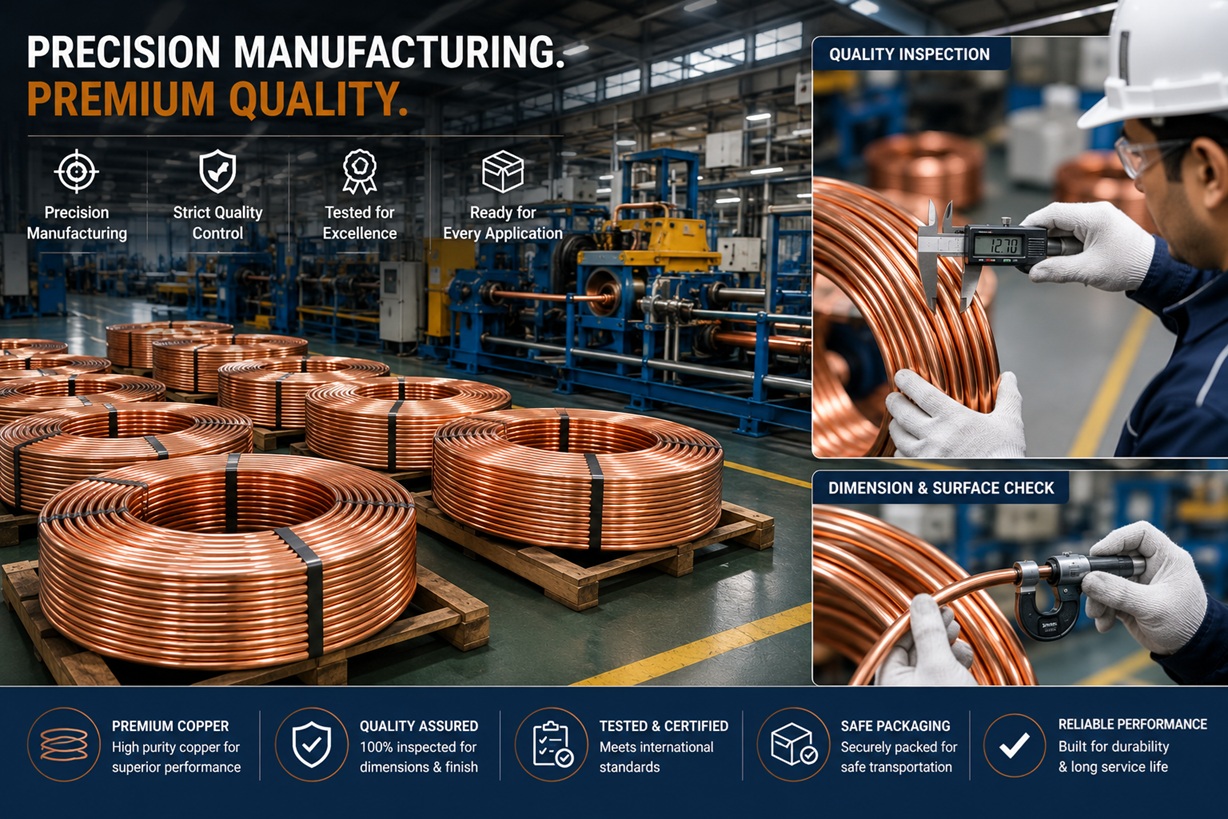
Pancake coils are manufactured from high-purity copper, drawn into a seamless tube, and then fully annealed, a heat-treatment process that softens the metal's grain structure. This annealing step is what gives a pancake coil its defining trait: the flexibility to be bent by hand or with a simple tubing bender, without the tube cracking or springing back to its original shape. The refrigeration-grade pancake coil also undergoes internal cleaning and dehydration during manufacturing, then is capped at both ends to keep the bore free of moisture and contaminants until installation.
Key Features & Benefits of Copper Pancake Coils
The copper pancake coil has become the default tubing format for refrigerant lines for a handful of practical reasons that show up directly on the job site.
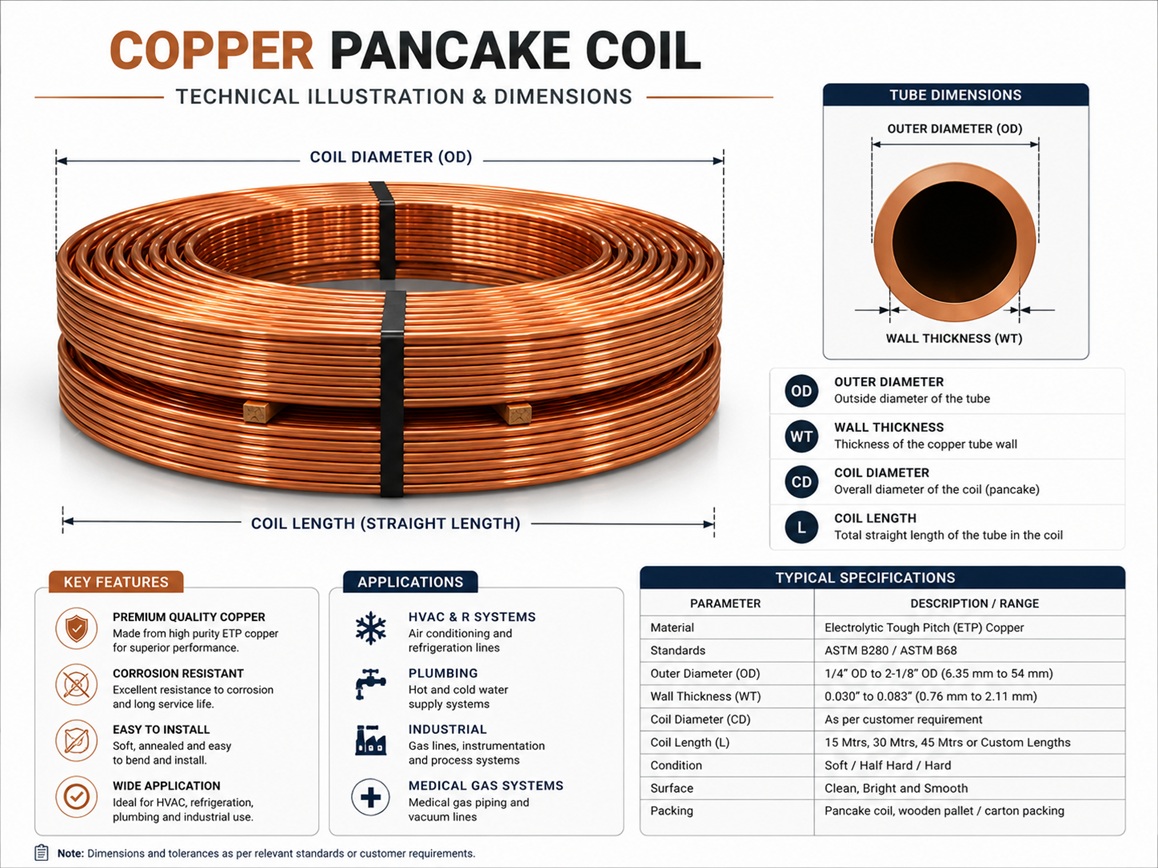
Flexibility is the standout benefit. Because pancake coil is supplied in a soft, annealed temper, it can be unrolled and bent around obstacles, through wall cavities, and around tight equipment spaces without needing extra fittings at every turn.
Annealed construction means the copper has been heat-treated to relieve internal stress, allowing it to be worked repeatedly without cracking or hardening prematurelyâ€â€something a hard-drawn straight tube simply can't do.
Corrosion resistance comes from copper's natural ability to form a stable, protective oxide layer, helping pancake coil installations last for decades without internal or external degradation.
Leak-proof performance follows directly from flexibility. Fewer joints along a tubing run mean fewer brazed connections that could eventually fail, which matters enormously in sealed refrigerant systems.
Easy bending reduces both labor time and the risk of tube damage during installation, since technicians can shape the coil by hand rather than cutting and rejoining straight lengths at every angle change.
High thermal conductivity ensures efficient heat transfer along the tubing run, supporting the overall efficiency of the AC or refrigeration system it's installed in.
Together, these qualities are why the copper pancake coil remains the standard choice across residential, commercial, and industrial refrigerant piping.
Types of Copper Pancake Coils
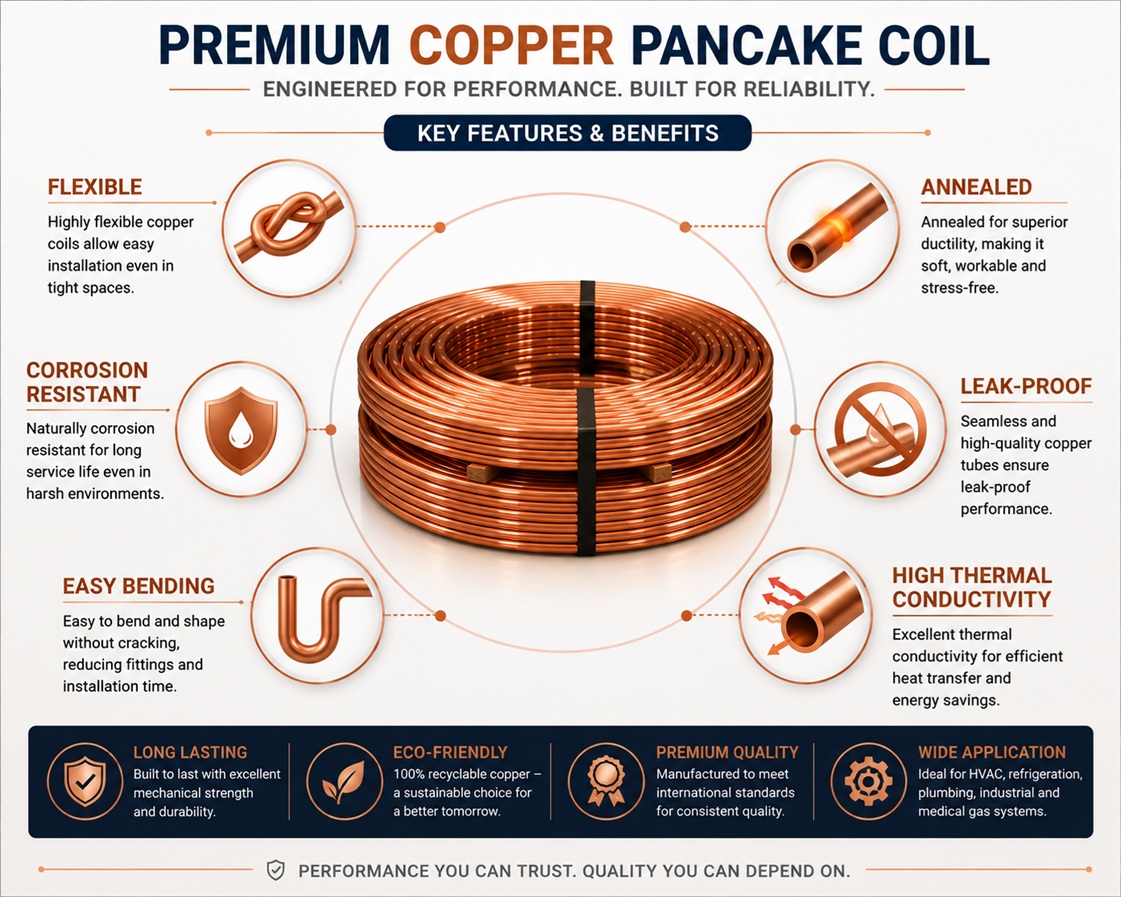
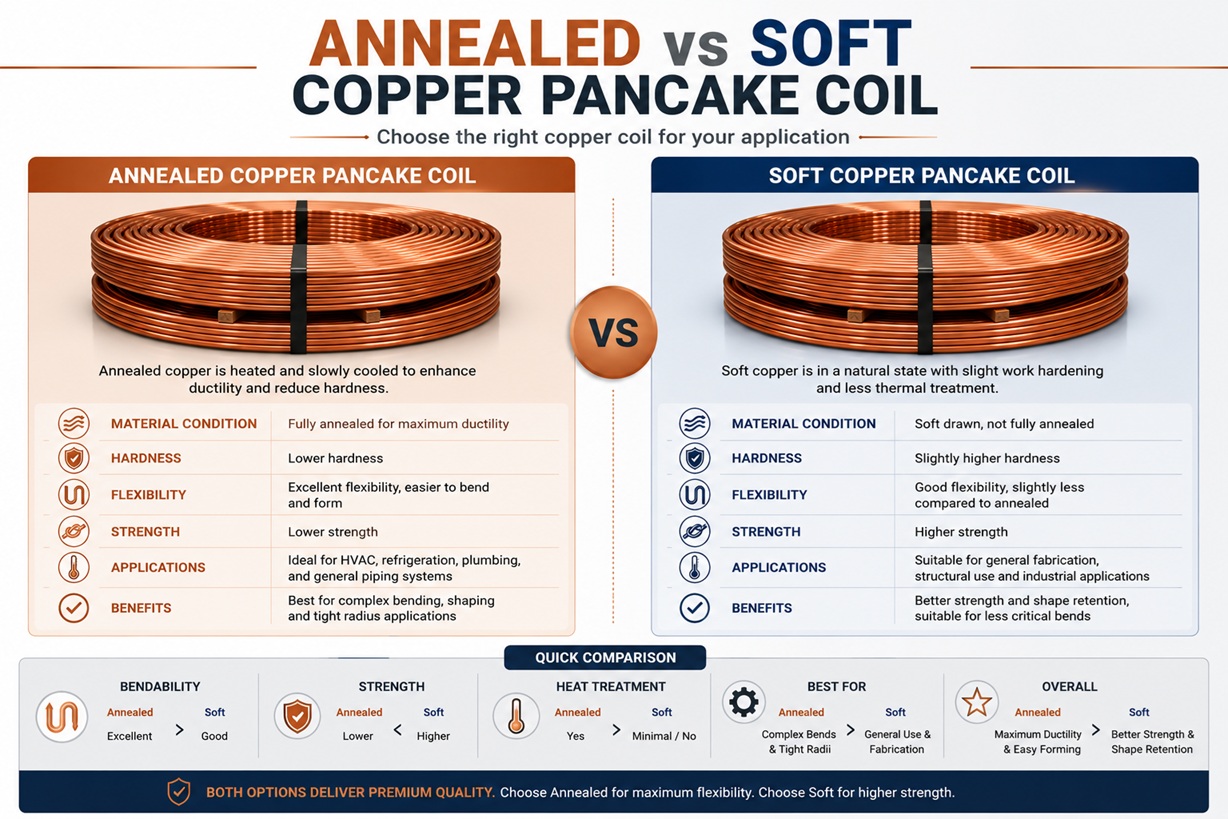
Not all pancake coils are identical, and the key distinction buyers should understand is temper, specifically the difference between annealed and soft copper pancake coil terminology, which are often used interchangeably but worth clarifying.
An annealed copper pancake coil refers to a tube that has undergone the heat-treatment annealing process after being drawn to size. This process relieves the internal stresses built up during drawing and softens the copper's grain structure, making the tube workable and less prone to cracking when bent. Annealing is what transforms rigid, hard-drawn tubes into something a technician can shape by hand.
A soft copper pancake coil is essentially the practical outcome of that annealing process. "Soft" describes the resulting temper, while "annealed" describes the process that produced it. In supplier catalogs and specification sheets, these terms are frequently used together or interchangeably, since a properly annealed coil is, by definition, soft.
The degree of annealing does matter, however. Under-annealed coil can feel stiffer and be more prone to kinking during tight bends, while properly annealed coil bends smoothly and holds its shape without springing back. Buyers sourcing pancake coil should confirm that the temper meets recognized standards (such as those referenced under ASTM B280 for refrigeration tube) rather than assuming all "soft" coil is equally well processed.
Beyond temper, pancake coils also vary by wall thickness and diameter, which need to be matched to the pressure requirements of the refrigerant system. Higher-pressure refrigerants like R410A generally call for thicker walls than older, lower-pressure refrigerants.
Copper Tubing Coil Roll & Coil Forms
Beyond the flat pancake format, copper tubing is available in several coil forms, and understanding the differences helps buyers choose the right product for their specific job requirements.
A copper tubing coil roll typically refers to a more compact, cylindrical winding format, often used for smaller-diameter tube in HVAC servicing, gas line work, and general maintenance tasks where a technician needs a manageable, portable supply. These rolls are usually easier for a single person to carry and handle compared to larger pancake coils.
A copper coil tube roll is essentially the same product category, though the terminology can vary by manufacturer or region. Both describe wound copper tube supplied in a roll format rather than cut straight lengths, prioritizing continuous, joint-free runs over the stacking efficiency of a pancake coil.
The choice between a flat pancake coil and a cylindrical coil roll usually comes down to volume and handling logistics. Pancake coils excel for bulk supply and warehouse storage, since their flat shape stacks efficiently on pallets. Smaller coil rolls are often preferred for field technicians who need portability over storage efficiency, particularly for service calls and smaller repair jobs rather than full system installations.
Copper Pancake Coil Sizes & Specifications
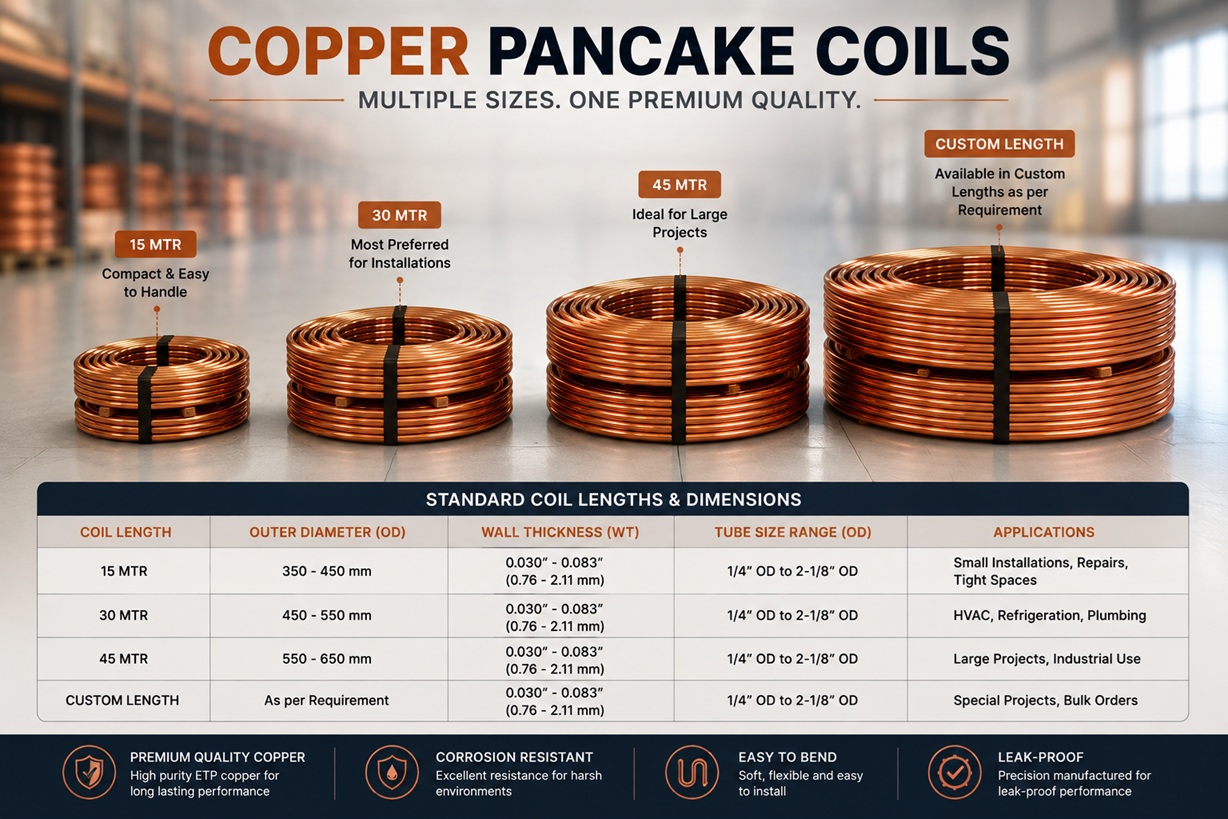
Specifying a copper pancake coil correctly means confirming three interconnected measurements: tube outside diameter, wall thickness, and total coil length.
The outside diameter is typically specified in fractions of an inch or in millimeters depending on the market, with common refrigeration sizes ranging from as small as 1/8 inch up to 2 inches or more, matched to the flow requirements of the liquid and suction lines in a given system. Wall thickness must correspond to the pressure rating required by the refrigerant type in use. Thicker walls are needed for higher-pressure refrigerants, while thinner walls may suffice for lower-pressure legacy systems, though local codes and manufacturer requirements should always take precedence over general assumptions.
Coil length is usually standardized around common increments such as 15 meters, 30 meters, or 50 feet, chosen to balance enough continuous tube for typical installation runs against a coil weight and size that remain manageable for transport and handling. Larger commercial projects may use longer coils to minimize joints across extended tubing runs, while smaller residential jobs often use shorter coils sized to typical split AC installation distances.
Buyers should always cross-reference actual OD and wall thickness against the relevant standard (such as ASTM B280 in the US or regional equivalents) rather than relying solely on nominal size labels, since mismatched dimensions are a common cause of fitting incompatibility during installation.
AC Copper Pancake Coil
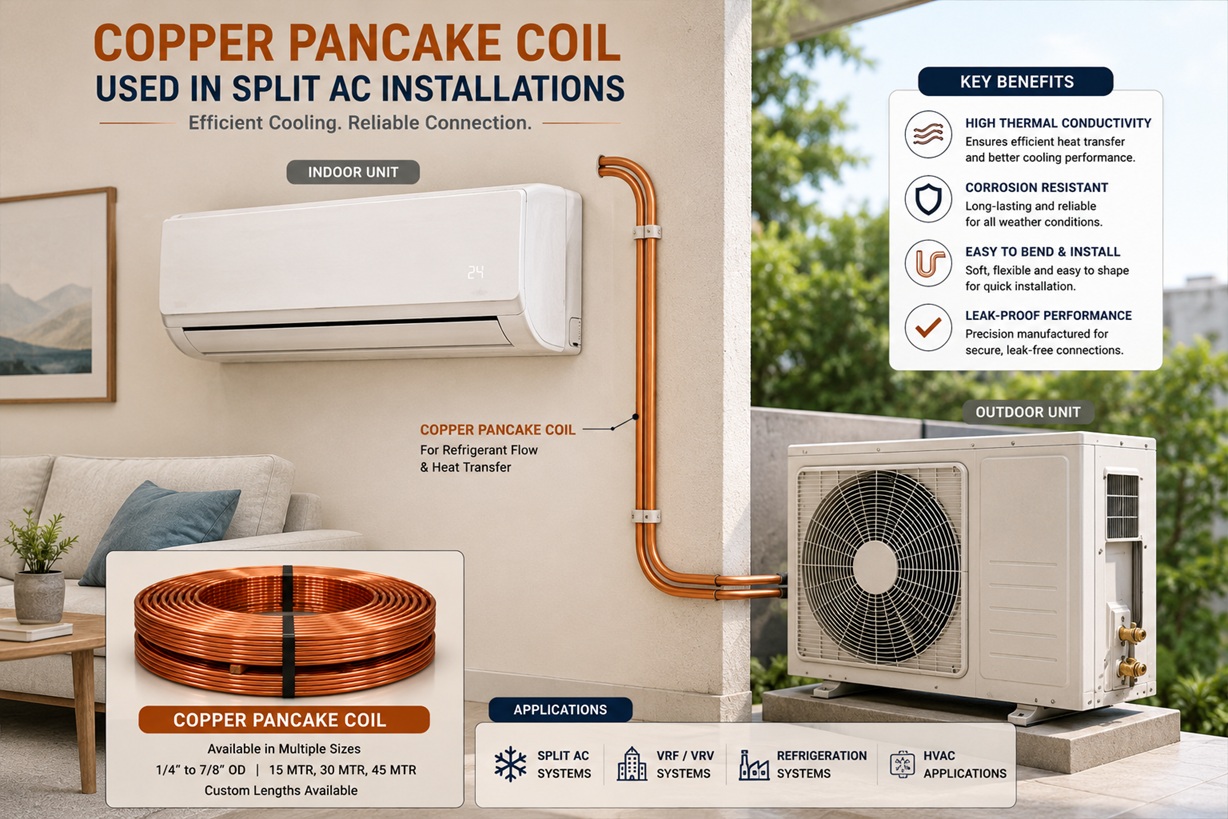
An AC copper pancake coil refers specifically to a pancake-wound tube used in air conditioning refrigerant lines, connecting the indoor evaporator coil to the outdoor condensing unit. This is one of the highest-volume applications for a pancake coil, since nearly every split and ducted residential or light commercial AC system relies on it for both the liquid and suction lines.
The soft, annealed temper of AC copper pancake coil allows installers to route tubing through wall cavities, ceiling voids, and around structural obstacles without needing a fitting at every turn, a significant advantage over rigid tube, which would require cutting and brazing joints at each directional change. Fewer joints translate directly into fewer potential leak points across the life of the system, which matters given that refrigerant leaks reduce cooling efficiency and can require costly system recharging.
An AC copper pancake coil is also frequently supplied pre-insulated for the suction line, since this line carries cooler refrigerant and is prone to condensation forming on its surface if left bare, a detail that saves installers a separate insulation step on site.
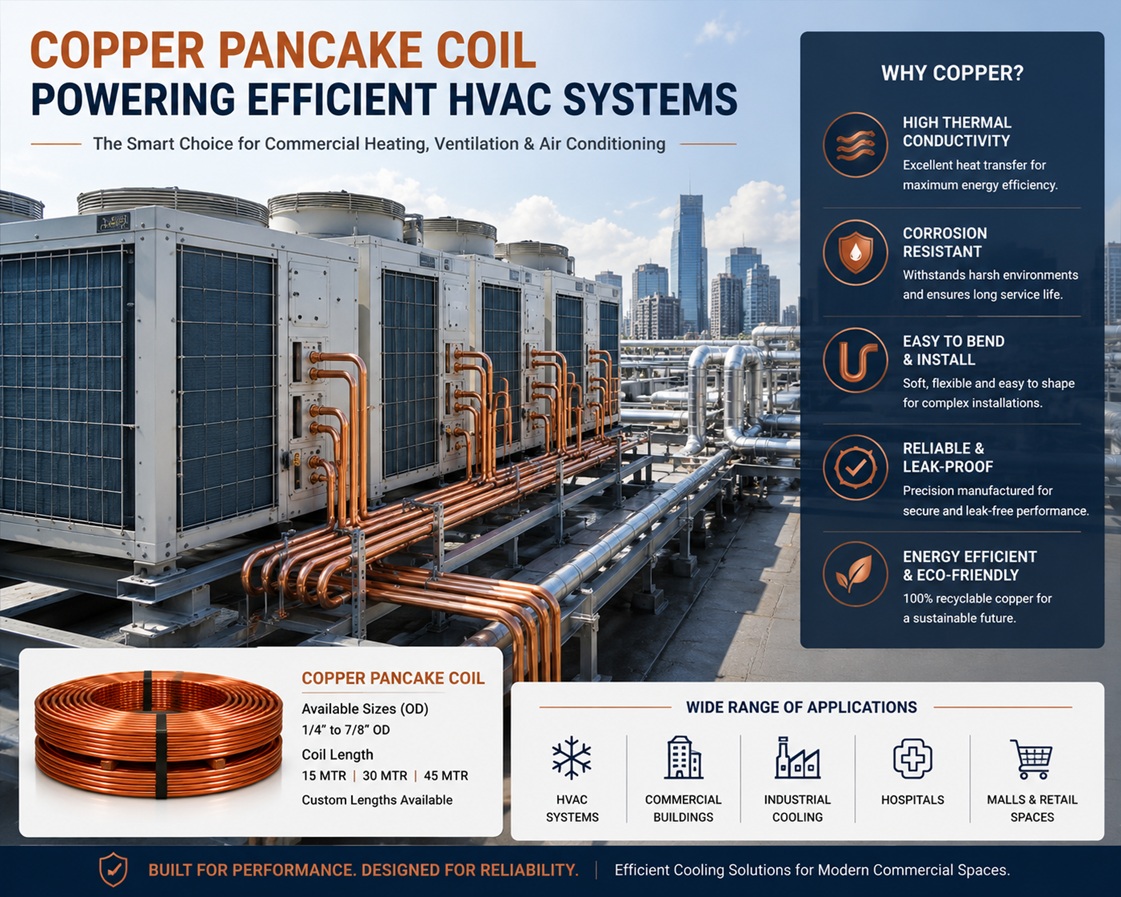
HVAC Copper Pancake Coil
HVAC copper pancake coils extend beyond simple residential AC installations into the broader world of heating, ventilation, and air conditioning systems found in commercial and institutional buildings. Larger HVAC systems including rooftop units, chillers, and multi-zone commercial installations often require longer, more complex refrigerant tubing runs than a typical residential split system.
In these larger installations, the flexibility of pancake coils remains just as valuable, allowing contractors to route tubing through ceiling plenums, mechanical rooms, and vertical risers across multiple floors with minimal joints. Commercial HVAC projects also tend to demand tighter documentation and code compliance, making certified, standard-compliant pancake coils (rather than uncertified generic tubes) especially important for passing inspection and maintaining warranty coverage on expensive commercial equipment.
Because commercial HVAC systems often run continuously for years without extended downtime, any weak point introduced by excess joints or substandard tube becomes a much larger long-term liability than it would in a seasonally-used residential system, reinforcing why quality and certification matter more, not less, at commercial scale.
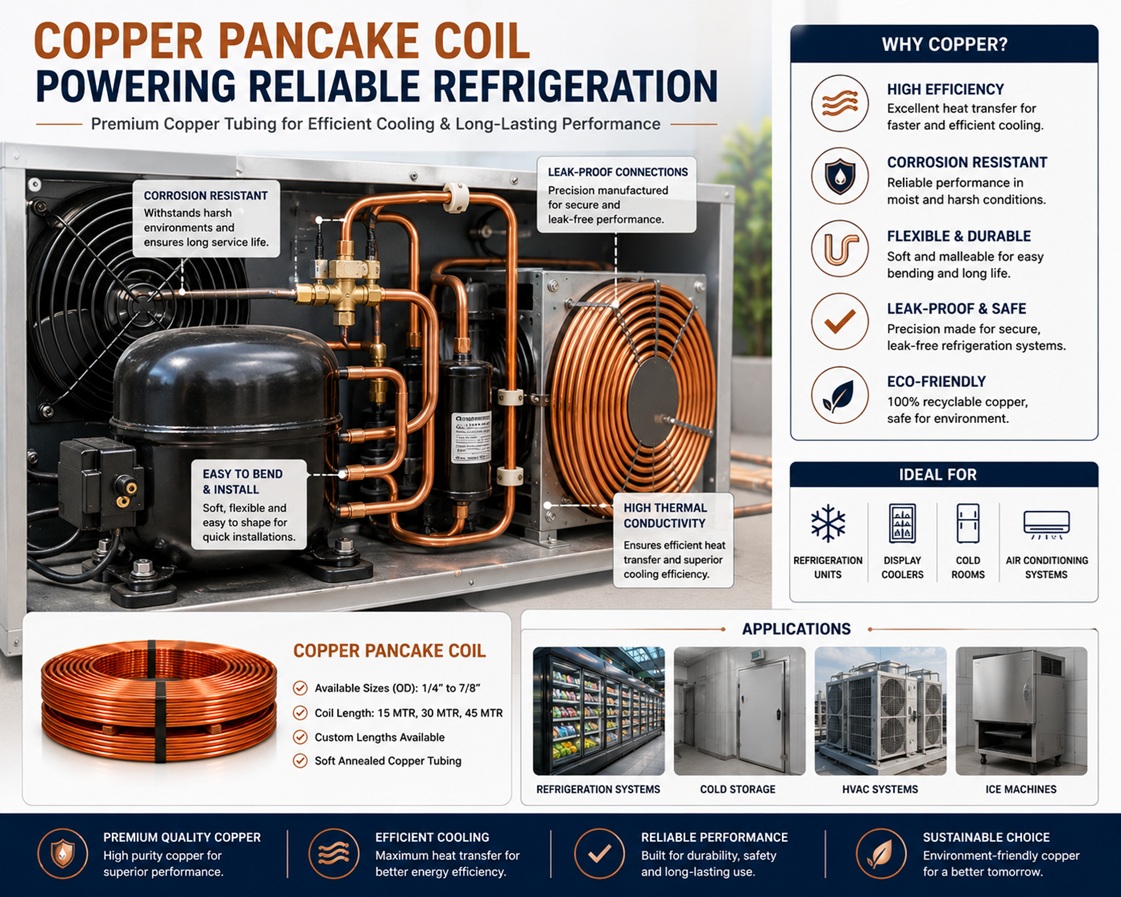
Refrigeration Copper Pancake Coil
A refrigeration copper pancake coil serves much the same purpose in commercial and industrial refrigeration equipment as it does in AC systems, though often under more demanding operating conditions. Walk-in coolers, supermarket display cases, cold storage warehouses, and standalone refrigeration units all rely on pancake coils to connect compressors, condensers, and evaporators across what can be considerably longer and more complex tubing runs than a residential AC install.
Refrigeration systems typically operate continuously, around the clock, which raises the stakes on tubing quality and joint integrity considerably. A slow leak that might go unnoticed for a season in a residential AC system can cause continuous refrigerant loss, temperature excursions, and product loss in a commercial refrigeration setting, a far more costly outcome. This is exactly why the internal cleanliness and moisture control built into properly certified refrigeration-grade pancake coil matter so much; contamination or trapped moisture inside the sealed system can lead to compressor damage, ice formation, and corrosion over time.
Given these higher stakes, refrigeration contractors typically specify pancake coils certified to recognized refrigeration tube standards rather than substituting generic or uncertified stock, even though it may carry a modest cost premium.
Copper Coil for Air Conditioner & Split AC
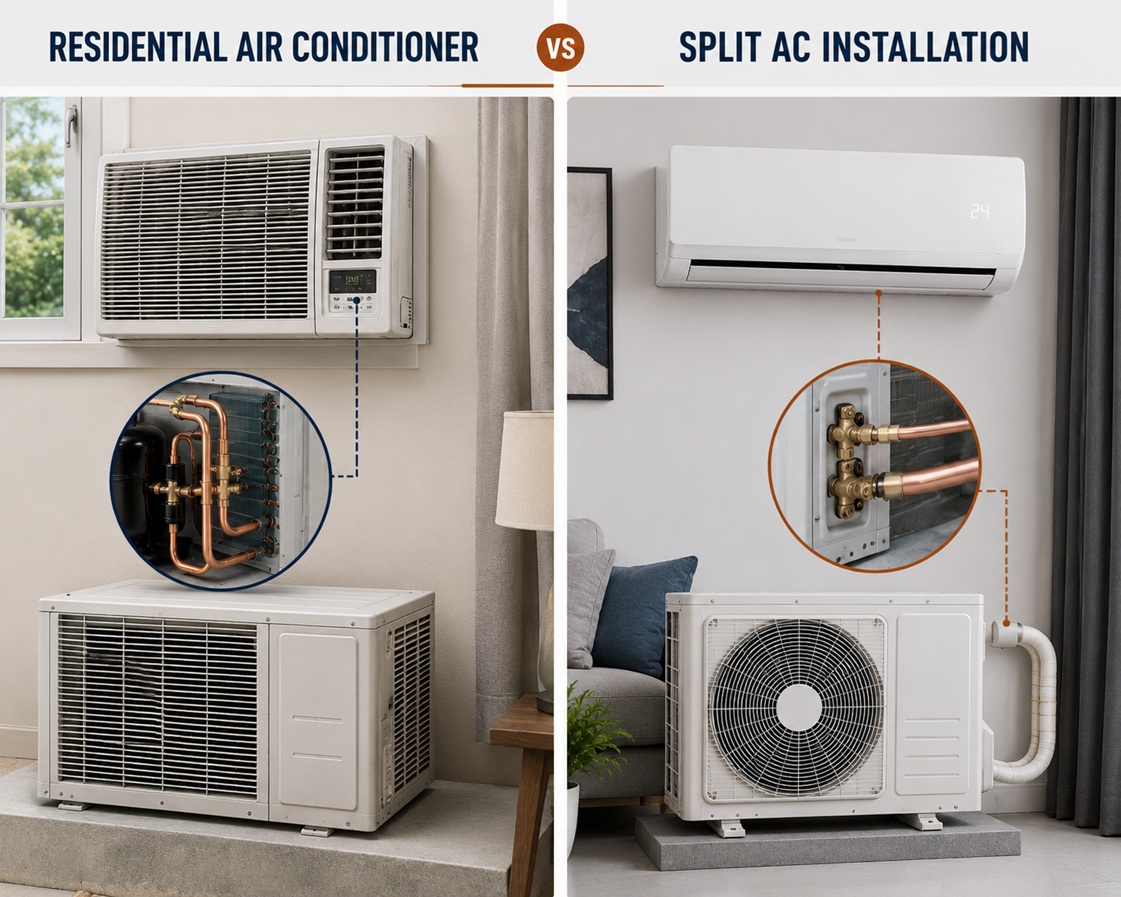
The terms "copper coil for air conditioner" and "copper coil for split AC" both point to the same core use case: connecting an indoor cooling unit to an outdoor compressor and condenser, but it's worth understanding how sizing and installation details can differ between residential window units, ducted central systems, and dedicated split AC setups.
In a typical split AC installation, two separate copper lines run between the indoor and outdoor units: a smaller-diameter liquid line carrying high-pressure liquid refrigerant and a larger-diameter suction line carrying low-pressure vapor refrigerant back to the compressor. Pancake coil supplies both lines, with the suction line generally requiring insulation to prevent condensation and thermal loss along its length.
For older window-unit or self-contained air conditioner designs, copper coil use is more internal to the unit itself, connecting compact evaporator and condenser coils within a single housing rather than running long distances between separate indoor and outdoor components. Ducted central AC systems, meanwhile, may involve longer overall tubing runs than a single split unit, particularly in larger homes or commercial spaces with the outdoor condenser positioned farther from the indoor air handler.
Across all these configurations, correctly matching coil diameter and wall thickness to the specific refrigerant and system design remains essential, since undersized or mismatched tubing can restrict refrigerant flow and reduce overall cooling capacity.
Industrial Applications of Copper Pancake Coils
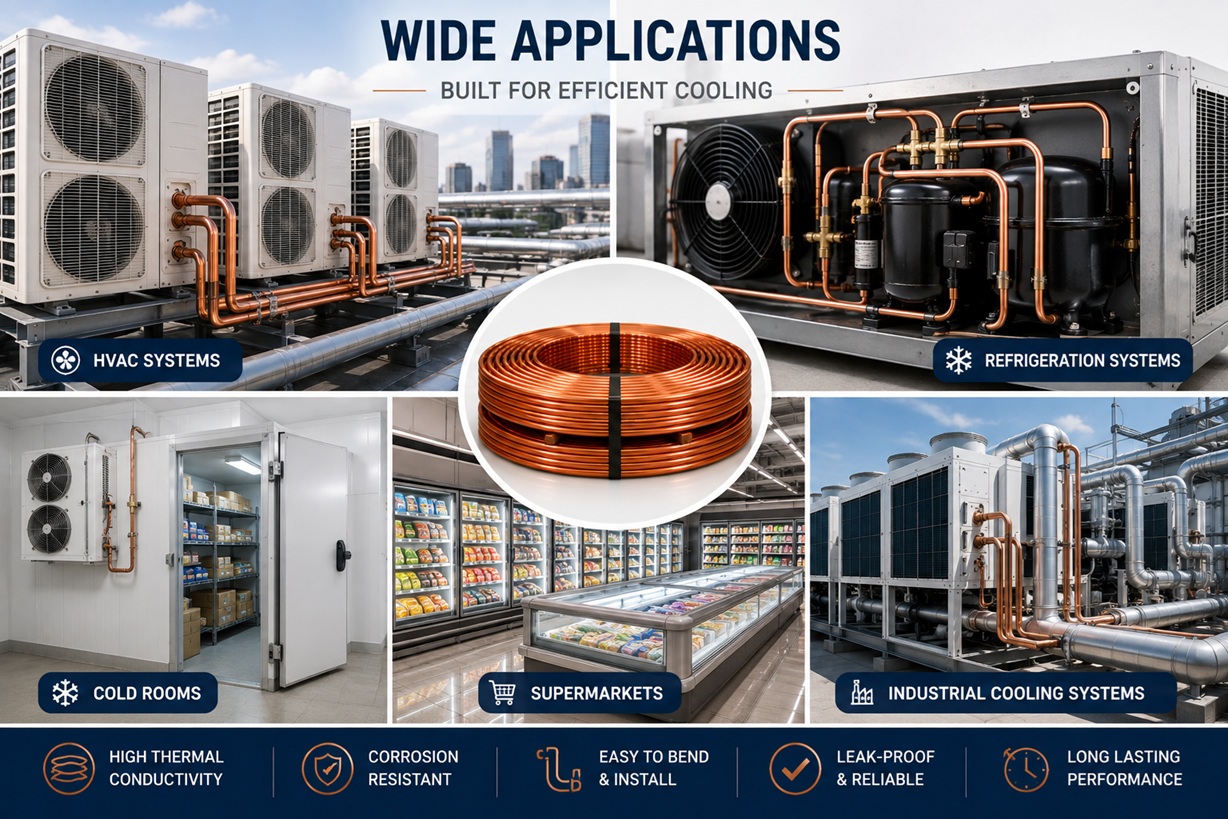
While AC and refrigeration installations account for the bulk of copper pancake coil use, its applications extend further across several industrial contexts.
In cold rooms and cold storage facilities, pancake coils connect extensive refrigeration equipment networks spanning large storage areas, where minimizing joints across long tubing runs directly reduces long-term maintenance and leak risk.
In supermarkets and retail refrigeration, pancake coils supply the extensive network of display cases, walk-in coolers, and backroom refrigeration equipment that keep perishable inventory at consistent temperatures throughout the day.
In industrial cooling systems , pancake coils are used in machinery cooling loops, process equipment, and auxiliary refrigeration systems supporting manufacturing operations where consistent temperature control affects product quality or equipment longevity.
In transport refrigeration, a smaller diameter pancake coil is sometimes used in refrigerated vehicle and container cooling systems, where the flexibility of the tube helps it withstand the vibration and movement inherent to transport applications.
Across these varied contexts, the common thread remains the same: a pancake coil's flexibility, corrosion resistance, and leak-resistant properties make it a dependable choice wherever refrigerant needs to travel reliably between components over an extended service life.
Choosing the Right Copper Pancake Coil Manufacturer & Supplier
Not every pancake coil on the market is produced to the same standard, which makes choosing the right source just as important as the specification itself.
A reliable copper pancake coil manufacturer should be able to provide documented mill certification confirming compliance with recognized refrigeration tube standards, along with clear data on temper, wall thickness tolerances, and internal cleanliness testing. Consistency between production batches matters too, since variance in wall thickness or coil ovality can create fitting problems during installation.
A dependable copper pancake coil supplier maintains steady inventory across common sizes and specifications, helping contractors avoid project delays caused by stock shortages mid-installation. The best suppliers also offer genuine technical support, helping buyers match coil specifications correctly to their refrigerant type and system design rather than simply processing orders.
Before committing to any manufacturer or supplier, it's worth requesting sample certificates of analysis and confirming their track record specifically within HVAC and refrigeration tube supply, rather than assuming general copper tube experience automatically translates to refrigeration-grade quality.
Copper Pancake Coil Exporter & Price Considerations
For buyers sourcing internationally, working with an established copper pancake coil exporter involves more than just placing an order. Proper export packaging that protects coils from deformation or moisture ingress during long-distance shipping, accurate customs documentation, and consistent quality control across export batches all factor into a smooth transaction. Buyers should request evidence of prior export experience and, where feasible, third-party inspection reports before committing to large international orders.
Copper pancake coil price tracks closely with global copper commodity pricing, since raw copper typically represents the majority of the product's total cost. Beyond the underlying metal price, cost also varies with wall thickness (thicker walls for higher-pressure refrigerants cost more), coil length, and whether the product is supplied pre-insulated or bare.
Buyers comparing quotes should treat unusually low pricing with some caution, since it can sometimes signal thinner-than-specified walls, incomplete annealing that leaves the tube stiffer than expected, or inadequate internal cleaning that only becomes apparent after installation. Requesting full documented specifications alongside any price quote remains the most reliable way to compare offers fairly.
Frequently Asked Questions
What is a copper pancake coil used for? A copper pancake coil is primarily used to carry refrigerant between components in AC, HVAC, and refrigeration systems, connecting indoor and outdoor units or linking compressors, condensers, and evaporators in commercial equipment.
What's the difference between an annealed and a soft copper pancake coil? "Annealed" describes the heat-treatment process applied to the tube, while "soft" describes the resulting flexible temper. A properly annealed coil is, by definition, soft, and the terms are often used interchangeably by suppliers.
What sizes do copper pancake coils come in? Common sizes range from about 1/8 inch up to 2 inches or more in outside diameter, with wall thickness varying based on the pressure rating required by the refrigerant in use.
Can a copper pancake coil be used for both AC and refrigeration systems? Yes, the same general product serves both applications, though refrigeration systems, which often run continuously, typically place greater emphasis on certified internal cleanliness and joint minimization given their extended duty cycles.
What's the difference between a copper tubing coil roll and a pancake coil? A coil roll is generally a more compact, cylindrical winding favored for portability in field service work, while a pancake coil's flat shape is optimized for efficient stacking and bulk storage.
How is copper pancake coil price determined? Price is driven primarily by global copper commodity costs, with additional variation based on wall thickness, coil length, and whether the coil is supplied pre-insulated.
What should I look for in a copper pancake coil manufacturer or supplier? Look for documented mill certification against recognized refrigeration tube standards, consistent production quality, adequate stock availability, and genuine technical support for specification matching.
Conclusion
The copper pancake coil may look like a simple, unglamorous product, but it plays a critical role in how reliably AC and refrigeration systems perform over their service life. Its soft, annealed temper minimizes joints, its flat-wound format simplifies storage and transport, and its certified internal cleanliness protects the sealed systems it feeds into. Whether you're installing a split AC unit or sourcing coil in bulk from a manufacturer or exporter, understanding what separates a properly specified pancake coil from a generic one is what keeps refrigerant systems running efficiently and leak-free for years to come.