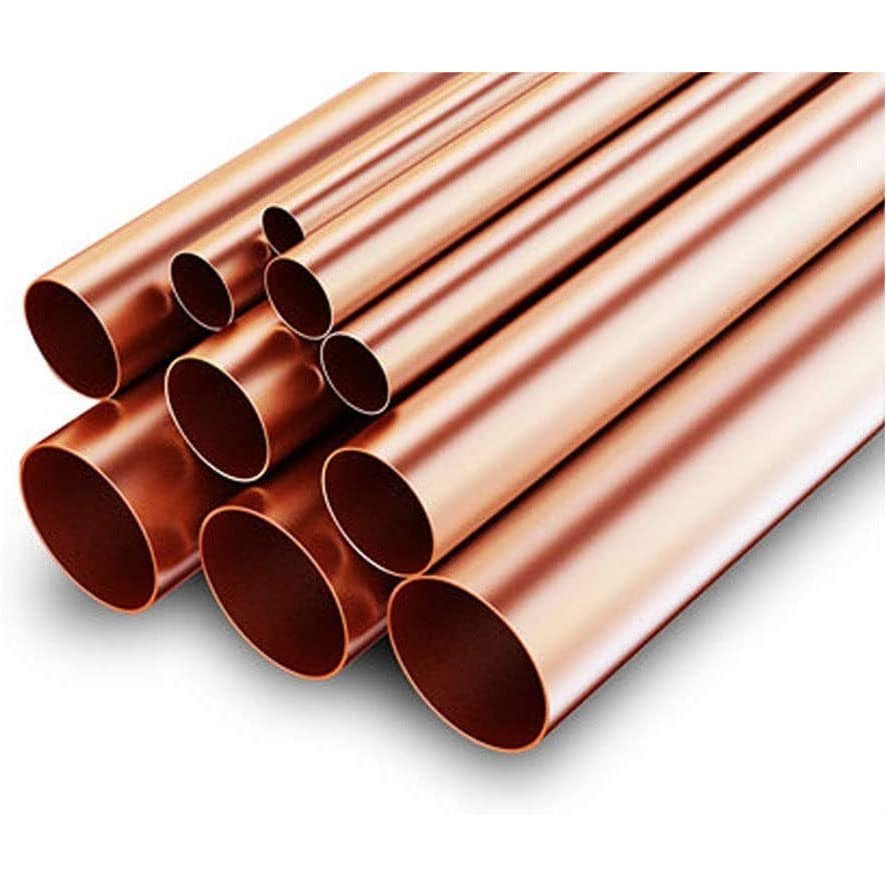
Copper Pipe and Fittings
Copper pipe and fittings form the backbone of modern plumbing, HVAC, gas distribution, and industrial piping systems. Known for their durability, corrosion resistance, and reliability, copper systems are widely used for transporting water, gases, and other fluids safely and efficiently.
The combination of high-quality copper pipes with precision-engineered fittings ensures leak-proof connections, efficient flow, and long service life across a wide range of applications.
What are Copper Pipe and Fittings?
Copper pipe and fittings refer to the complete piping system consisting of copper tubes or pipes along with connectors such as elbows, tees, couplings, reducers, and caps. These components work together to create a continuous and efficient flow path.
They are used extensively in both residential and industrial environments due to their strength and ease of installation.
Types of Copper Pipes
- Type K: Thick wall pipes for underground and high-pressure applications
- Type L: Medium wall pipes for plumbing and HVAC systems
- Type M: Thin wall pipes for residential applications
Types of Copper Fittings
- Elbows: Change the direction of flow
- Tees: Create branch connections
- Couplings: Join two pipes
- Reducers: Connect different pipe sizes
- Caps & Plugs: Seal pipe ends
- Unions: Allow easy disconnection
Key Properties
- Excellent corrosion resistance
- High thermal conductivity
- Strong and durable structure
- Antimicrobial properties
- Long service life
Copper Grades Used
- C12200 – Phosphorus-deoxidized copper (DHP)
- C12000 – Low residual phosphorus copper
Applicable Standards
- ASTM B88 – Copper water tubes
- ASTM B280 – Copper tubing for HVAC
- ASME B16.22 – Wrought copper fittings
- EN 1057 – Copper tubes for water and gas
Applications of Copper Pipe and Fittings
Plumbing Systems
- Hot and cold water distribution
- Residential and commercial piping
HVAC Systems
- Heating and cooling pipelines
- Refrigeration systems
Gas Systems
- LPG and CNG distribution
- Medical gas pipelines
Industrial Applications
- Process piping systems
- Utility fluid transport
Advantages
- Reliable and long-lasting performance
- Leak-proof connections
- Easy installation and maintenance
- Resistant to high temperatures and pressure
- Environmentally friendly and recyclable
Installation Methods
- Soldering
- Brazing
- Compression fittings
- Press-fit systems
Sizes and Dimensions
| Nominal Size | Outer Diameter (mm) | Typical Use |
|---|---|---|
| 1/2 inch | 15.88 | Branch lines |
| 3/4 inch | 22.23 | Main supply |
| 1 inch | 28.58 | Commercial systems |
| 2 inch | 54.00 | Industrial piping |
Quality Control
- Dimensional inspection
- Pressure and hydrostatic testing
- Chemical composition analysis
- Leak testing
Conclusion
Copper pipe and fittings are essential for building efficient, durable, and safe piping systems. Their versatility and reliability make them a preferred choice across plumbing, HVAC, gas, and industrial sectors.
By selecting high-quality materials and ensuring proper installation, copper pipe and fittings provide long-term performance and operational efficiency.