Copper Pipe Fittings: Complete Product Guide
Specifying a piping system usually starts with the tube, but it rarely ends there. Every turn, branch, transition, and termination point in that system depends on a fitting, and the wrong fitting in the wrong place is one of the fastest ways to turn a straightforward installation into a rework job. This guide is built as a practical product reference: what copper pipe fittings actually are, the full range of shapes available, how they're joined, how they're sized, and what to check before placing an order.
Whether you're specifying for a plumbing renovation, a refrigeration line, or a gas distribution system, the goal is the same: matching the right fitting in the right material grade, joined the right way, to the tube already in the system. The sections below walk through that process from product basics to final sourcing decisions .
What are Copper Pipe Fittings?
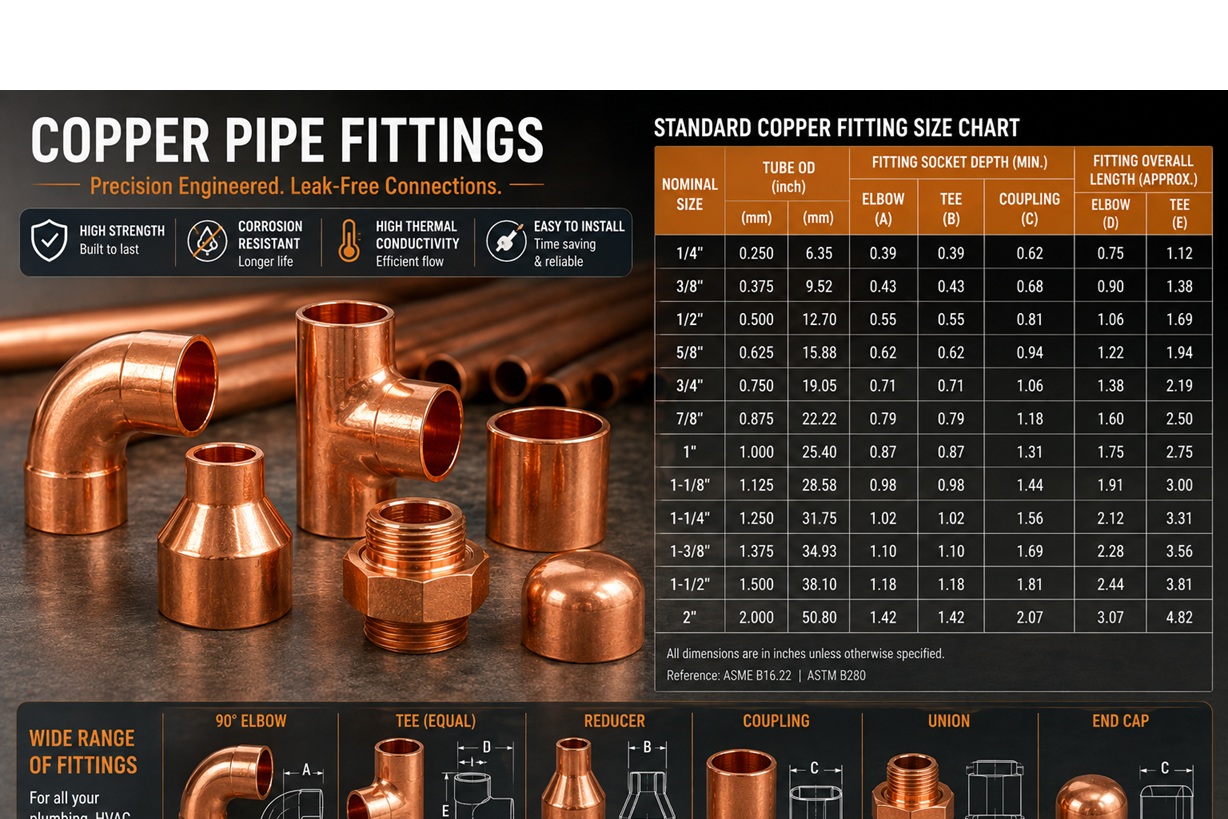
Copper pipe fittings are the connective components of a copper piping system, the pieces that join, redirect, branch, resize, or seal off sections of copper tube. Where the tube itself is a simple hollow cylinder, a fitting is shaped for a specific function: changing direction, splitting flow, stepping between diameters, or closing a run entirely. .
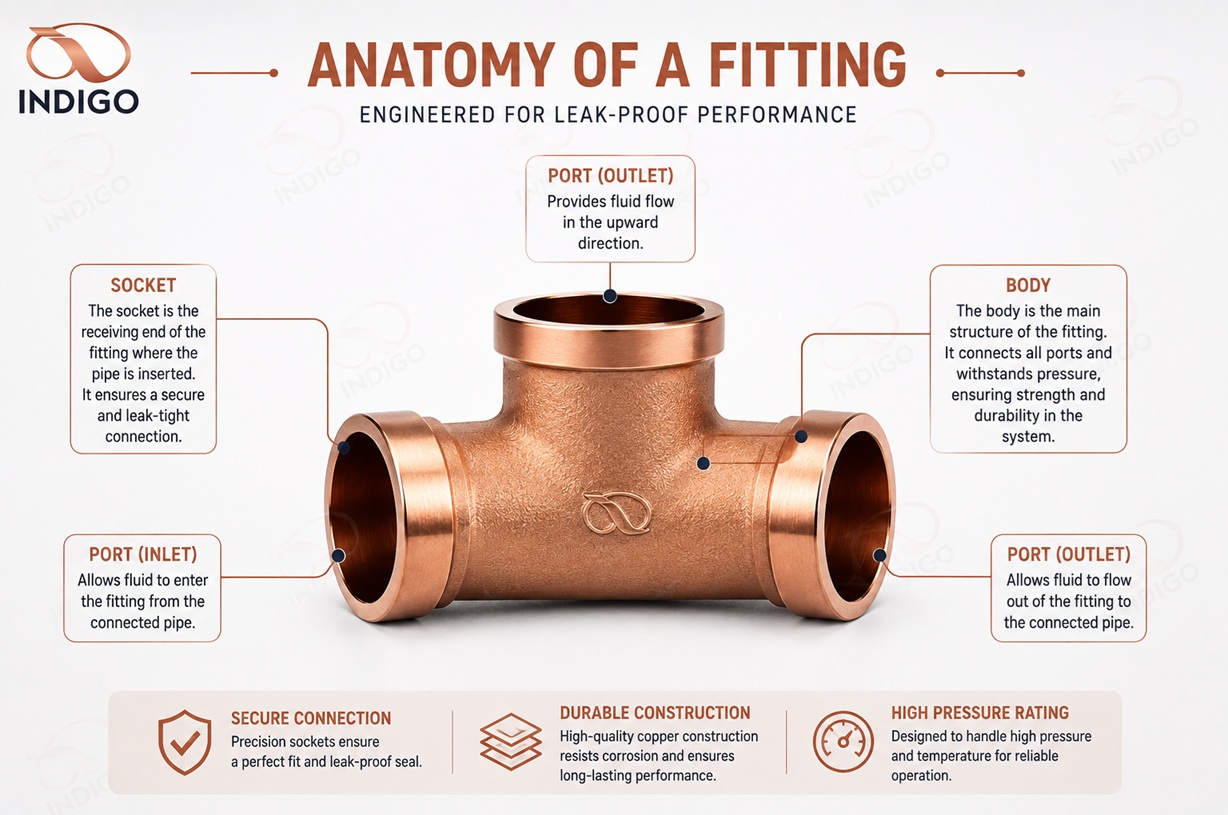
Most copper fitting pipe components are manufactured from wrought or cast copper alloy, with one or more sockets machined to a tight tolerance so they can accept tube ends and form a strong, leak-tight joint once soldered, brazed, or mechanically sealed. That socket tolerance is the single most important dimension on any fitting. Too loose and the joint won't fill properly with filler metal during soldering or brazing; too tight and the tube won't seat to full depth. .
Because fittings sit at every stress point in a system, corners, branches, and transitions, their manufacturing standard matters just as much as the tube's. Fittings produced to recognized specifications such as ASME B16.22 (wrought fittings) or ASME B16.18 (cast fittings) are dimensionally consistent enough to be mixed and matched across brands without compatibility issues.
Copper Pipe Connectors: How Fittings Complete a Piping System
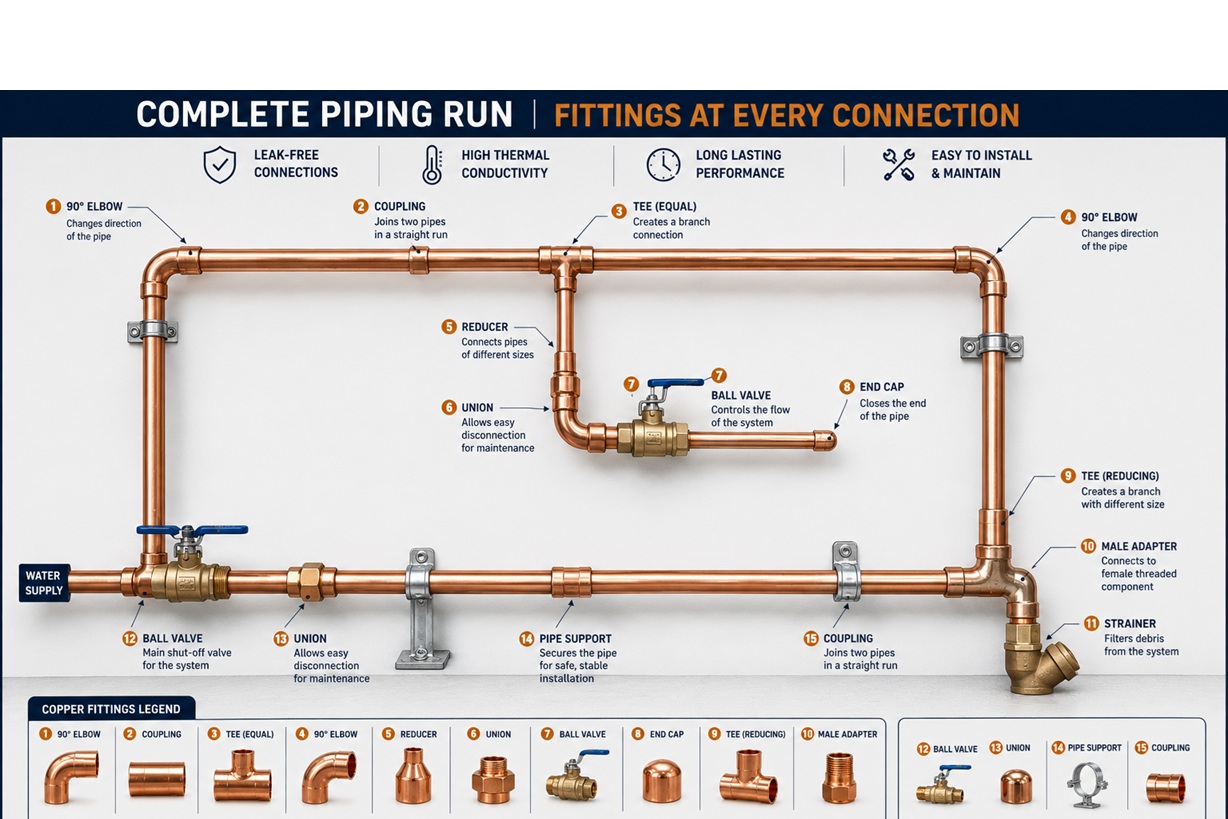
It helps to think of copper pipe connectors as the joints in a skeleton, individually small but collectively responsible for how the whole system holds together and performs.
A run of tube on its own can only go in one direction. The moment a system needs to turn a corner, split into a branch line, step down to a smaller fixture connection, or terminate at a dead end, a connector has to be introduced. In a typical building, this might mean dozens or even hundreds of individual fitting connections across the plumbing, HVAC, and gas systems combined, each one a potential point of failure if the wrong part, size, or jointing method is used.
This is also why fitting selection is rarely a single decision made once. A plumber or HVAC technician is constantly selecting connectors on the fly as a run is installed: an elbow here, a tee there, and a reducer where the branch line needs to step down, which is why having a full, well-stocked range of copper pipe connectors on hand, rather than sourcing piece by piece mid-installation, keeps projects moving without delay.
Product Range: Types of Copper Pipe Fittings
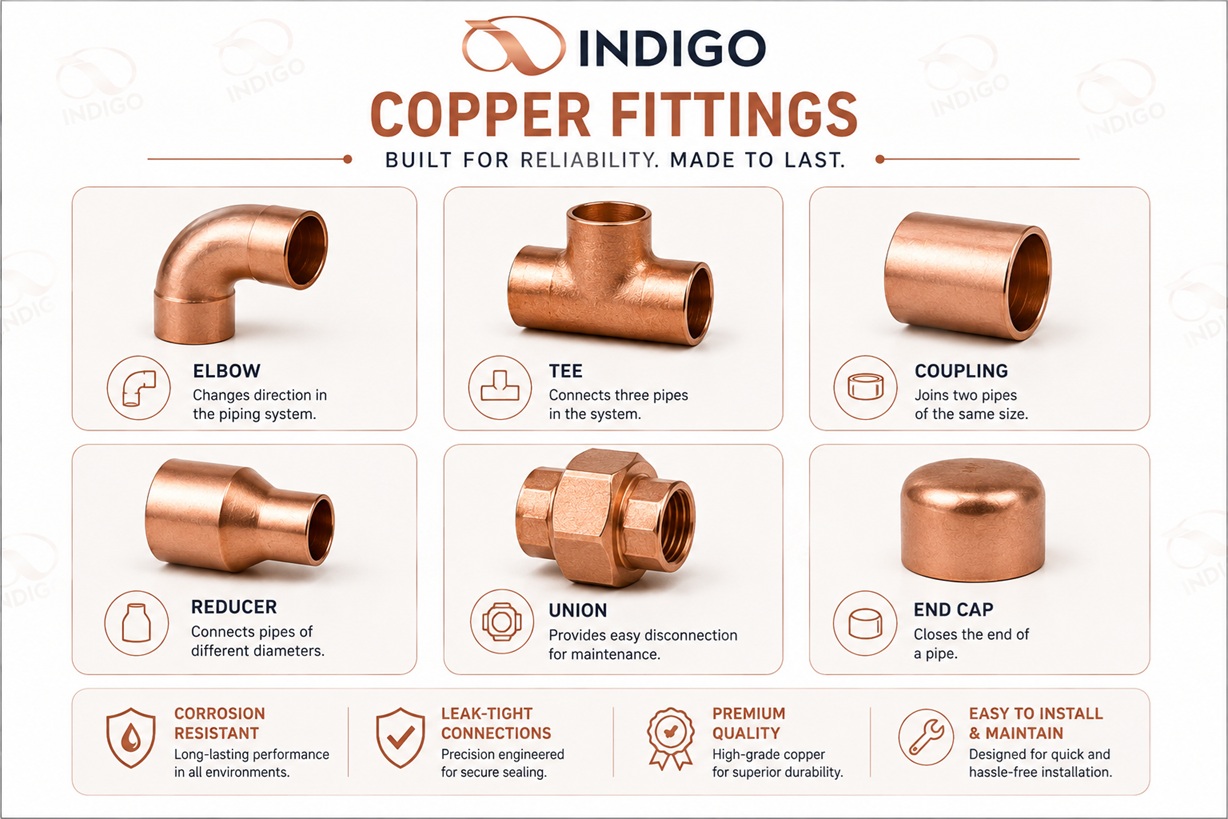
A complete copper pipe fittings range covers a handful of core shapes, each solving a specific routing problem.
Copper elbow: Used to change the direction of a run, most commonly at 90 degrees or 45 degrees. Available in short-radius versions for tight spaces and long-radius versions where minimizing flow restriction matters more than saving room.
A copper tee splits one flow path into two or merges two into one. Specified by the size of all three ports, reducing tees, where the branch is a smaller diameter than the main run, are common wherever a secondary line taps off a larger supply.
A copper coupling joins two lengths of tube of the same diameter in a straight run and is used to extend a line or repair a damaged section. Stop couplings include an internal ridge to center both tube ends precisely; slip couplings are open on both sides, useful for repair work where tube ends need to slide into position.
Copper reducer Steps a run down or up between two different tube diameters. Straight reducers keep both ends on the same centerline; eccentric reducers keep one side flat, which helps avoid trapped air pockets in drainage or venting runs.
Copper union Provides a joint that can be taken apart without cutting the tube, using a threaded nut to draw two mating fitting halves together. Especially valuable anywhere equipment like a pump, valve, or appliance may need to be removed for maintenance without disturbing the surrounding piping.
Copper end caps seal a tube run completely and are used to close off an unused branch, cap a line during pressure testing, or terminate a run permanently.
Together, this core range covers the overwhelming majority of routing needs in plumbing, HVAC, refrigeration, and gas piping systems with adapters and specialty transition fittings filling in the less common gaps.
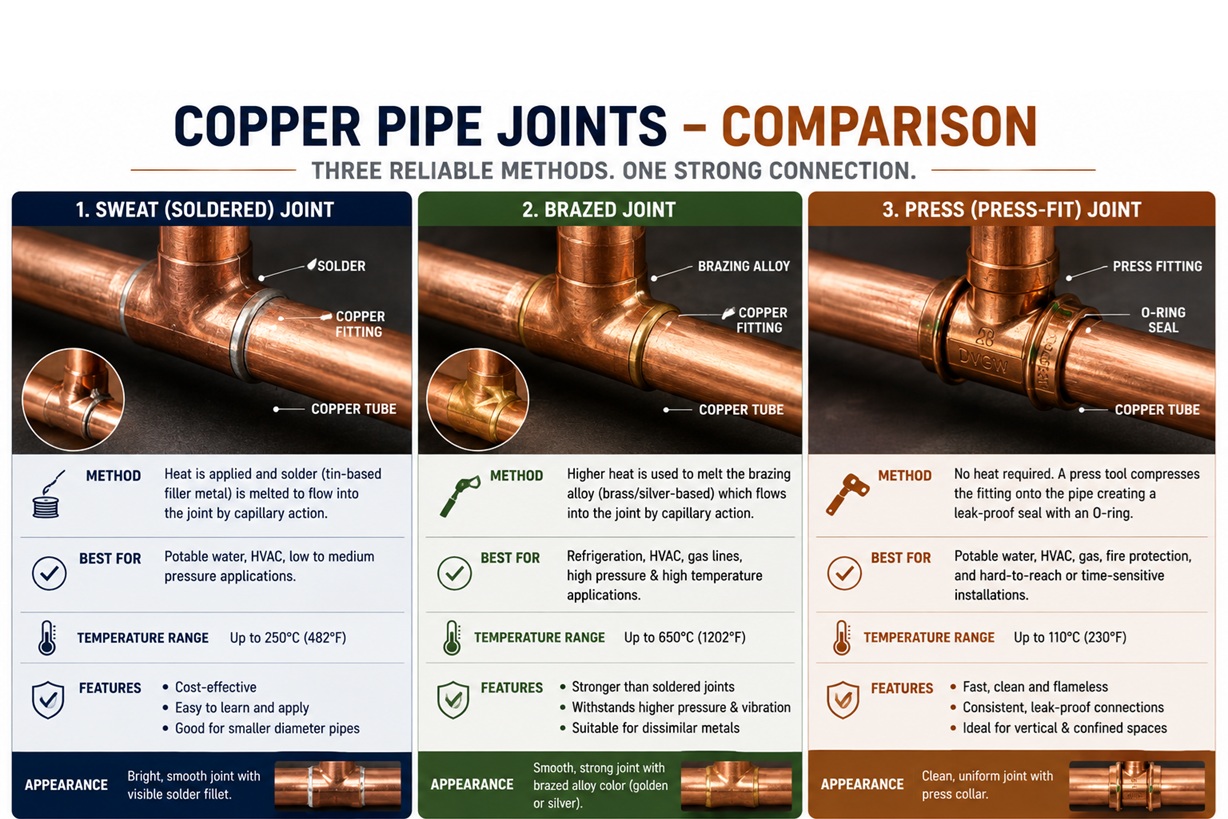
Jointing Methods: Solder, Braze & Compression
The same fitting shape can often be joined in more than one way, and the method chosen depends on the system's pressure, temperature, and installation conditions.
Copper solder fittings are joined using a filler metal that melts below roughly 450°C, drawn into the joint by capillary action once the tube and fitting socket are cleaned and fluxed. Soldering is the standard method for residential and light commercial plumbing, where moderate pressures and temperatures make the lower joint strength perfectly adequate, and the speed of the process is an advantage.
Copper brazing fittings use a higher-melting filler metal, typically above 450°C, to produce a stronger joint capable of handling greater pressure and temperature extremes. Brazed connections are the standard for refrigeration lines, fuel gas piping, and any system where a soldered joint's lower strength margin isn't acceptable.
Copper compression fittings skip filler metal entirely, instead using a ferrule that's compressed tightly around the tube as a nut is tightened onto the fitting body. This makes them well suited to repair work, occupied spaces where open flame is restricted, and situations where a joint may need to be disassembled during future servicing with the tradeoff that correct ferrule seating and tightening torque are essential to avoid a leak.
Choosing between these three methods early in the specification process avoids a common and costly mistake: ordering fittings suited to one jointing method when the installation crew is set up to use another.
Sizing & Compatibility Guide
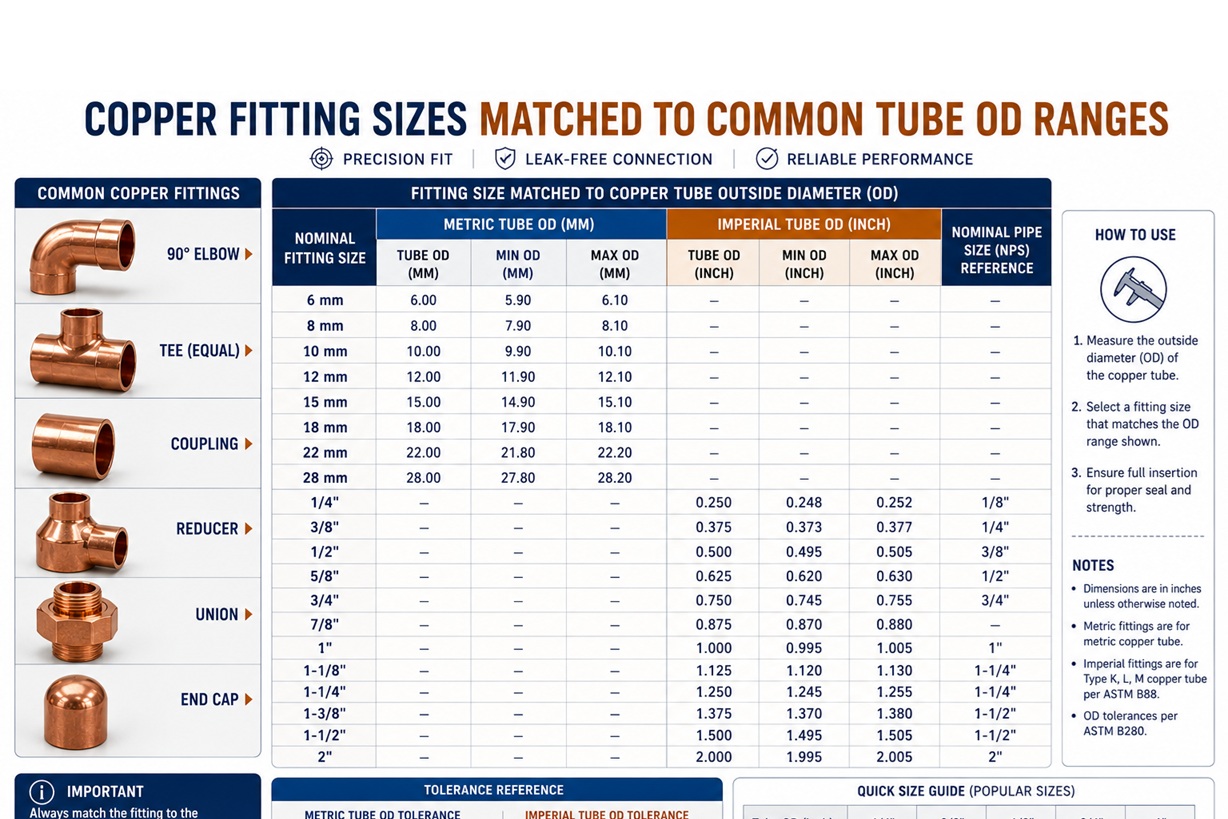
Copper pipe fittings are sized to match the outside diameter of the tube they'll be joined to, and getting this right depends on knowing which tube standard applies to the system in question.
For standard water tube (types K, L, and M under ASTM B88), fitting sizes correspond to nominal diameters that range from as small as 1/4 inch up to several inches for larger commercial systems, with the important caveat that nominal size and actual outside diameter aren't identical, so cross-checking against the tube's actual OD before ordering avoids a mismatch.
For refrigeration-grade tube under ASTM B280, fittings are sized directly by actual OD, typically from 1/8 inch up to over 2 inches, and matched to the wall thickness and pressure rating required by the refrigerant system.
Beyond diameter, socket depth deserves equal attention. A socket that's too shallow won't provide enough surface area for a durable soldered or brazed joint, and mismatched socket depths across a mixed batch of fittings can produce inconsistent joint quality across a single installation. Confirming OD, socket depth, and jointing method together before placing an order is the simplest way to avoid a costly reorder mid-project.
Material Grades & Standards Compliance
Not all copper pipe fittings are manufactured to the same grade or standard, and the difference matters more in higher-stakes applications like gas and refrigeration than it does in low-pressure water lines.
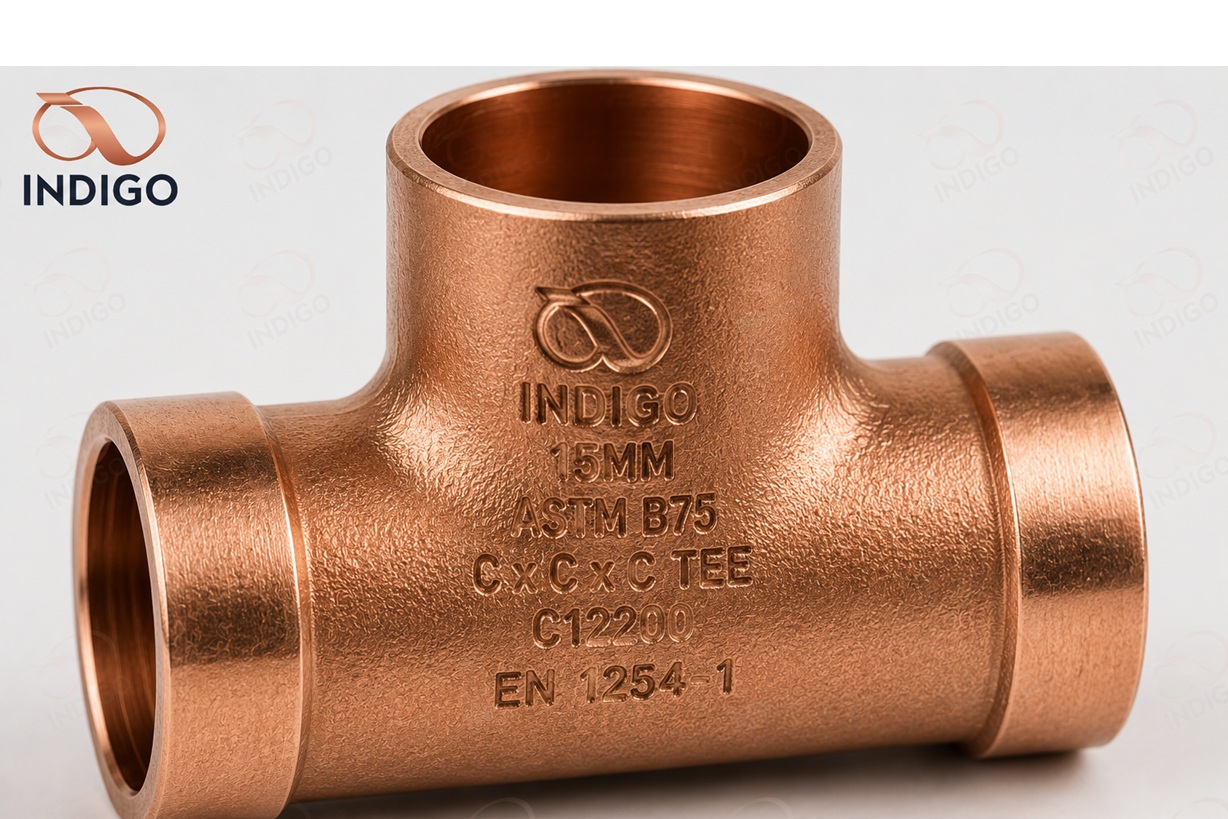
Wrought copper fittings, produced to standards like ASME B16.22, are typically favored for pressure-critical applications due to their consistent grain structure and dimensional accuracy. Cast copper alloy fittings, produced to standards like ASME B16.18, are common in fittings with more complex shapes, such as certain valve-adjacent components, where casting allows for geometries that would be difficult to produce from wrought stock.
For projects outside North America, EN 1254 governs copper and copper alloy fittings under European norms, and confirming which standard a supplier's product range is certified against is an essential step before specifying for an international project, particularly where local code compliance is being inspected.
Selecting Fittings for Your Project
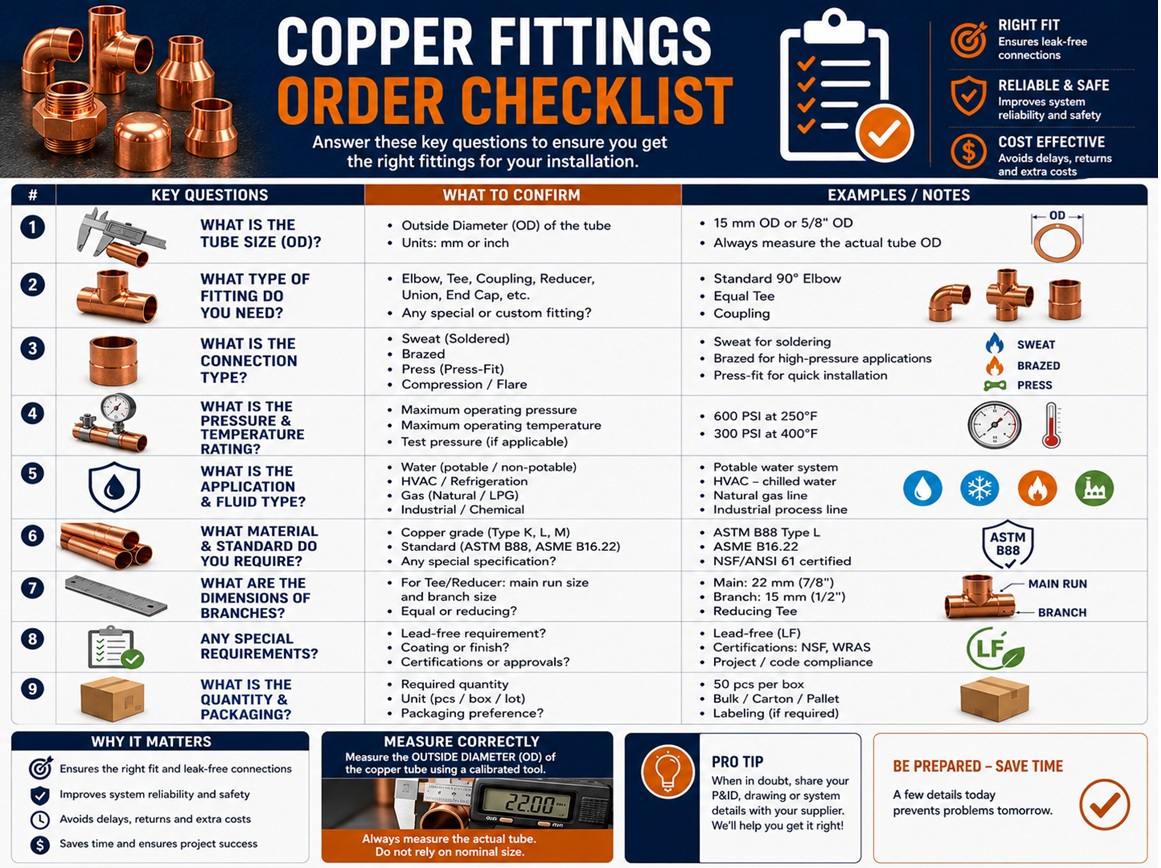
Before finalizing an order, a short checklist can prevent most of the common sourcing mistakes that show up mid-installation.
Confirm the tube standard in use (ASTM B88, ASTM B280, EN 1057, or another) and cross-check the fitting's rated size against the tube's actual outside diameter, not just its nominal size. Confirm the jointing method the installation crew will use solder, braze, or compression since fitting sockets, while often compatible with more than one method, still needs to match the filler metal or ferrule system planned for the job. Confirm the system's pressure and temperature range, since a fitting suited to a residential water line may not be rated for a refrigeration or gas application. And confirm the material grade and standard the fitting is certified to, particularly for any installation subject to code inspection.
Running through these four checks before an order is placed is generally faster than resolving a fitting mismatch after tubes have already been cut and installation is underway.
Working with a Copper Fittings Manufacturer or Supplier
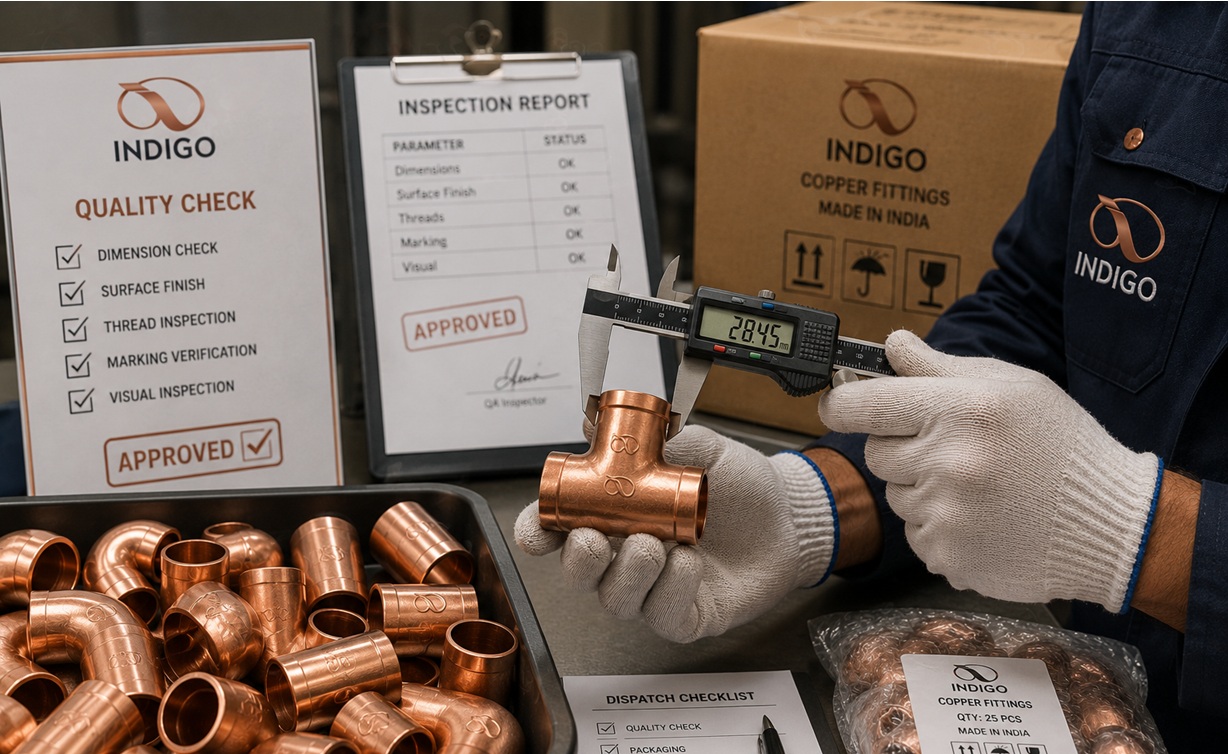
Sourcing decisions matter as much as product selection. A copper fittings manufacturer with consistent quality control should be able to provide test certificates confirming the alloy composition, dimensional tolerances, and standard compliance of every batch shipped, documentation worth keeping on file for warranty and inspection purposes.
A strong copper fittings supplier relationship also means access to full-range stock elbows, tees, couplings, reducers, unions, and end caps in the sizes a project needs rather than sourcing individual items from multiple vendors mid-project. Technical support matters here too: a supplier able to answer sizing, compatibility, and code-related questions quickly saves significantly more time over the course of a project than a marginal difference in unit price.
For larger or recurring projects, building a relationship with a single reliable manufacturer or supplier rather than sourcing opportunistically order to order tends to pay off in more consistent lead times and fewer surprises at delivery.
Frequently Asked Questions
What's the difference between a copper pipe fitting and a copper pipe connector? The terms are generally used interchangeably; both refer to the components (elbows, tees, couplings, reducers, unions, and end caps) used to join and route copper tube within a piping system.
Do I need copper brazing fittings or copper solder fittings for my project? It depends on the system: soldered joints are standard for residential and light commercial plumbing, while brazed joints are required for refrigeration lines, gas piping, and higher-pressure or higher-temperature applications.
Can copper compression fittings be used instead of soldering? Yes, compression fittings form a seal without heat, making them useful for repairs, occupied spaces, or joints that may need to be disassembled later, provided the ferrule is seated and tightened correctly.
What sizes do copper pipe fittings come in? Sizes vary by tube standard. Refrigeration fittings (matched to ASTM B280 tube) typically range from 1/8 inch to over 2 inches OD, while fittings for standard water tube (Types K, L, M) range from 1/4 inch up to several inches nominal size.
What's the difference between a copper union and a copper coupling? A coupling creates a permanent joint between two same-size tube ends, while a union can be disassembled and reassembled without cutting the tube, which is useful anywhere equipment may need future servicing.
Why does the manufacturing standard of a fitting matter? Standards like ASME B16.22 and ASME B16.18 ensure consistent socket dimensions and tolerances, so fittings from different manufacturers remain compatible with the same tube sizes and jointing methods.
How do I know which copper fittings manufacturer or supplier to choose? Look for one that provides test certification for every batch, maintains consistent stock across the full range of fitting types and sizes, and can offer technical support on sizing and code compliance.
Conclusion
A copper piping system is only as reliable as its weakest connection, which makes the fittings covered in this guide—elbows, tees, couplings, reducers, unions, and end caps—every bit as important as the tube they join. Matching the right shape, jointing method, size, and material grade to your project, and sourcing from a manufacturer or supplier who can back that product with proper certification, is the surest way to specify a system that performs the first time and keeps performing for decades after.