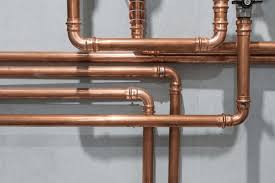
Copper Pipe Fittings for Plumbing, HVAC and Industrial Systems
Copper pipe fittings are essential components used to connect, redirect, extend, and control the flow of fluids and gases in piping systems. Widely used in plumbing, HVAC, refrigeration, gas distribution, marine, and industrial applications, copper pipe fittings provide unmatched reliability, corrosion resistance, and long service life.
As a preferred material across industries, copper offers excellent thermal conductivity, strength, and compatibility with various joining methods. Copper pipe fittings play a critical role in ensuring leak-proof performance and efficient system operation.
What are Copper Pipe Fittings?
Copper pipe fittings are specially designed components that connect copper pipes or tubes within a piping system. These fittings allow changes in direction, pipe size, or system configuration while maintaining structural integrity and flow efficiency.
Manufactured with high precision, copper pipe fittings ensure tight sealing and durability, making them suitable for both low and high-pressure applications.
Types of Copper Pipe Fittings
Copper pipe fittings are available in various configurations to meet different piping requirements:
- Elbows: Used to change the direction of flow (45°, 90°, 180°)
- Tees: Used to divide or combine flow in multiple directions
- Reducers: Connect pipes of different diameters
- Couplings: Join two pipes of the same size
- Caps and Plugs: Close the ends of pipes
- Unions: Allow easy disconnection for maintenance
- Adapters: Connect copper pipes to threaded systems
Types Based on Joining Methods
Copper pipe fittings can also be categorized based on installation techniques:
- Soldered Fittings: Commonly used in plumbing systems
- Brazed Fittings: Suitable for high-pressure and HVAC systems
- Compression Fittings: Ideal for quick installations
- Press-Fit Fittings: Modern solutions for fast and secure connections
Advantages of Copper Pipe Fittings
- Excellent corrosion resistance
- High strength and durability
- Leak-proof performance
- Resistance to high temperatures and pressures
- Antimicrobial properties for safe water systems
- Long service life with minimal maintenance
Copper pipe fittings are known for maintaining system integrity even in demanding environments.
Standards for Copper Pipe Fittings
Copper pipe fittings are manufactured in compliance with international standards to ensure quality and compatibility:
- ASME B16.22 – Wrought copper and copper alloy fittings
- ASTM B88 – Copper water tube
- ASTM B75 – Seamless copper tube
- EN 1254 – Copper fittings standard
- IS 1545 – Copper pipes and fittings
Adherence to these standards ensures consistent performance and safety in all applications.
Material Grades Used
Copper pipe fittings are typically manufactured using premium copper grades:
- C12200 – Phosphorus-deoxidized copper
- C12000 – High purity copper
These grades offer excellent workability, corrosion resistance, and mechanical strength.
Sizes and Dimensions
| Nominal Size | Outer Diameter (mm) | Application |
|---|---|---|
| 1/4 inch | 6.35 | Instrumentation and small piping |
| 3/8 inch | 9.52 | HVAC and residential systems |
| 1/2 inch | 15.88 | Water and gas pipelines |
| 3/4 inch | 22.23 | Commercial plumbing |
| 1 inch and above | 28.58+ | Industrial piping systems |
Manufacturing Process of Copper Pipe Fittings
Copper pipe fittings are produced using advanced manufacturing techniques to ensure precision and quality:
- Selection of high-quality copper raw material
- Hot forging or extrusion
- Machining and shaping
- Annealing for ductility
- Surface finishing and cleaning
- Final inspection and testing
These processes ensure dimensional accuracy and long-term performance.
Applications of Copper Pipe Fittings
Plumbing Systems
- Hot and cold water supply
- Sanitary and potable water systems
HVAC and Refrigeration
- Air conditioning pipelines
- Refrigeration systems
Gas Distribution
- LPG and natural gas pipelines
- Industrial gas systems
Industrial Applications
- Oil and gas processing
- Power generation plants
- Marine piping systems
Medical Systems
- Medical gas pipelines
- Clean room installations
Why Choose Copper Pipe Fittings?
Copper pipe fittings are preferred due to their reliability, safety, and performance. They offer superior resistance to corrosion, high temperatures, and pressure fluctuations, making them suitable for critical infrastructure.
Additionally, copper is a recyclable material, making it an environmentally sustainable choice for modern construction and industrial applications.
Quality Control and Testing
Manufacturers perform strict quality control procedures to ensure product excellence:
- Hydrostatic pressure testing
- Dimensional verification
- Chemical composition analysis
- Surface inspection
These tests ensure that copper pipe fittings meet global standards and deliver reliable performance.
Conclusion
Copper pipe fittings are an integral part of efficient and reliable piping systems across industries. Their durability, versatility, and compatibility with copper piping make them indispensable in modern infrastructure.
Whether used in plumbing, HVAC, gas distribution, or industrial applications, copper pipe fittings provide long-term performance, safety, and efficiency, making them the preferred choice for engineers and manufacturers worldwide.