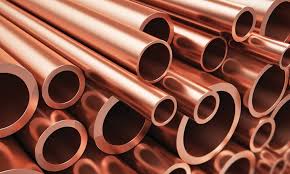
Copper Pipe Tube
Copper pipe tube is one of the most widely used materials in plumbing, HVAC, refrigeration, gas distribution, and industrial piping systems. Known for its excellent durability, corrosion resistance, and superior thermal conductivity, copper pipe tube plays a crucial role in modern infrastructure.
From residential water supply systems to complex industrial applications, copper pipe tube provides reliable performance, long service life, and efficient fluid transport under various operating conditions.
What is Copper Pipe Tube?
Copper pipe tube refers to seamless cylindrical copper products designed for transporting fluids such as water, gas, refrigerants, and industrial chemicals. These tubes are manufactured with precise dimensions and are available in various sizes and thicknesses to meet different application requirements.
They are supplied in both straight lengths and coils, offering flexibility for installation in different systems.
Types of Copper Pipe Tube
- Type K: Thick wall, used for underground and high-pressure systems
- Type L: Medium thickness, ideal for plumbing and gas applications
- Type M: Thin wall, used in residential water systems
- ACR Tubes: Used in air conditioning and refrigeration
Key Properties
- Excellent corrosion resistance
- High thermal conductivity
- Strong and durable
- Leak-proof performance
- Antimicrobial properties
Copper Grades Used
- C12200 – Phosphorus-deoxidized copper
- C12000 – Low residual phosphorus copper
- C10100 – Oxygen-free copper
Applicable Standards
- ASTM B88 – Copper water tubes
- ASTM B280 – Copper tubing for HVAC
- EN 1057 – Copper tubes for water and gas
- IS 1545 – Copper tubes for plumbing and LPG
Sizes and Dimensions
| Nominal Size | Outer Diameter (mm) | Application |
|---|---|---|
| 1/4 inch | 6.35 | Refrigeration |
| 3/8 inch | 9.52 | HVAC systems |
| 1/2 inch | 12.70 | Residential plumbing |
| 3/4 inch | 19.05 | Commercial piping |
| 1 inch | 25.40 | Industrial systems |
Manufacturing Process
- Melting and casting of copper billets
- Seamless extrusion
- Cold drawing for accuracy
- Annealing for flexibility
- Inspection and testing
Applications
Plumbing
- Hot and cold water systems
HVAC
- Air conditioning and refrigeration
Gas Systems
- LPG and CNG pipelines
Industrial
- Process piping
- Heat exchangers
Advantages
- Long service life
- Low maintenance
- High efficiency
- Recyclable material
Quality Control
- Chemical testing
- Dimensional inspection
- Pressure testing
- Eddy current testing
Conclusion
Copper pipe tube remains a reliable and essential material across multiple industries due to its strength, corrosion resistance, and versatility. Its ability to deliver long-term performance makes it a preferred choice for engineers and manufacturers worldwide.
By selecting the right grade, following standards, and ensuring proper installation, copper pipe tube systems provide safe and efficient operation for years.