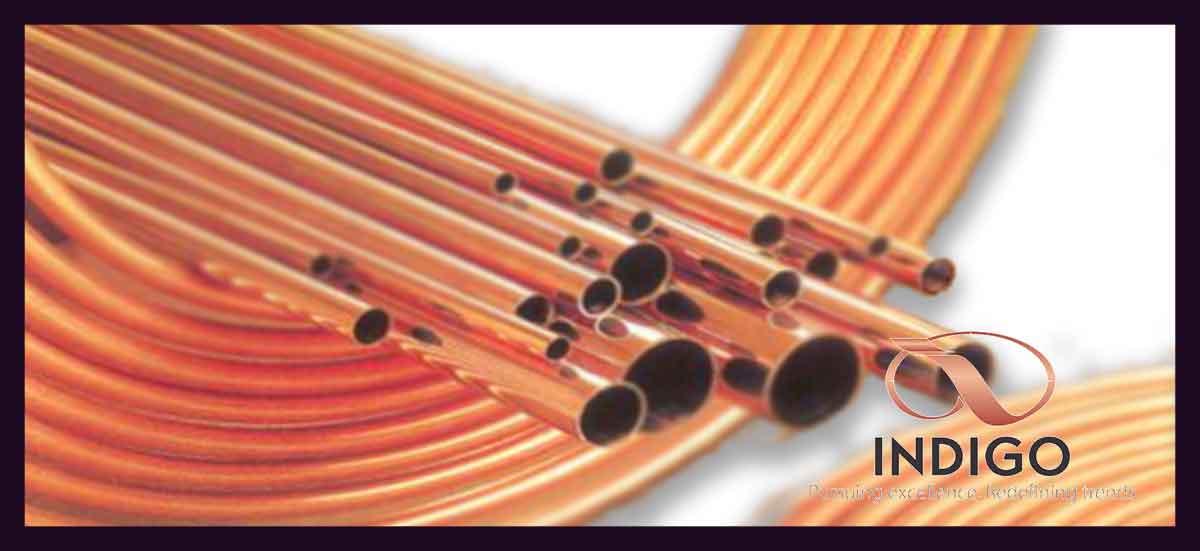
Copper Pipe with Insulation – Types, Standards and Industrial Applications
Copper pipe with insulation is a critical component in HVAC, refrigeration, plumbing, gas and industrial piping systems where temperature control, energy efficiency and condensation prevention are essential. By combining high-quality copper pipes with factory-applied thermal insulation, these systems deliver superior performance, reduced heat loss and long-term reliability in demanding environments.
Pre-insulated copper pipes are widely used in air-conditioning refrigerant lines, chilled water systems, heat pumps and industrial process piping. Factory insulation ensures uniform coverage, consistent thickness and protection against mechanical damage, making installation faster and more reliable compared to site-applied insulation.
Why is it Essential?
Copper pipes alone offer excellent thermal conductivity, corrosion resistance and mechanical strength. However, in temperature-sensitive applications, insulation is necessary to minimize heat gain or loss, prevent surface condensation and improve overall system efficiency.
Insulated copper piping reduces energy consumption, protects surrounding structures from moisture damage and enhances system longevity by maintaining stable operating conditions.
Types of Insulation Used
Elastomeric Rubber Insulation
Elastomeric insulation is the most commonly used material for HVAC and refrigeration copper pipes. It offers excellent flexibility, closed-cell structure and resistance to moisture ingress, making it ideal for preventing condensation on cold refrigerant lines.
Polyethylene (PE) Insulation
PE insulation is lightweight and cost-effective, widely used for residential and light commercial air-conditioning systems. It provides basic thermal protection and mechanical cushioning.
XLPE and Cross-Linked Foam Insulation
Cross-linked polyethylene insulation provides enhanced thermal resistance, durability and dimensional stability, making it suitable for higher temperature and pressure applications.
Fiberglass Insulation
Used primarily in industrial and power plant applications, fiberglass insulation offers high-temperature resistance and excellent thermal performance when combined with vapor barriers.
Manufacturing Process
Copper pipes are manufactured through extrusion and cold drawing processes, followed by annealing to achieve precise dimensions and mechanical properties. After stringent quality checks, insulation is applied using controlled extrusion or wrapping processes to ensure uniform thickness and strong adhesion.
Factory insulation eliminates gaps, weak points and inconsistencies often associated with on-site insulation, ensuring optimal thermal performance and durability.
Applicable Standards
- ASTM B280 – ACR copper tubes for HVAC and refrigeration
- ASTM B88 – Copper tubes for water and plumbing
- EN 12735 – Copper tubes for refrigeration
- EN 1057 – Copper tubes for water and gas
- IS 1545 / IS 2501 – Indian standards
- ASTM C534 / C547 – Insulation material standards
Sizes and Thickness Options
Insulated copper pipes are available in standard HVAC sizes ranging from 1/4 inch to 1-1/8 inch outer diameter, with custom sizes available for industrial applications. Insulation thickness typically ranges from 6 mm to 25 mm depending on system design, ambient conditions and energy efficiency requirements.
Wall thickness of the copper pipe is selected based on refrigerant pressure, temperature and safety margins defined by applicable codes and standards.
Applications
HVAC & Refrigeration
- Split and VRF air-conditioning systems
- Chillers and cold storage facilities
- Heat pumps and condenser units
Plumbing & Water Systems
- Hot water distribution
- Chilled water piping
- Solar thermal systems
Gas & Medical Systems
- Medical gas pipelines
- Laboratory gas distribution
- Specialty gas handling systems
Industrial & Power Applications
- Process piping with temperature control
- Power plant cooling systems
- Refinery and chemical processing units
Advantages
- Reduced heat loss and energy consumption
- Effective condensation prevention
- Faster installation and reduced labor cost
- Consistent insulation quality
- Enhanced durability and system reliability
Quality Control and Testing
It undergoes rigorous testing including dimensional inspection, eddy current testing, hydrostatic pressure testing and insulation adhesion checks. Moisture content and cleanliness are tightly controlled for refrigeration and medical applications.
Compliance with international standards ensures safe operation, long service life and reliable performance under demanding operating conditions.
Conclusion
Copper pipe with insulation is an indispensable solution for modern HVAC, refrigeration and industrial systems where energy efficiency, temperature control and reliability are critical. By combining high-performance copper tubing with factory-applied insulation, these systems deliver superior thermal efficiency, reduced maintenance and long-term operational stability.
Manufactured to global standards and tailored to application-specific requirements, insulated copper pipes continue to be the preferred choice for engineers, contractors and OEMs across residential, commercial and industrial infrastructure projects worldwide.