Introduction
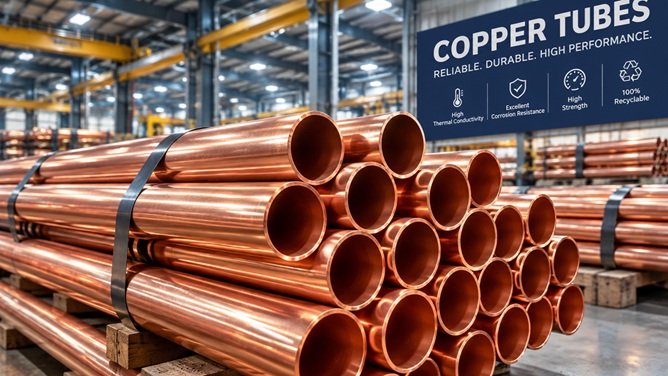
Consider all the systems that work seamlessly in the background of a hospital or HVAC system that carry air, gas or water where it needs to go, or all the systems that would move gas through a factory without leaking or corroding. They likely all use copper piping. It's the kind of material that's invaluable to the extent that people take it for granted. But, when something goes wrong, it is without a doubt necessary to know the type, grade, and size copper tubing.
What people likely don't know is the numbers of types of copper piping there are. Copper tubing can have different coatings and finishes, and come in different thicknesses, so there is a copper tube for each specific application. One copper tube for underground water systems is completely different that a copper tube for refrigerant lines or plumbing systems. This guide outlines the copper piping, and helps you learn the standards, sizes, and types of piping, as well as the applications in every industry. This guide helps you decide on the right copper pipe for your project.
What is a Copper Tube?
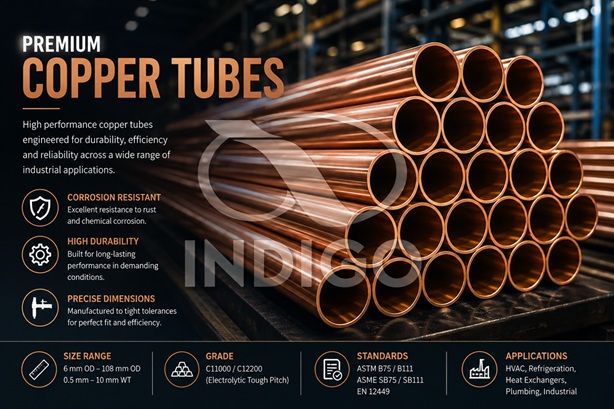
A copper tube is hollow, refined, and drawn or extruded copper shaped into a cylinder with thin walls and precise dimensions. Unlike copper pipes, which are sized by nominal pipe size and have thicker walls due to lower required internal pressures, copper tubes are sized by the exact external diameter and are manufactured with greater precision. This characteristic makes copper tubes better suited to applications with high internal pressures and high required precision.
The three most defining dimensions of copper tube are its external and internal diameters and thickness of the wall between the two. These determine the pressure the tube can contain, the tube's volumetric capacity to convey a fluid or gas, and its resistance to deformation.
The production of copper tube starts with an extrusion of a copper cathode which is refined to a hollow billet. Each diameter of the tube is drawn through a series of fixtures which forms a precise, smooth, and consistent bore with progressively smaller external diameters. Depending on the requirement of flexibility or rigidity of the copper tube for its intended application, the copper tube may be in a hard drawn state or be soft. The combination of these characteristics and features of copper tubing are what differentiates copper tubing from other general purpose tubing.
Key Characteristics of Copper Tubes
Copper tubing has maintained its popularity in the plumbing and HVAC industries for good reason. The tangible benefits and characteristics of copper tubing are what maintain their position as the material choice. The first characteristic of copper tubing is their corrosion resistance. Copper forms a protective layer of oxide of itself when it is exposed to air and water. This protective layer makes copper tubing last a minimum of 50 years.
Copper tubing's thermal conductivity is what makes copper tubing the best choice for refrigeration and makes copper tubing the best choice in the construction of heat exchangers and solar thermal systems. Every degree of efficiency matters in these systems.
Copper tubing's stress and demand tolerance also allow for temperature swings and high mechanical stress. The flexibility of copper tubing during their coiling and annealing processes allows for bending copper tubing. This also allows for routing through limited spaces and leaves a minimum of junctions. Each junction is a potential leak.
Copper tubing's recyclability is also a benefit that is frequently overlooked. Compared to many of the plastic alternatives, copper tubes are a much more sustainable choice. All of these benefits of copper tubing systems also provide a huge advantage when systems are needed on a large scale in order to optimize the overall cost.
Types of Copper Tubes
Copper Tubes are not made from a one-size-fits-all design. There are various forms/ designs made based on the method of installation and the intended use. 'Seamless copper tube' means it is made with no joints that are welded along the lengths of the tube since it is made as a continuous piece. Seamless tubes, thus, do not have points that are comparatively weaker and get along with tube significantly better when it comes to pressure, so it is favored when it comes to plumbing, refrigerants and industrial pressure.
Copper tubing coil form refers to tubes that have been shaped into coils. Unlike cut straight forms of tube, coiled copper tube is always soft-annealed which means that it retains the property of being easy to shape and of being flexible. Coiled tubes are used as refrigerant tubes and in situations where tube is routed and laid out underground. Copper tubing roll form is basically the same as coiled form but refers to smaller and more manageable rolls. It is commonly used in HVAC servicing and lines of gas.
Copper tube in straight length form is made with a rigid form as compared to the coil or roll forms of tube. It is favored when a tube form is used that is made to be structurally straight. The choice when it comes to rolls, coils and straight lengths of tube is based on the environment. For relatively long routes that are hard to reach, flexible forms of tube are best.
ASTM B280 Copper Tube: Standards & Specifications
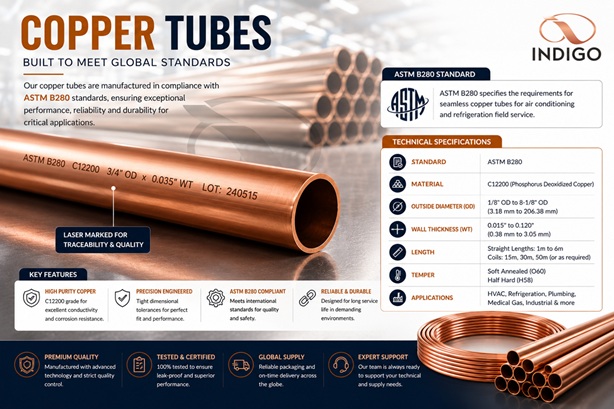
ASTM B280 is the specification that governs seamless copper tube used specifically in air conditioning and refrigeration (ACR) applications, and it's one of the most important standards in the HVAC industry. What sets ASTM B280 copper tube apart from standard water tube is the manufacturing and finishing process. Tube produced under this standard is internally cleaned to remove oils, oxides, and particulate residue, then dehydrated to eliminate moisture, and finally capped or plugged at both ends before shipping. This matters enormously in refrigeration systems, where even trace contamination or moisture inside a sealed line can cause corrosion, ice formation, or compressor damage down the line.
ASTM B280 tube is typically supplied in a soft-annealed temper for coils (allowing field bending) and hard-drawn temper for straight lengths used in larger commercial systems. The standard specifies precise tolerances for outside diameter and wall thickness, ensuring compatibility with standard flare fittings, braze connections, and refrigeration components across manufacturers.
For contractors and engineers, specifying ASTM B280 copper tube isn't optional in most jurisdictions building and mechanical codes frequently reference it directly for refrigerant piping, making mill certification an important document to keep on file for inspection and warranty purposes.
Copper Tubing Sizes & Specifications
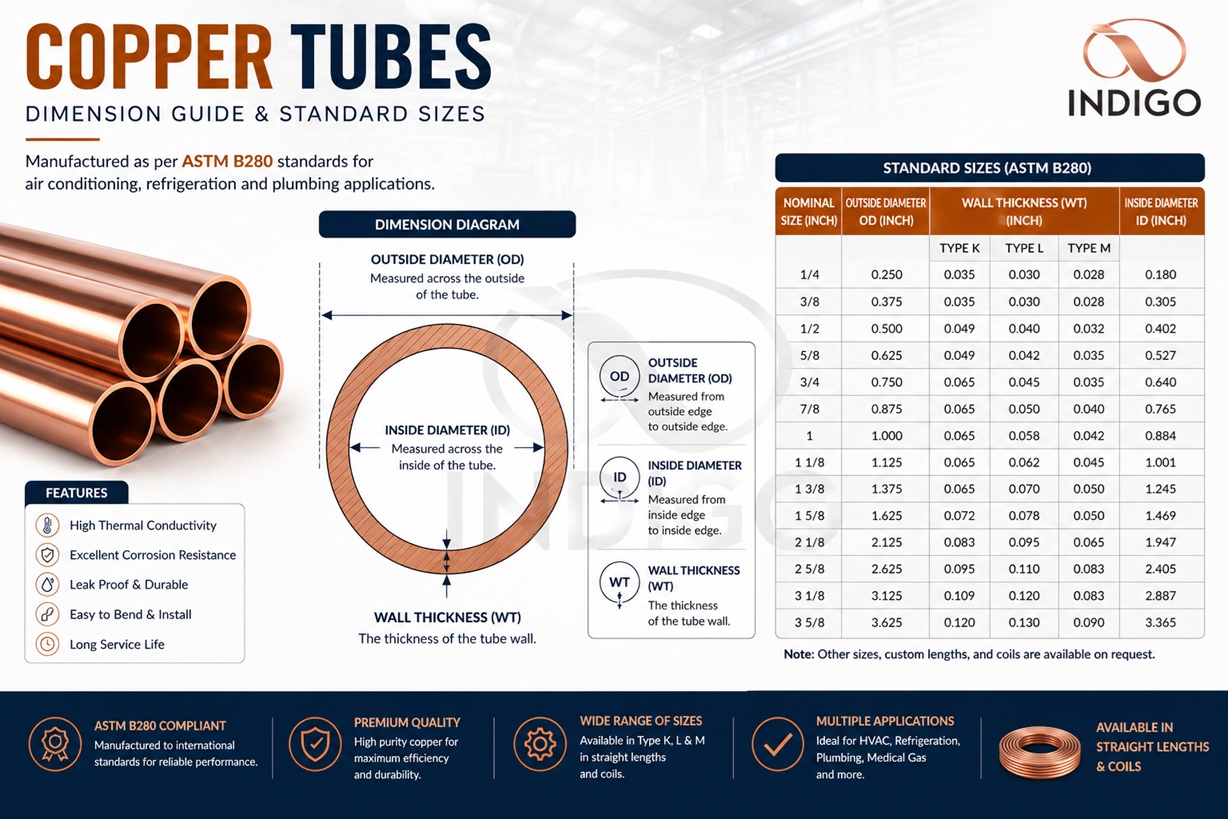
Copper tube sizing can be confusing at first glance because it doesn't always match the numbers printed on the package. Nominal size, actual outside diameter, and wall thickness all interact differently depending on tube type.
For standard water tube (Types K, L, and M under ASTM B88), sizes commonly range from as small as 1/4 inch up to 8 inches or more in nominal diameter, with the actual OD always slightly larger than the nominal size a detail that trips up first-time buyers. Wall thickness varies by type: Type K carries the thickest wall for maximum pressure rating, Type L sits in the middle as the standard for most commercial plumbing, and Type M is thinnest, suited to lighter residential use.
Refrigeration-grade tube under ASTM B280 is sized directly by actual OD rather than nominal size, with common sizes ranging from 1/8 inch up to over 2 inches, matched to specific wall thicknesses depending on the pressure rating of the refrigerant system involved. When specifying copper tubing sizes, three numbers should always be confirmed together: OD, wall thickness, and length (or coil footage). Mixing up nominal versus actual dimensions is one of the most common sourcing errors, and it can lead to fitting incompatibility on site so cross-checking against the relevant ASTM or EN standard before ordering is always worth the extra few minutes.
Copper Tube with PVC Coating
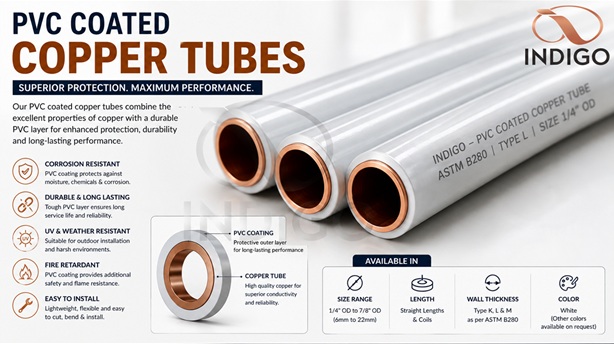
Copper tube with PVC coating combines the core performance of copper with an outer polymer layer bonded to the tube's exterior surface. This coating serves a specific purpose: protecting the tube from external corrosion, abrasion, and electrolytic reactions when it comes into contact with dissimilar materials, concrete, or aggressive soil conditions.
PVC-coated copper tube is especially useful in split air conditioning installations, where the tube runs through walls or is exposed to weather, since the coating shields against UV degradation and moisture ingress that could otherwise attack the bare copper surface over time. It's also commonly color-coded, which helps installers visually distinguish between liquid and suction lines during HVAC installation.
Beyond HVAC, PVC-coated tube shows up in underground or embedded installations, where the coating acts as a barrier against galvanic corrosion that can occur when copper contacts certain metals or aggressive soils directly.
Sheathed & Insulated Copper Tubes
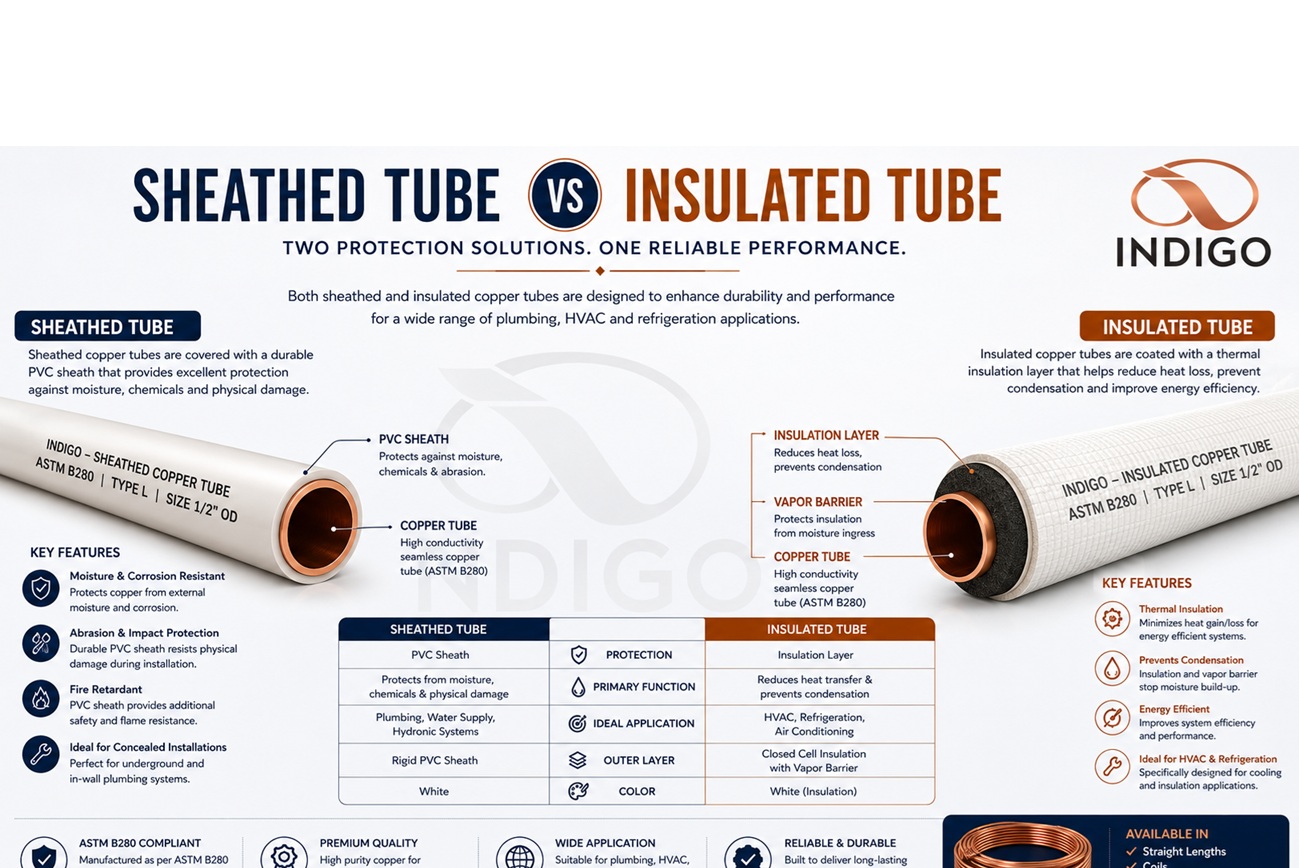
Sheathed copper tube and insulated copper tube solve related but distinct problems, and the difference is worth understanding before specifying either. Sheathed copper tube is wrapped in a protective outer layer often a plastic or polymer sheath primarily to guard against physical damage, abrasion, or minor corrosion during installation and long-term use. The sheath is generally thin and focused on protection rather than temperature control.
Insulated copper tube goes a step further, wrapping the tube in a thicker thermal insulation layer (commonly foam or rubber-based) designed to prevent heat gain or loss along the tube's length. This is critical in refrigeration and air conditioning lines, where an uninsulated suction line can sweat, drip condensation, and lose cooling efficiency before refrigerant even reaches the indoor unit.
In practice, many HVAC installations use both: an insulated tube for thermal performance, sometimes with an additional protective sheath layer for durability in exposed or outdoor runs. Choosing correctly depends on whether the priority is physical protection, thermal performance, or both.
Refrigeration Copper Tubing
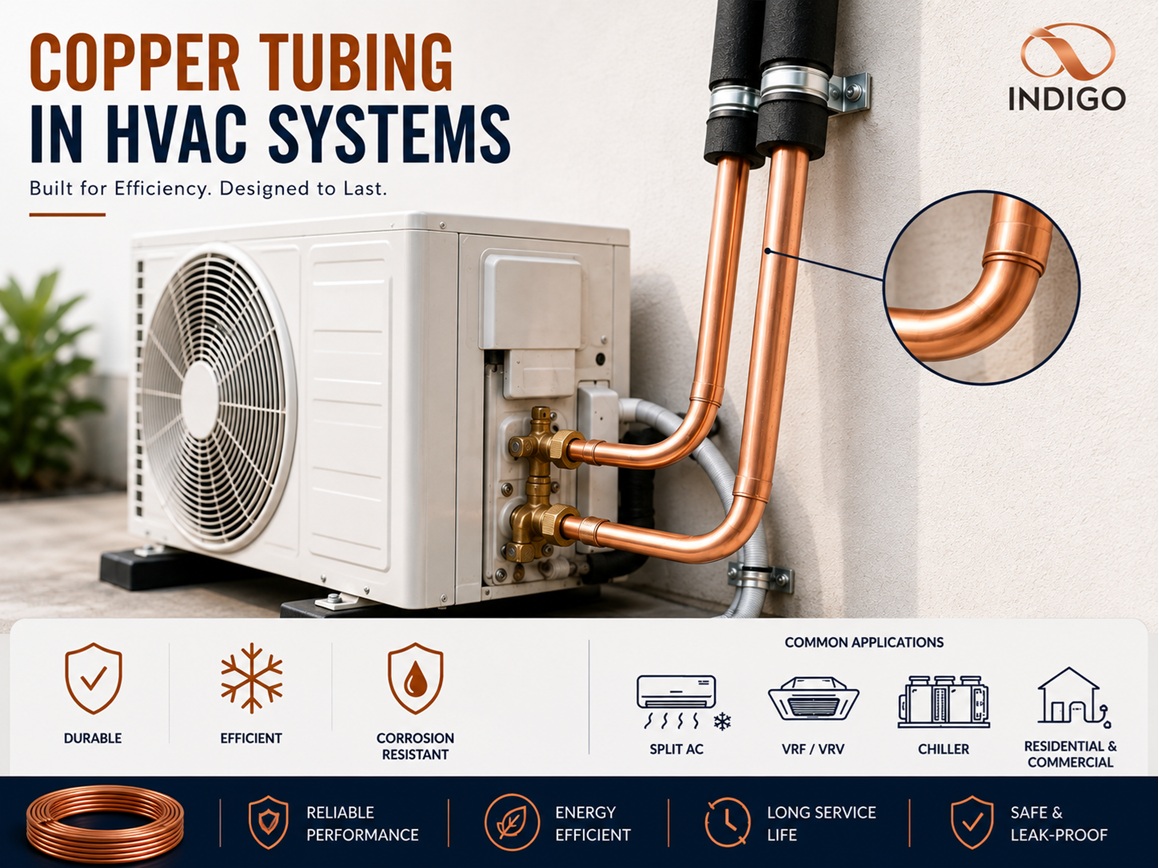
Refrigeration copper tubing is the unsung workhorse of every air conditioner, refrigerator, chiller, and cold storage unit in operation today. It's responsible for carrying refrigerant between the compressor, condenser, and evaporator, and its performance directly affects system efficiency, reliability, and lifespan.
What makes refrigeration-grade tube different from standard plumbing tube is its manufacturing process: it's cleaned, dehydrated, and sealed at both ends immediately after production to prevent any moisture or debris from entering the system before installation a detail covered under standards like ASTM B280. Even a small amount of trapped moisture can cause ice formation inside the system, corrosion, or a phenomenon known as "copper plating" that damages compressors over time.
Installation typically involves brazing (rather than soldering) to withstand the higher pressures and temperature cycles refrigeration systems experience, and tube runs are almost always insulated to prevent energy loss and condensation. Given how central these lines are to system performance, using properly certified refrigeration copper tubing rather than substituting generic tube is one of the simplest ways to protect long-term HVAC reliability.
Copper Tube for Gas Line, LPG Line & CNG Kit
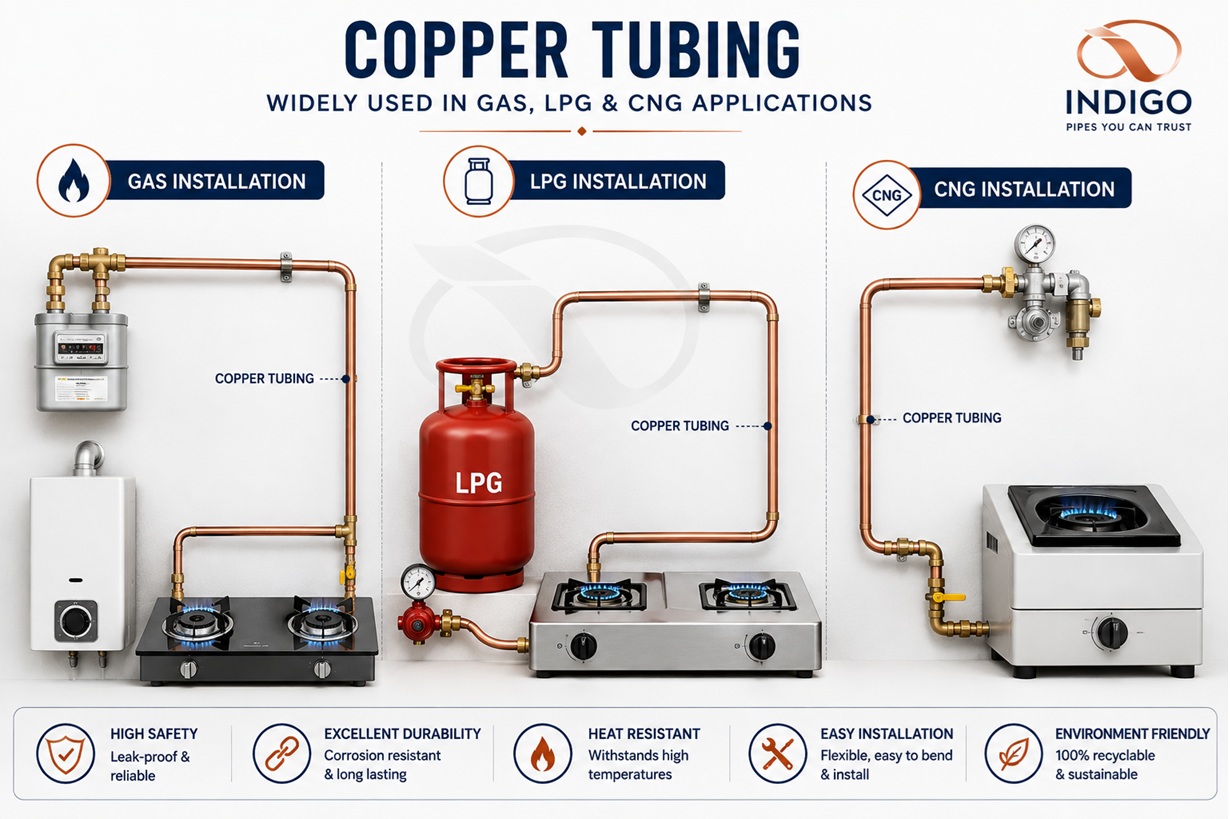
Copper tube's corrosion resistance and reliable jointing characteristics make it a trusted choice for gas distribution applications, though each use case comes with its own specific requirements.
Copper tube for gas line applications typically natural gas or piped fuel gas within buildings relies on tube manufactured to strict cleanliness and pressure-rating standards, since gas lines carry serious safety implications if a joint fails or the tube is undersized for the pressure involved. Many jurisdictions specify minimum wall thicknesses and require specific jointing methods (brazing rather than soldering) for gas service.
Copper tube for LPG line installations face an added consideration: LPG (liquefied petroleum gas) can be more chemically aggressive to certain fittings and seals than natural gas, so tube, fittings, and jointing compounds all need to be rated specifically for LPG compatibility. Flexible copper tube is often used here to simplify routing from cylinders or bulk tanks to appliances, reducing the number of rigid joints exposed to vibration.
Copper tube for CNG kits used in compressed natural gas vehicle conversions operates under significantly higher pressures than household gas lines, which means the tube specified must meet automotive and pressure-vessel-adjacent safety standards, often with thicker walls and more rigorous testing than standard gas tube. Given that CNG systems are mobile and subject to vibration, heat cycling, and mechanical stress, using tube specifically rated and tested for CNG service rather than repurposed plumbing tube is a non-negotiable safety requirement.
Across all three applications, the common thread is that gas-carrying copper tube should never be substituted with generic water or refrigeration tube without confirming it meets the pressure rating and code requirements for that specific fuel and use case.
Corrosion Resistant Copper Tube
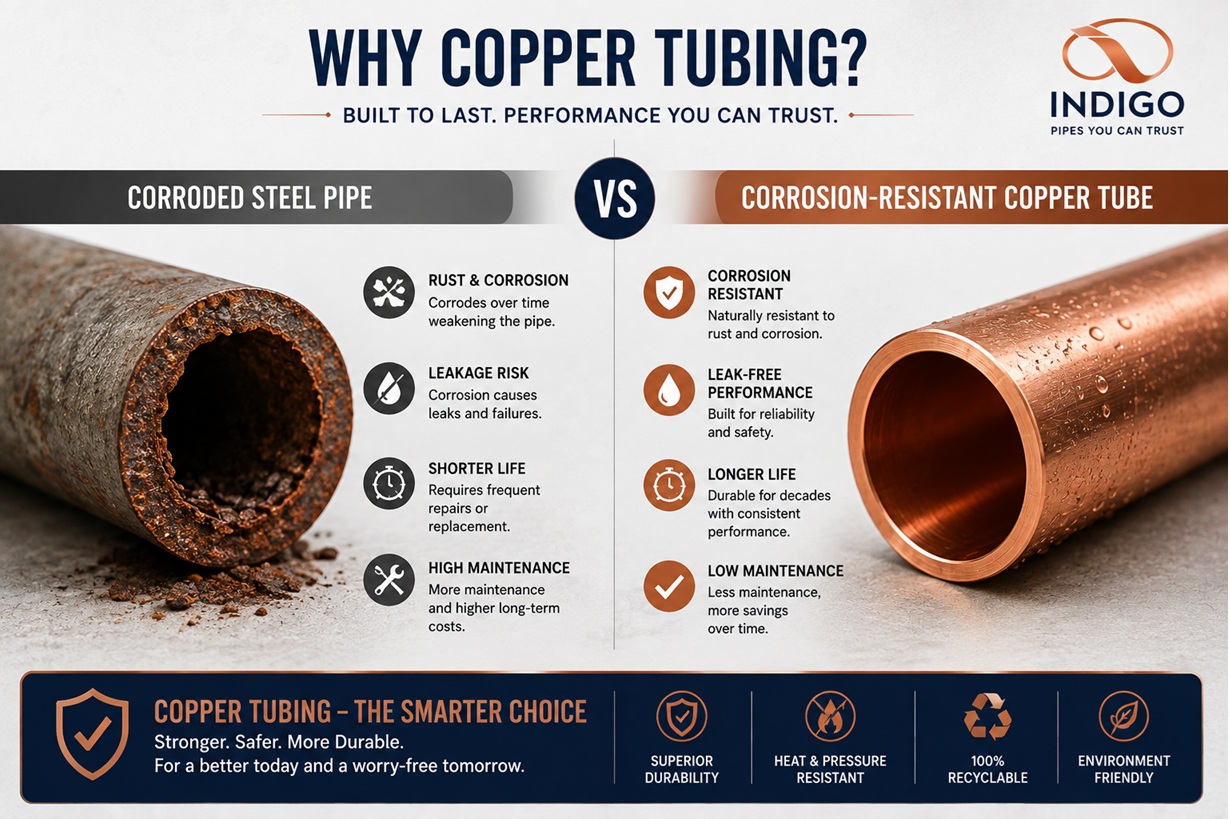
One of copper's defining advantages over ferrous metals is its natural resistance to corrosion, and this becomes especially clear when compared side-by-side with materials like steel or iron piping.
Steel and iron pipes rely on external coatings or galvanization to resist rust, and once that coating is scratched, worn, or compromised, corrosion can spread quickly beneath the surface — often invisibly, until a leak develops. Copper, by contrast, forms a thin, stable, self-repairing oxide layer (patina) when exposed to air and moisture. This layer doesn't flake off or expose fresh metal to ongoing attack the way rust does; instead, it acts as a passive shield that actually strengthens the tube's long-term resistance to further degradation.
This is why corrosion-resistant copper tube is so heavily favored in water distribution, marine environments, and underground installations, where a failed pipe often means costly excavation and repair. Copper-nickel alloy variants push this resistance even further, specifically engineered for saltwater and marine environments where standard copper or steel would degrade far faster.
Copper Tube Applications Across Industries
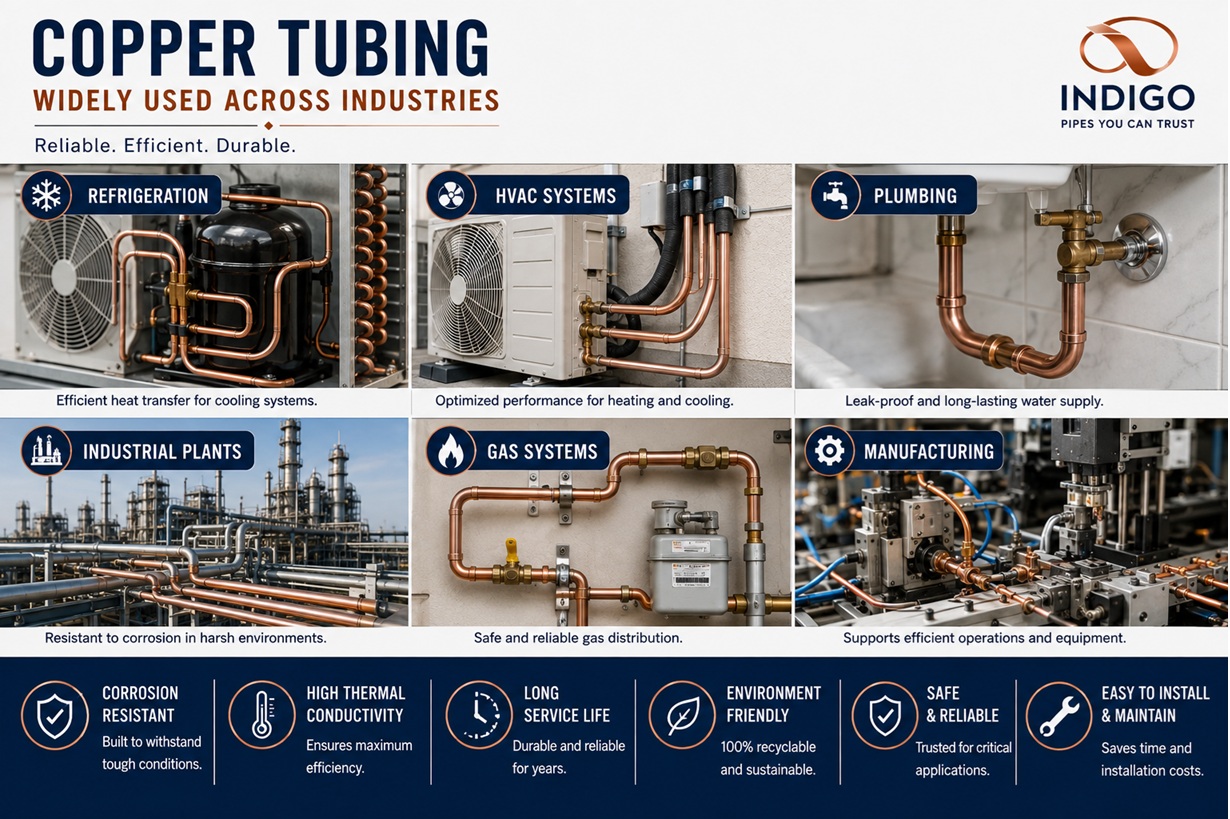
Copper tube's versatility means it shows up across a surprisingly wide range of industries, each drawing on a different combination of its properties.
In plumbing, copper tube remains a top choice for potable water supply lines, valued for its corrosion resistance and antimicrobial properties that help maintain water quality over decades of service.
In refrigeration and HVAC, copper tube forms the circulatory system of air conditioners, heat pumps, and commercial refrigeration units, relying on its thermal conductivity and compatibility with brazed and flared joints.
In industrial plants and process facilities, copper and copper-alloy tube is used in heat exchangers, cooling systems, and fluid transfer lines, particularly where corrosion resistance to chemicals or seawater is required.
In gas distribution systems, from household piped gas to LPG and CNG installations, copper tube provides a reliable, leak-resistant option for carrying fuel gases safely.
In manufacturing and electronics, copper tube and tubing components are used in cooling systems for machinery, transformers, and industrial equipment that generate significant heat during operation.
In renewable energy, particularly solar thermal systems, copper tubing carries heated fluid through collector panels, taking advantage of its efficient heat transfer to maximize system output.
Across all of these sectors, the common denominator is copper's rare combination of durability, conductivity, and corrosion resistance — properties that are difficult to replicate with any single alternative material.
Choosing the Right Copper Tube Supplier
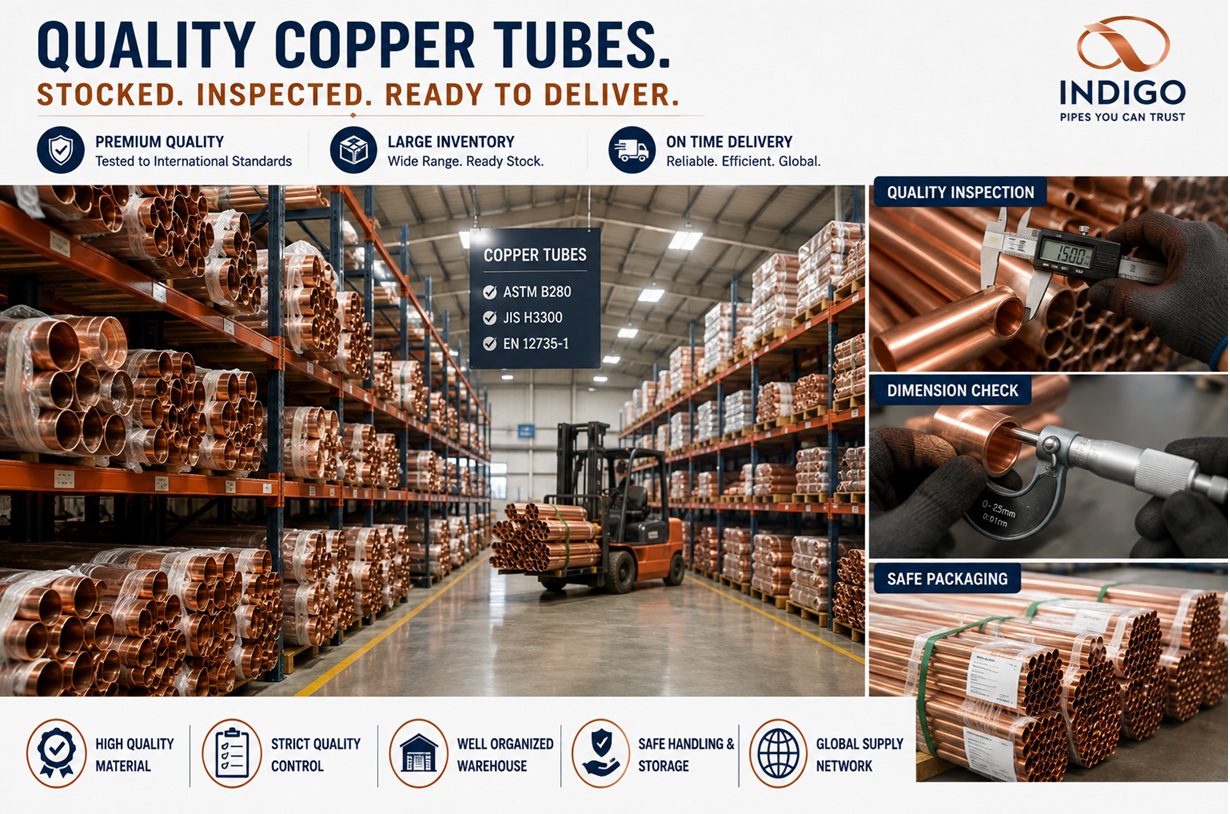
Sourcing copper tube isn't just about price it's about consistency, certification, and technical support. A reliable supplier should be able to provide mill test certificates confirming compliance with the relevant standard (ASTM B88, ASTM B280, EN 1057, or others), along with clear documentation of alloy composition, wall thickness tolerances, and temper.
Beyond paperwork, a good supplier maintains consistent stock across the range of types and sizes a project might need, minimizing delays caused by sourcing gaps mid-installation. Technical responsiveness matters too a supplier who can quickly answer questions about compatibility, sizing, or code requirements saves significant time compared to one who simply ships product without support.
Finally, look for a supplier with a track record across the specific application you're sourcing for, whether that's refrigeration-grade ACR tube, gas line tube, or marine-grade copper-nickel alloy. Experience in your specific sector often translates into fewer surprises during installation and inspection.
Frequently Asked Questions
What is the difference between copper tube and copper pipe? Copper tube is sized by actual outside diameter and manufactured to tighter tolerances, while copper pipe is sized by nominal pipe size with generally thicker walls suited to lower-pressure use.
What is ASTM B280 copper tube used for? ASTM B280 copper tube is specifically manufactured and certified for air conditioning and refrigeration applications, with internal cleaning, dehydration, and sealed ends to prevent contamination.
What are common copper tubing sizes? Sizes vary by type refrigeration tube (ASTM B280) commonly ranges from 1/8 inch to over 2 inches OD, while water tube (Types K, L, M) ranges from 1/4 inch up to 8 inches or larger nominal size.
Is copper tube with PVC coating necessary for outdoor installations? It's strongly recommended for outdoor or embedded installations, since the coating protects against UV exposure, moisture, and galvanic corrosion from contact with other materials.
Can copper tube be used for CNG kits? Yes, but only tube specifically rated for CNG service should be used, as these systems operate at much higher pressures than standard gas lines and require thicker walls and stricter certification.
Why is copper tube considered corrosion resistant? Copper naturally forms a stable, self-repairing oxide layer when exposed to air and moisture, which protects the underlying metal far more effectively than the coatings relied on by ferrous metals like steel.
Is copper tube recyclable? Yes copper can be recycled repeatedly without losing its physical or chemical properties, making it one of the more sustainable piping materials available.
Conclusion
Copper tube's reliability isn't accidental — it's the result of decades of refined manufacturing standards, precise sizing, and material science that make it suited to everything from household plumbing to CNG conversions and marine cooling systems. Understanding the differences between tube types, standards like ASTM B280, and application-specific variants like PVC-coated or insulated tube puts you in a far stronger position to specify or source exactly what a project needs — the first time, without costly rework.