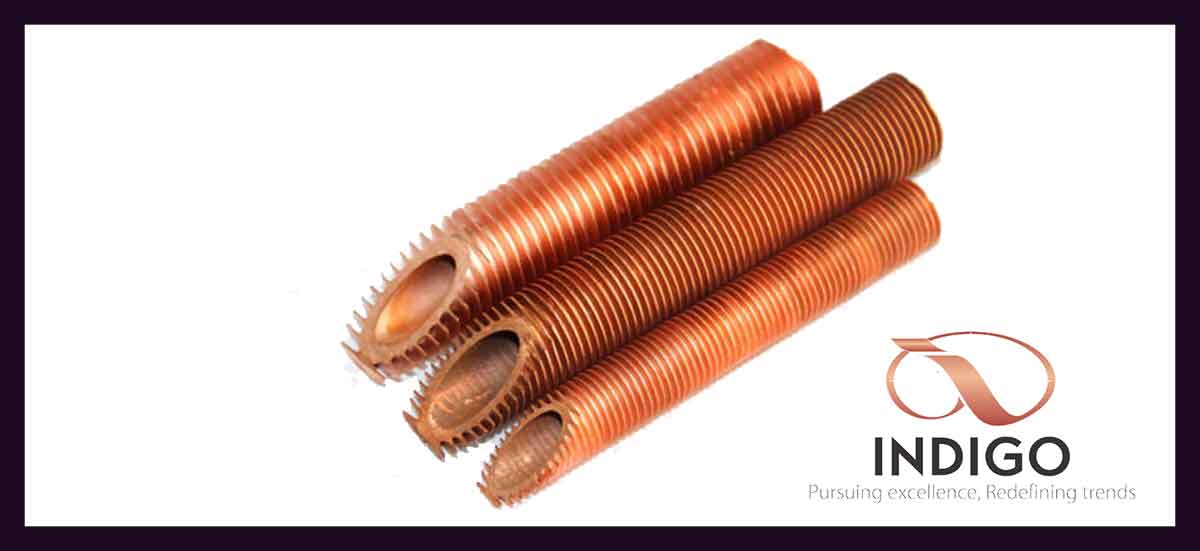
Finned Tubes for High-Efficiency Heat Transfer Applications
Finned tubes are specialized heat transfer components designed to increase the surface area of tubes and improve thermal efficiency. They are widely used in heat exchangers, HVAC systems, power plants, refineries and industrial processes where effective heat transfer is essential.
By adding fins to the outer surface of the tube, finned tubes significantly enhance heat exchange between fluids, making them an essential component in modern thermal systems.
What are Finned Tubes?
Finned tubes are tubes with extended surfaces (fins) attached to their exterior. These fins increase the surface area, allowing more efficient heat transfer between the fluid inside the tube and the surrounding environment.
They are commonly manufactured using materials such as copper, aluminum, stainless steel and carbon steel.
Types of Finned Tubes
Extruded Finned Tubes
Manufactured by extruding aluminum over a base tube, providing excellent bonding and corrosion resistance.
L-Footed Finned Tubes
Fins are wrapped around the tube and secured mechanically, offering cost-effective performance.
Embedded Finned Tubes (G-Type)
Fins are embedded into grooves on the tube surface for strong mechanical bonding.
Welded Finned Tubes
Fins are welded to the tube, providing high durability for high-temperature applications.
Low Fin Tubes
Used in applications where moderate heat transfer enhancement is required.
Materials Used
Finned tubes are manufactured using a combination of materials:
- Copper tubes for high thermal conductivity
- Aluminum fins for lightweight and efficient heat transfer
- Stainless steel for corrosion resistance
- Carbon steel for strength and durability
Key Features
- Enhanced heat transfer efficiency
- Increased surface area
- Reduced equipment size
- Energy-efficient operation
- Suitable for high-temperature applications
- Long service life
Technical Specifications
| Parameter | Details |
|---|---|
| Tube Material | Copper / Steel / Stainless Steel |
| Fin Material | Aluminum / Copper |
| Fin Density | 8–16 FPI (Fins per inch) |
| Tube Diameter | 6 mm – 50 mm |
| Applications | Heat exchangers, HVAC, power plants |
Applications of Finned Tubes
Heat Exchangers
Used in air-cooled and shell-and-tube heat exchangers for efficient heat transfer.
HVAC Systems
Used in air conditioning and heating systems to improve thermal performance.
Power Plants
Used in boilers, economizers and condensers.
Oil and Gas Industry
Applied in refineries and petrochemical plants for heat recovery systems.
Industrial Applications
Used in manufacturing processes requiring temperature control.
Advantages of Finned Tubes
- Improved heat transfer efficiency
- Reduced energy consumption
- Compact equipment design
- Lower operational costs
- High durability and reliability
Manufacturing Process
The manufacturing of finned tubes involves:
- Selection of base tube material
- Fin attachment using extrusion, welding or wrapping
- Quality inspection and testing
- Surface finishing and coating
Maintenance and Durability
Finned tubes require periodic cleaning to remove dust and deposits that may affect heat transfer efficiency. Proper maintenance ensures long service life and consistent performance.
Why Choose Finned Tubes?
Finned tubes offer superior thermal performance and efficiency, making them essential in modern heat transfer systems. Their ability to enhance heat exchange while reducing energy consumption makes them a preferred choice across industries.
Conclusion
Finned tubes are a critical component in heat exchangers and industrial systems. Their advanced design and high efficiency make them indispensable for applications requiring effective heat transfer.
Choosing high-quality finned tubes ensures optimal performance, energy savings and long-term reliability in demanding environments.