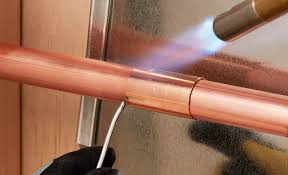
Soldering Copper Pipe
Soldering copper pipe is a widely used joining technique in plumbing, HVAC, refrigeration, and light industrial piping systems. This method creates strong, leak-proof joints by using a low-melting-point filler metal known as solder. Due to its reliability, cost-effectiveness, and ease of application, soldering copper pipe remains a standard practice in both residential and commercial installations.
From potable water systems to heating pipelines, soldering copper pipe provides a durable and efficient solution for joining copper tubing and fittings under moderate temperature and pressure conditions.
What is Soldering Copper Pipe?
Soldering copper pipe is a capillary joining process where heat is applied to a copper pipe and fitting assembly, allowing molten solder to flow into the joint. Once cooled, the solder solidifies and forms a secure bond between the surfaces, ensuring leak-tight performance.
This method is especially suitable for plumbing systems, HVAC piping, and utility services where system pressures are relatively low.
Principle of Soldering Copper Pipe
The process works on the principle of capillary action. When the pipe and fitting are properly cleaned and heated, the molten solder is drawn into the joint space, filling any gaps and creating a strong seal.
Proper preparation and uniform heating are essential to achieve a high-quality soldered joint.
Tools Required for Soldering Copper Pipe
- Pipe cutter
- Deburring tool
- Emery cloth or wire brush
- Flux (to prevent oxidation)
- Solder (lead-free for potable systems)
- Propane or MAP gas torch
- Safety gloves and protective eyewear
Types of Solder Used
The choice of solder depends on application requirements:
- Lead-free solder: Used for drinking water systems (Sn-Cu or Sn-Ag alloys)
- Silver-bearing solder: Provides improved strength and flow characteristics
- Soft solder: Suitable for low-temperature applications
All solder materials must comply with applicable safety and regulatory standards.
Step-by-Step Soldering Process
- Cut the Pipe: Ensure a clean and square cut
- Deburr the Edges: Remove internal burrs
- Clean the Surfaces: Remove oxidation using emery cloth
- Apply Flux: Prevent oxidation during heating
- Assemble the Joint: Insert pipe into fitting
- Heat the Joint: Apply heat evenly using a torch
- Apply Solder: Allow solder to melt and flow into the joint
- Cool Naturally: Do not disturb the joint while cooling
Advantages of Soldering Copper Pipe
- Cost-effective and simple method
- Reliable leak-proof joints
- Minimal equipment required
- Suitable for various applications
- Quick installation process
Limitations of Soldering Copper Pipe
- Not suitable for high-pressure systems
- Limited temperature resistance
- Not recommended for gas lines in many standards
- Requires skilled workmanship
Applications of Soldering Copper Pipe
Plumbing Systems
- Hot and cold water distribution
- Potable water systems
HVAC Systems
- Chilled water piping
- Heating systems
Refrigeration Systems
- Low-pressure refrigerant lines
Industrial Utility Systems
- Process water piping
- Non-critical fluid transport
Standards and Compliance
Soldering copper pipe must comply with the following standards:
- ASTM B828 – Practice for capillary joints
- ASTM B32 – Specification for solder metals
- NSF/ANSI 61 – Drinking water system compliance
- Local plumbing codes and regulations
Safety Practices
Safety is essential during soldering operations:
- Ensure proper ventilation
- Use personal protective equipment
- Keep flammable materials away
- Use fire-resistant surfaces
Comparison: Soldering vs Brazing
| Parameter | Soldering | Brazing |
|---|---|---|
| Temperature | Below 450°C | Above 450°C |
| Strength | Moderate | High |
| Applications | Water systems | Gas, HVAC, industrial |
| Filler Material | Soft solder | Silver-based alloys |
Quality Control and Inspection
Proper inspection ensures reliability of soldered joints:
- Visual inspection for even solder distribution
- Pressure testing for leaks
- Verification of joint integrity
Regular inspection helps maintain system performance and safety.
Conclusion
Soldering copper pipe is a fundamental and reliable joining method widely used in plumbing and HVAC systems. Its ease of application, cost efficiency, and proven performance make it an essential technique for modern piping installations.
By following proper procedures, selecting appropriate materials, and adhering to safety standards, soldering copper pipe ensures durable and leak-free connections across residential, commercial, and industrial applications.