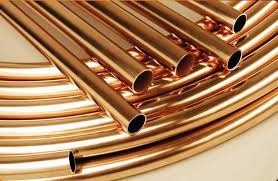
Threaded Copper Tube for HVAC, Plumbing and Industrial Applications
Threaded copper tube is a specialized form of copper tubing where threads are machined at the ends to enable mechanical connections. It is used in systems where easy assembly, disassembly and maintenance are required without the need for soldering or brazing.
Although copper tubes are typically joined using soldering or brazing, threaded connections are essential in specific applications such as gas systems, industrial equipment and modular piping networks.
What is Threaded Copper Tube?
Threaded copper tube refers to copper tubing that has internal or external threads cut into its ends. These threads allow the tube to connect with threaded fittings such as couplings, unions and adapters.
Threading is usually applied to thicker-walled copper tubes or through adapters to maintain structural integrity.
Types of Threaded Copper Tube Connections
Male Threaded Copper Tube
External threads are machined on the tube ends, allowing connection to female threaded fittings.
Female Threaded Copper Tube
Internal threads are present to receive male threaded components.
Threaded Copper Adapters
Used to connect copper tubes with threaded steel, brass or plastic systems.
Hybrid Threaded Fittings
Combination fittings that include threaded-to-solder or threaded-to-compression connections.
Technical Specifications
| Parameter | Details |
|---|---|
| Material | Copper (C12200 / C11000) |
| Thread Types | NPT / BSPT / BSPP |
| Standards | ASTM B88 / ASTM B280 / ASME B1.20.1 |
| Size Range | 1/4 inch to 4 inch |
| Applications | Water, Gas, HVAC, Industrial |
Key Features
- Easy installation and removal
- Strong mechanical connection
- No heat required for joining
- Reusable connections
- Corrosion resistant
- Suitable for maintenance systems
Standards and Compliance
Threaded copper tubes comply with international standards:
- ASTM B88 – Copper water tube
- ASTM B280 – Copper tubing for HVAC
- ASME B1.20.1 – Pipe thread standards
- EN and ISO standards for piping systems
Applications of Threaded Copper Tube
HVAC Systems
Used in service connections and equipment interfaces.
Plumbing Systems
Used in detachable connections for maintenance purposes.
Gas Distribution
Used in LPG and natural gas pipelines with threaded fittings.
Industrial Equipment
Used in machinery and process piping systems.
Marine Applications
Used in marine systems due to corrosion resistance.
Installation Methods
- Threaded assembly using PTFE tape or sealant
- Combination with soldered or brazed joints
- Use of adapters for mixed material systems
- Proper torque application for leak-proof sealing
Advantages of Threaded Copper Tube
- Quick installation and removal
- Ideal for maintenance and repair work
- No flame or heat required
- Flexible system design
- Cost-effective for modular systems
Limitations
- Not suitable for thin-walled tubing
- Requires proper sealing to prevent leakage
- Less common than soldered joints in standard applications
Maintenance and Longevity
Threaded copper tubes require periodic inspection to ensure thread integrity and sealing. Proper installation ensures long-lasting and reliable performance.
Why Choose Threaded Copper Tube?
Threaded copper tube is ideal for applications requiring flexibility, easy maintenance and detachable connections. It provides a practical solution for industrial and mechanical systems.
Conclusion
Threaded copper tube offers a versatile and efficient solution for specialized piping systems. Its durability, corrosion resistance and ease of installation make it suitable for a wide range of applications.
Choosing high-quality threaded copper tubes ensures safe, efficient and long-term performance across all systems.